What is Bitcoin
In 2008, a paper titled "Bitcoin: A Peer-to-Peer Electronic Cash System" by Satoshi Nakamoto appeared, laying the foundation for the birth of Bitcoin. As the first cryptocurrency built using cryptographic principles, Bitcoin has gold-like properties due to its limited supply, and its value has been appreciating over the years.
Over twelve years, Bitcoin went from being worth nothing to breaking $60,000 in 2021. The world has witnessed its evolution from a niche product popular among geeks to a financial asset that cannot be ignored by the mainstream today. In the future, as the Bitcoin network and the entire crypto ecosystem continue to grow and develop, the remarkable story of Bitcoin will continue to unfold.
I. Introduction to Bitcoin
On October 31, 2008, Satoshi Nakamoto first proposed the concept of Bitcoin. On January 3, 2009, he developed the first client program implementing the Bitcoin algorithm, and the first Bitcoin was born. Bitcoin, with the English name Bitcoin and abbreviated as BTC, was originally constructed as "currency" but is now more commonly defined as a specific virtual asset, corresponding to property that holders actually enjoy in real life, with both use value and exchange value.
II. How Bitcoin is Generated
Bitcoin is a cryptocurrency based on decentralization, using peer-to-peer networks and consensus主动性, open source code, with blockchain as the underlying technology. It solves the problem of issuing and circulating digital assets with a fixed total supply without central institutions, creating a decentralized electronic accounting system.
Unlike fiat currency, Bitcoin is not controlled or issued by any institution. Its issuance method, rate, and scale are written into the program from the beginning and cannot be changed. Unlike our daily bookkeeping, for example, when we deposit and withdraw money from banks, the bookkeeping is done by banks, relying on national credit behind it. Bitcoin provides another method, where participants keep accounts together and synchronize ledgers in real time. Since everyone has a ledger, the possibility of trading being forged is greatly avoided, making trading more transparent and secure.
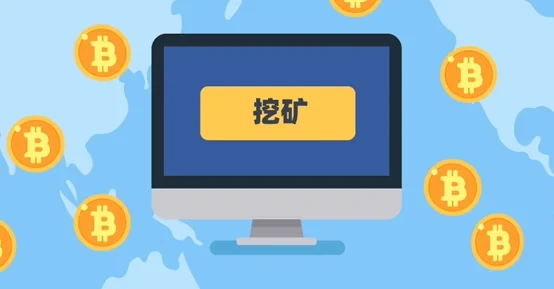
In the Bitcoin system, people who maintain ledger security are called miners, and the bookkeeping process is mining. Miners package generated trading into blocks approximately every 10 minutes. To encourage miners to keep accounts, Bitcoin has its own incentive mechanism.
You can understand it this way: Bitcoin is stored in different blocks, and the method to mine blocks is to solve a complex mathematical puzzle. Whoever among the miners first solves the puzzle answer and quickly broadcasts this message will obtain the Bitcoin in that block.
Since trading needs to be packaged into blocks by miners and confirmed by the entire network to take effect, the trading initiator pays certain transaction fees to miners. In addition, there's another reason for charging transaction fees: Bitcoin's total supply is fixed at 21 million coins. When all Bitcoin is mined, new blocks will not generate any block rewards, so transaction fees are a method to incentivize miners to continue bookkeeping.
III. Bitcoin Trading Method
This section only introduces Bitcoin's on-chain trading method.
The trading initiator creates a trading and uses their private key to sign this trading. This signature indicates the Bitcoin owner's permission for the trading and also ensures that the trading cannot be tampered with by others after it occurs. Afterwards, this trading will be broadcast to the entire Bitcoin network, waiting for confirmation.
When miners receive these trading requests, they will package the trading and upload it to the entire blockchain. When more than six nodes in the entire network confirm these trading, the Bitcoin transfer is complete. After trading is complete, this trading will be permanently stored on the blockchain, and the Bitcoin recipient will obtain ownership of these funds.
IV. Characteristics of Bitcoin
1) Decentralization
In the Bitcoin network, issuance and trading do not require the intervention of centralized institutions and are automatically executed by computers. This is an organizational operation method maintained equally by multiple parties. In the Bitcoin network, all participants are independent individuals with equal power. No participant holds decision-making power or can influence other participants' decisions. Any participant's entry or exit will have no impact on other participants or the entire system.
2) Open, Transparent, and Tamper-Proof
Any trading behavior on the chain regarding Bitcoin is transparent and traceable, and this trading data cannot be tampered with. However, although trading is open, transparent, and traceable, the identity of traders is anonymous. We cannot obtain the real-life identity corresponding to traders through on-chain addresses.
3) Global Circulation
Bitcoin trading has no border restrictions and can circulate worldwide. Through the internet, any node in the world can conduct Bitcoin trading.
4) Fixed Supply
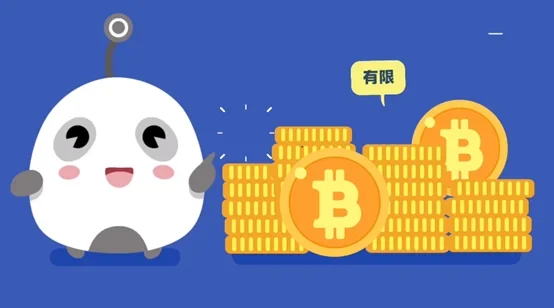
Bitcoin's total supply is fixed at 21 million coins. The Bitcoin network releases a certain amount of Bitcoin every 10 minutes, and it is expected to be completely mined by 2140. The fixed supply characteristic gives Bitcoin more investment value and investment space. Through the long historical process, many Bitcoin are forever lost in the torrent of history, which also increases Bitcoin's scarcity attribute.
5) Halving Mechanism
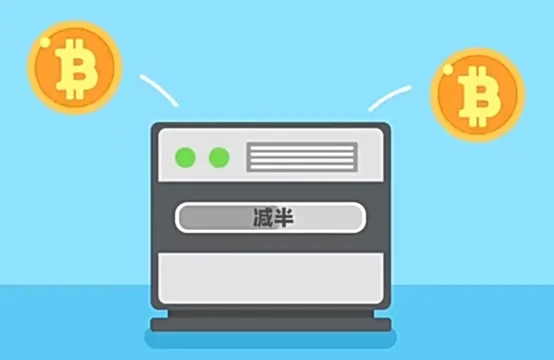
Bitcoin halving refers to the reduction of its production by half every 4 years, meaning that with the same computing power, the amount of Bitcoin rewarded per block will be reduced by half. Since Bitcoin's birth, three halvings have been completed, with block rewards decreasing from 50 Bitcoin to the current 6.25 Bitcoin.
V. Bitcoin Value/Market Cap
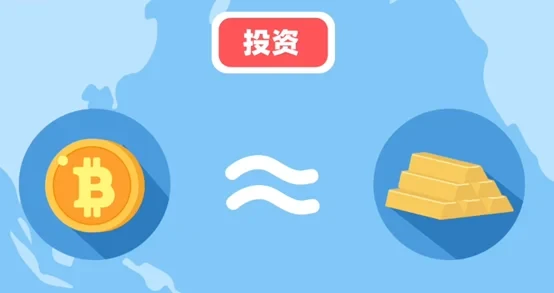
Bitcoin is also known as "digital gold." Due to scarcity and anti-inflation characteristics brought by its fixed supply, it is gradually regarded by investors as a value-preserving product and safe-haven asset.
As a groundbreaking product and the first application of blockchain, Bitcoin holds a pivotal position in the crypto assets field. CoinMarketCap data shows that Bitcoin's market cap accounts for the majority of the total cryptocurrency market cap. Additionally, after Bitcoin broke through a trillion-dollar market cap, it reached 10% of gold's total market cap and surpassed many well-known companies such as Tesla and Facebook.
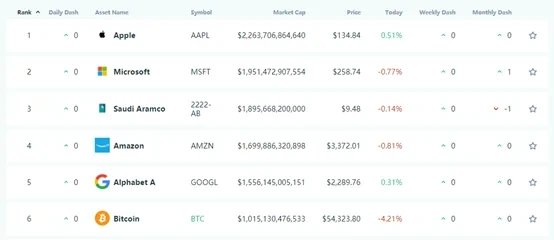
Data Source: Asset Dash
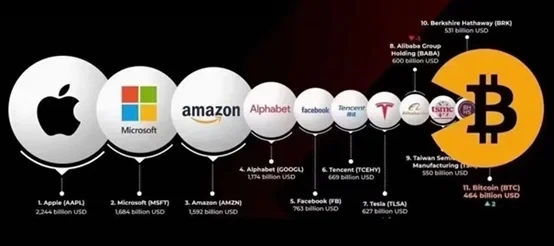
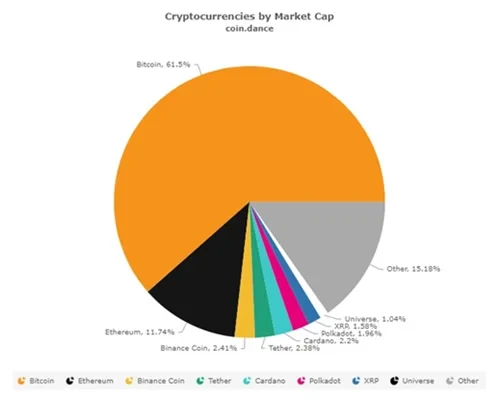
The growth of Bitcoin's market cap reflects its continuously expanding influence. Just as Citibank stated that Bitcoin is at a tipping point for entering the mainstream, traditional financial institutions such as JPMorgan Chase, Morgan Stanley, and Fidelity have begun launching Bitcoin-related products. It can be seen that Bitcoin is becoming a force that cannot be ignored, influencing the traditional financial world. Furthermore, the involvement of payment giants such as Visa, PayPal, Mastercard, and Square will further expand Bitcoin's coverage population, bringing positive impacts on future development.
Undoubtedly, institutional investors' interest in Bitcoin is growing day by day. More and more institutional investors believe that Bitcoin can hedge against inflation, diversify investment portfolios, and serve as a safe haven that traditional government bonds cannot provide. Therefore, Bitcoin becoming a mainstream asset is just around the corner.
VI. How to Obtain Bitcoin
There are multiple methods to obtain Bitcoin. Common methods in the market include obtaining through mining, direct purchase, and airdrop rewards.
1) Obtain Through Mining
Mining is the earliest method to obtain Bitcoin and is also the source of Bitcoin generation. Mining requires professional mining equipment. The Bitcoin obtained from mining will be directly deposited into a Bitcoin wallet. Due to rising Bitcoin prices and increasing network computing power, mining competition is fierce. Therefore, miners have increasingly high requirements for mining equipment, and the iteration speed of mining equipment is also accelerating. To maximize the ratio of computing power to energy consumption, the technical content of mining equipment has improved, which has also led to increasingly expensive mining equipment prices. In addition, purchasing mining equipment and selecting mining farm locations also face many risks. Therefore, the threshold and cost of mining are relatively high, so ordinary investors generally do not use this method to obtain Bitcoin.

2) Direct Purchase
Direct purchase mostly occurs in the secondary market, that is, exchanges. Investors can purchase Bitcoin through exchanges such as OKX. Due to good liquidity and market depth, large exchanges are a more friendly method for new investors to obtain Bitcoin.
In addition, users can purchase Bitcoin directly over-the-counter, but due to lack of guarantees, there are significant risks, so careful selection is required.
3) Airdrop Rewards
From its inception, Bitcoin was used for gifting or rewarding rare items. To achieve product promotion and give back to users, some platforms hold Bitcoin airdrop events, and users can obtain Bitcoin through these events.
VII. Bitcoin Forks
In the blockchain world, everyone follows the same set of rules. Because there is no absolute authority in a decentralized world, when disagreements arise, there may be a failure to reach a unified consensus, which will also lead some people to propose new rules. At this time, blockchains based on both new and old rules will appear in the network simultaneously. This is a fork.
Forks are divided into soft forks and hard forks. A soft fork is a temporary fork, meaning all blocks considered legal under new rules are also considered legal under old rules, and old rules also accept blocks created under new rules. New and old rules are compatible.
A hard fork is a permanent divergence of the blockchain. Old rules will not accept legal blocks created under new rules, considering legal blocks under new rules as illegal, and new rules also do not accept blocks created under old rules. Generally, after a hard fork, a new currency will appear, but not all forked coins can successfully capture the market. The success of a newly forked coin entirely depends on its ability to capture market value.
On August 1, 2017, due to scaling disputes, Bitcoin experienced its first fork, and the new currency generated from the fork was Bitcoin Cash (BCH). Original holders of Bitcoin will automatically receive forked coins after the fork is complete. In the following months, Bitcoin experienced multiple fork events, generating multiple forked coins such as BTG and BCD.
People often say that the greatness of the internet lies in allowing humans to cross spatial barriers and communicate with anywhere, achieving globalization and free flow of information. The emergence of Bitcoin is to solve the problem of currency circulation and value transfer. As a payment method, its purpose is to let value circulate freely like information.
Finally, unlike previous bull markets, in this bull market, Bitcoin's core has already changed due to the deployment of compliant channels, the entry of traditional institutions, and increasingly rich investment tools. Its value support has also become more diverse. Within the foreseeable range, we are witnessing the mainstream development of Bitcoin.
Disclaimer
This article may contain content related to products that are not available in your region. This article is intended to provide general information only and does not take responsibility for any factual errors or omissions contained therein. This article represents only the author's personal views and does not represent the views of OKX. This article is not intended to provide any of the following advice, including but not limited to: (i) investment advice or investment recommendations; (ii) offers or solicitations to buy, sell, or hold digital assets; or (iii) financial, accounting, legal, or tax advice. Holding digital assets (including stablecoins) involves high risk, may fluctuate significantly, and may even become worthless. You should carefully consider whether trading or holding digital assets is suitable for you based on your financial situation. For questions about your specific situation, please consult your legal/tax/investment professional. The information appearing in this article (including market data and statistics, if any) is for general reference only. While we have taken all reasonable precautions in preparing these data and charts, we accept no responsibility for any factual errors or omissions expressed herein. © 2025 OKX. This article may be reproduced or distributed in its entirety, or excerpts of 100 words or less from this article may be used, provided that such use is non-commercial. Any reproduction or distribution of the entire article must also prominently state: "Copyright © 2025 OKX. Used with permission." Permitted excerpts must cite the article name and include the source, for example "Article Name, [Author Name (if applicable)], © 2025 OKX". Some content may be generated or assisted by artificial intelligence (AI) tools. Derivative works or other uses of this article are not permitted.
Show More
Recommended Reading
How to Unfreeze Your OKX Account: Documents and Steps Explained
# How to Unfreeze Your OKX Account: Documents and Steps Explained Being locked out of your OKX account can be stressful, but with the right documents and steps, recovery is possible. If you're facing the OKX account verification process or looking for the documents needed to unfreeze your OKX account, you've come to the right place. This guide will explain the reasons for account freezes, what documents you need, and a step-by-step plan to regain access. We'll cover
March 10, 2026
How to Resolve OKX Withdrawal Freeze Issues: Step-by-Step Troubleshooting
# How to Resolve OKX Withdrawal Freeze Issues: Step-by-Step Troubleshooting You try to withdraw from OKX—but your funds are frozen or stuck. This can be stressful, especially when you need quick access to your crypto assets. Fortunately, there are clear steps that can help you resolve OKX withdrawal freeze issues. This guide will cover why withdrawals are frozen, how to troubleshoot, and how to prevent future problems. We'll cover the main reasons
March 10, 2026
How Long Does OKX Withdrawal Take? Processing Time, Fees, and Troubleshooting
# How Long Does OKX Withdrawal Take? Processing Time, Fees, and Troubleshooting Many crypto traders worry about how quickly they can get their funds—withdrawal speed is crucial. If you want to know OKX withdrawal processing times, you're not alone. This guide will detail how long OKX withdrawals usually take, factors affecting the timeline, and how to avoid delays. You'll also learn about OKX withdrawal fees, common troubleshoot
March 10, 2026
OKX Withdrawal Blocked Due to KYC Verification: Reasons and Solutions
# OKX Withdrawal Blocked Due to KYC Verification: Reasons and Solutions Many OKX users face sudden withdrawal blocks related to KYC verification—this article will explain why and how to resolve it. If you've encountered OKX withdrawals being blocked due to KYC verification, you're not alone. This guide will explain why OKX enforces these restrictions, how their KYC process works, and how to resolve the issue
March 10, 2026
OKX Withdrawal Pending: Reasons, Solutions, and Support Guide
# OKX Withdrawal Pending: Reasons, Solutions, and Support Guide Still waiting for your OKX withdrawal to complete? You're not alone—withdrawal delays are a common concern for cryptocurrency users. If you see an "OKX withdrawal pending" status, it can be stressful, but most delays have simple explanations and solutions. This guide will detail why OKX withdrawals may be pending, the most common issues, how long withdrawals usually take
March 10, 2026
How to Contact OKX Customer Support for Withdrawal Issues: Step-by-Step Guide
# How to Contact OKX Customer Support for Withdrawal Issues: Step-by-Step Guide Is your crypto withdrawal stuck? You're not alone. Many OKX users occasionally experience withdrawal delays or issues, and knowing how to contact OKX customer support is crucial for quickly resolving withdrawal problems. In this guide, you'll learn how to contact OKX customer support, troubleshoot withdrawal issues, and get your funds moving again. We'll walk you through the most common issues and show you
March 10, 2026