Bitcoin Selloff: Understanding the Three Key Macro Factors Driving Market Movements
Recently, Bitcoin has experienced multiple waves of widespread selling, with prices falling sharply and the crypto market gripped by panic. On September 21 at 8:00, Bitcoin price plummeted by $3,000 in just one hour, followed by sustained declines the next day that pushed it below the $40,000 mark, with intraday losses exceeding 9%. In the days that followed, Bitcoin traded in the $40,000–$45,000 range. On September 24 at 16:00, Bitcoin experienced another sharp intraday drop, dipping as low as $40,659. As a result, the total market cap of crypto assets fell below and remains below the $2 trillion mark.
Market explanations for these Bitcoin selloffs vary widely, but in summary, the declines have been driven by a combination of macro-level factors. This article focuses on the potential causes behind the sharp drops on September 21 and September 24, analyzing the key factors that typically warrant close attention when examining widespread Bitcoin selloffs.
Traditional Financial Market Risks
First, we consider the interconnection and transmission effects from traditional financial markets. In the September 21 selloff, apart from the crypto market, global stocks, commodities, and other assets also declined. Conversely, the US dollar and government bonds saw surging demand as investors sought safe havens. This was widely attributed to the crisis surrounding a major real estate company. Recently, market attention on the company's crisis has been intensifying, which quickly spread to global equity markets and the Bitcoin market.
On September 21, driven by related news, the Bitcoin market experienced significant volatility. Global equity markets also fell, with some analysts arguing that many investors reduced risk exposure by withdrawing some funds from the Bitcoin market, further contributing to the nearly 10% price plunge.
As is well known, Bitcoin was born during the 2008 financial crisis, when people urgently needed to find new safe-haven financial tools. Some might argue that based on this logic, the current crisis should be bullish for Bitcoin. However, that is not the case. When facing a potential global financial crisis, panic and risk-aversion dominate, and most ordinary investors would prefer to pull funds out of major investment markets first and convert them to cash or government bonds for safety.
After all, the traditional financial market and Bitcoin market still influence each other. Based on historical experience and volatility patterns, typically, in positive market conditions, BTC and ETH are negatively correlated with stock indices, and in such environments, Bitcoin tends to outperform other traditional risk assets. In negative market conditions, cryptocurrency and traditional financial assets show positive correlation. Over the past two years, as institutional investors have continued to pour in, the correlation between the crypto market and traditional markets has grown increasingly strong. Particularly as participants in both traditional and crypto markets become more homogeneous, we may see increasingly pronounced transmission of volatility between traditional financial markets and the crypto market. Therefore, events similar to the Evergrande crisis can also impact the Bitcoin market to some extent. However, in the author's personal view, this impact is not necessarily negative—if you anticipate that most traditional financial assets carry extremely high risk in certain scenarios, Bitcoin might actually be a comparatively better choice. In any case, investors should always maintain a certain level of risk awareness regarding sudden events in traditional financial markets.
Federal Reserve Policy
In addition, the Federal Reserve's interest rate meetings have been a hot topic recently. The Fed's monetary policy has always been a nerve-wracking factor for markets, given its ripple effects on global financial and capital markets. As such, it is also a key factor that Bitcoin market investors need to monitor closely.
Some analysts believe that one reason for Bitcoin's sharp decline on September 21–22 was expectations surrounding the Fed's September FOMC meeting. In the days leading up to the Fed's announcement, many investors and analysts expected the Fed might announce measures to taper QE at the meeting, which would strengthen expectations for the US dollar. As a result, a large amount of market capital chose its direction in advance based on expectations, and A-shares, the Nasdaq, Bitcoin, and other assets experienced widespread selling and short-term declines.
At 2:00 AM Beijing time on September 23, the Fed released its interest rate decision and policy statement, deciding to keep rates unchanged at zero and maintain its monthly bond-buying program at $120 billion. The Fed Chair indicated that tapering could begin as early as the next (November) meeting, with the process to be completed by mid-2022.
This means the Fed continued to maintain its accommodative policy. Around the time of the Fed's FOMC meeting, Bitcoin prices saw a modest uptick. The latest dot plot released by the Fed shows significant divergence among FOMC members on whether to raise rates in 2022. Based on economic projections, rates are expected to rise to around 0.5% by the end of 2022, with rate hike expectations having moved forward.
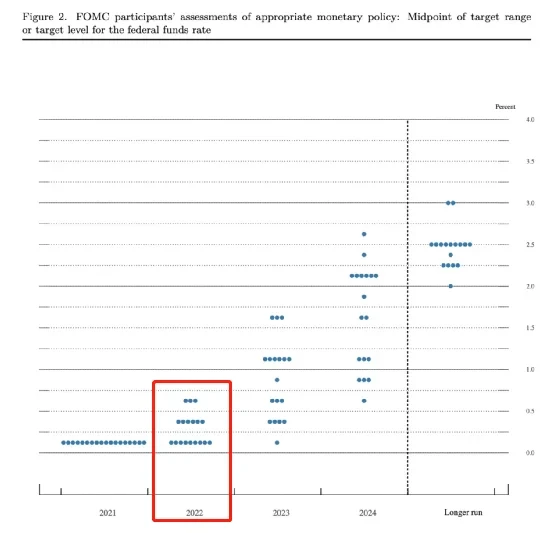
Latest Fed dot plot chart Source: Federal Reserve website
The dot plot is one of the important channels for the outside world to gauge Fed policy, and investors need to focus on the median projection, which represents the Fed's median expectation for the federal funds rate. Over the longer term, the tapering plan is what requires attention—once Taper is officially launched, the US dollar index will very likely strengthen, which will have a certain impact on global equity markets and the Bitcoin market.
Regulation in Major Countries
Beyond the Fed's policy moves, actions by regulatory bodies in major countries are also a factor that cannot be overlooked when it comes to influencing the Bitcoin market. In this regard, investors can focus primarily on two major US institutions—the Securities and Exchange Commission (SEC) and the Commodity Futures Trading Commission (CFTC)—as well as policy news from other key crypto market countries such as South Korea, Japan, and India.
Taking Bitcoin's sharp drop on September 21 as an example, regulatory pressure primarily came from news out of the US and South Korea—two events involving the SEC's desire to bring crypto assets under regulatory oversight and South Korea's deadline for cryptocurrency exchanges to register significantly eroded investor confidence in the crypto market.
On September 21, SEC Chair Gary Gensler, in an interview with The Washington Post, expressed a desire to bring crypto assets "into the public policy framework" to ensure this rapidly growing industry does not "undermine system stability." Gensler believes Bitcoin is digitalized, scarce, and a speculative store of value.
The SEC is the highest regulatory body in the US securities industry, responsible for securities supervision and management. Based on the SEC's past statements and actions regarding crypto assets, in their view, there is no doubt that crypto assets are innovative. However, given their volatility and speculative nature, as well as their operation outside the regulatory perimeter, the SEC has maintained a cautious stance—including the rejection of multiple Bitcoin ETF applications submitted by various crypto companies, and the SEC's lawsuit against Ripple. The key reason the SEC pays close attention to crypto asset regulation is that Gensler believes most crypto assets qualify as securities, some tokens look more like commodities, and some possess characteristics of both. In this situation, major US regulatory agencies may need to cooperate.
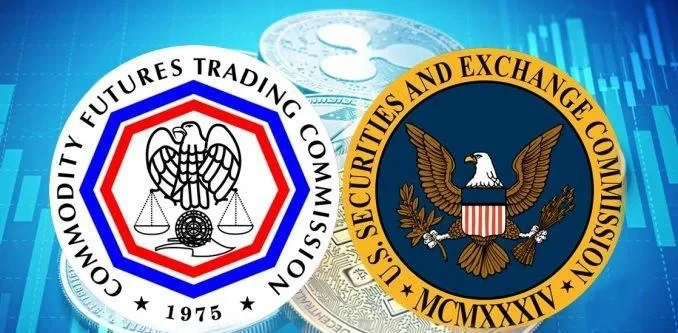
This brings us to the SEC's sister agency—the Commodity Futures Trading Commission (CFTC), which primarily regulates derivatives and has various commodity enforcement powers. Recently, CFTC Commissioner Dan Berkovitz stated that while the CFTC applies to futures contracts, swaps, and options trading, if Congress decides to expand the CFTC's jurisdiction to regulate spot markets in some manner, the CFTC would need additional resources to handle the spot market for crypto assets.
This means the SEC and CFTC may jointly seek congressional approval and assistance, and even coordinate funding and resources with banking regulators to further explore regulation of the crypto market, particularly stablecoins. It is precisely because of this news that Bitcoin and other crypto asset prices have experienced some volatility recently. Therefore, over the long term, regulatory developments from major domestic and international institutions are one of the important factors affecting the Bitcoin market, and this is a key area investors should monitor at the macro level.
In addition, regulatory developments in other countries where investors make up a significant portion of the crypto market, such as Japan and South Korea, also have an important impact on the Bitcoin market. Recently, South Korea announced a revised specific financial transaction information report and usage law, requiring cryptocurrency exchanges to obtain Information Security Management System (ISMS) certification by September 24 and submit reports to the Financial Intelligence Unit (FIU) of the Financial Services Commission (FSC). Currently, only five cryptocurrency exchanges and one wallet provider have submitted registration documents to the Korea Financial Intelligence Unit (Ko FIU).
At the same time, South Korea's cryptocurrency tax law is set to take effect on January 1, 2022, which will impose a 20% tax on income generated from cryptocurrency trading exceeding 2.5 million KRW (approximately $2,100). Although much of the crypto community is still attempting to delay the effective date, the specifics require further observation. There is no doubt that the formal implementation of such cryptocurrency tax laws will affect the enthusiasm of mainstream South Korean investors entering the crypto market.
Disclaimer
This article may contain product content not applicable to your region. This article is dedicated to providing general information only and does not accept responsibility for any factual errors or omissions. This article represents the author's personal views only and does not represent OKX's views. This article does not intend to provide any advice, including but not limited to: (i) investment advice or investment recommendations; (ii) offers or solicitations to buy, sell, or hold digital assets; or (iii) financial, accounting, legal, or tax advice. Holdings in digital assets (including stablecoins) involve a high degree of risk and may fluctuate significantly, or even become worthless. You should carefully consider whether trading or holding digital assets is suitable for you based on your financial situation. For questions specific to your circumstances, please consult your legal/tax/investment professional. The information contained in this article (including market data and statistics, where applicable) is for general reference purposes only. Although we have taken all reasonable precautions in preparing such data and charts, we do not accept any responsibility for factual errors or omissions expressed herein. © 2025 OKX. This article may be reproduced or distributed in its entirety, or excerpts of 100 words or fewer may be used, provided that such use is for non-commercial purposes. Any reproduction or distribution of the full article must prominently state: "This article is copyrighted © 2025 OKX, used with permission." Permitted excerpts must cite the article name and include the source, for example, "Article name, [author name (if applicable)], © 2025 OKX". Some content may have been generated or assisted by artificial intelligence (AI) tools. Derivative works or other uses of this article are not permitted.
Show More
Recommended Reading
OKX Pay: Ushering in a New Era of Next-Gen Crypto Payments
The preferred choice of tens of millions of users—Register with OKX to enjoy an exceptional trading experience and a diverse range of wealth management products. A message from OKX CEO Star: Today, we are officially launching the first version of OKX Pay for over 100 million global users. As the industry's first truly non-custodial and compliant payment application, OKX Pay will be built into the OKX App, currently available in select markets with a full rollout
2026年3月22日

A New Chapter: Building the Next Generation of Financial Infrastructure Together
The partnership between OKX and Intercontinental Exchange (ICE) represents a significant milestone for OKX and is equally meaningful for the evolution of the entire digital assets market. ICE builds and operates the world's most important financial infrastructure, including the New York Stock Exchange and global derivatives and clearing platforms. This investment by ICE in OKX and its addition to our Board of Directors reflects our shared belief—that digital assets technology will transform financial markets
2026年3月10日

Reflecting on Another Year of Building
As CEO of OKX and a builder who stays true to the mission, I am proud to look back on the extraordinary growth and progress OKX has achieved this year. Despite significant challenges, 2024 was a year defined by focus, innovation, and resilience. Not only did we expand and improve our products, but we also made important strides in launching transparent and compliant localized businesses while further strengthening our global management team. It is worth noting that after
2026年1月29日

2025: Steady Progress Toward Financial Freedom
— A Year-End Letter to Global Users from OKX Founder & CEO Star "Financial freedom" is often misunderstood. It does not mean the absence of rules, but rather having the freedom to choose—even in the presence of rules—and, when the system is truly tested, that it remains reliable and effective. This is precisely what we remained focused on throughout 2025. First and foremost, I would like to extend my sincere gratitude to our global customers, partners, and regulators for
2026年1月16日

OKX Officially Launches in Germany and Poland
By Erald Ghoos, CEO of OKX Europe Today is a significant day for OKX—and for crypto users across Europe. We have officially launched our fully compliant centralized cryptocurrency trading platform in Germany and Poland! For us, this is more than a geographic expansion—it is a commitment to building the future of cryptocurrency the right way: secure, transparent, and tailored to local needs. If you are in Germany
2025年10月21日

Partnership Upgrade! OKX Joins Forces with Standard Chartered to Expand Across Europe
On October 15, Erald Ghoos, CEO of OKX Europe, stated that OKX is expanding its strategic partnership with Standard Chartered into the European Economic Area (EEA). Earlier this year, OKX first partnered with Standard Chartered in the UAE, launching a collateral mirroring program—a
2025年10月15日