February Crypto Calendar
With the ringing of the Chinese New Year's Eve bells, the crypto market entered the solar calendar month of February. Whether this month's market trend can maintain consistency with the festive atmosphere of the Spring Festival is surely a matter of concern for the vast majority of investors.
After the Federal Reserve's first interest rate meeting of this year ended in late January, the outside world generally believes that a Fed rate hike in March is almost a certainty. So in February, what certain important financial events in mainstream financial markets will, like the Fed rate hike expectation, affect the trend of the crypto market?
To assist readers in developing the habit of regularly consulting the financial calendar and extracting key information from it, we will here provide a rough overview of the major events scheduled to occur in February. Details are as follows:
I. February 3, European Central Bank Interest Rate Decision
According to reports, the decisions of the European Central Bank's monetary policy meeting held on February 3 are as follows:
Maintain the main refinancing rate at 0% unchanged, the deposit facility rate at -0.5% unchanged, and the marginal lending rate at 0.25% unchanged. At the same time, the emergency bond purchase program implemented to address the pandemic will also terminate as originally planned in March of this year. The European Central Bank will implement the asset purchase program at a pace of 40 billion euros per month in the second quarter. In the third quarter, it will implement the asset purchase program at a pace of 30 billion euros per month. Starting from October 2022, it will implement the asset purchase program at a pace of 20 billion euros per month.
In addition, the Bank of England also announced on the same day that it would raise the benchmark interest rate by 25 basis points to 0.50%. The Bank of England Monetary Policy Committee unanimously agreed to end corporate bond purchases.
As the world's third-largest economy after China and the United States, the shift in the EU's monetary policy has a significant impact on world finance. This ECB decision undoubtedly releases a relatively clear signal of rate hikes, which is following the Fed's footsteps. Generally speaking, rate hikes mean that hot money in the market will flow back to financial institutions such as banks, directly affecting the liquidity of the crypto market.
Regarding the results of this monetary policy meeting, some professionals believe this is a relatively clear signal of turning hawkish, which will have a fundamental impact on the bull market, such as reducing the inflow of new funds, affecting investor confidence and institutional expectations for the future. Therefore, investors should prepare in advance and take preventive measures.
II. February 4, US Non-Farm Payrolls Data Release
On the evening of February 4 Beijing time, January's US non-farm payrolls data will be released as scheduled. As one of the important indicators affecting US fiscal and monetary policy, the non-farm payrolls data deserves particular attention. Non-farm payrolls data, that is, non-agricultural employment data, reflects the health of the US economy from the perspective of the employment population structure ratio. Therefore, non-farm payrolls data has also become an important basis affecting US monetary policy, concerning the strength of the Fed's rate hike expectations, and sensitive financial markets respond even more acutely to it.
On December 3, 2021, after the US non-farm payrolls data was released, because it significantly underperformed expectations, coupled with the impact of the Omicron variant virus, it triggered a market decline in global investment markets including the crypto market, with Bitcoin dropping 28%, and other digital assets falling more than 30%, with the entire market "turning red" across the board.
With the Fed starting to raise interest rates in March almost a certainty, this non-farm payrolls data, as well as next month's non-farm payrolls data, will also have a certain impact on the decision-making basis of Fed senior officials, including the rate hike interest rate and specific number of times. In other words, the non-farm payrolls data released on the evening of February 4 may directly relate to the intensity of the Fed's rate hike, and investors can also use this to preliminarily judge the long-term trend of future financial markets.
**III. February 7, Spring Festival Holiday Ends, Need to Focus on the Long-Tail Impact After the Spring Festival Effect**
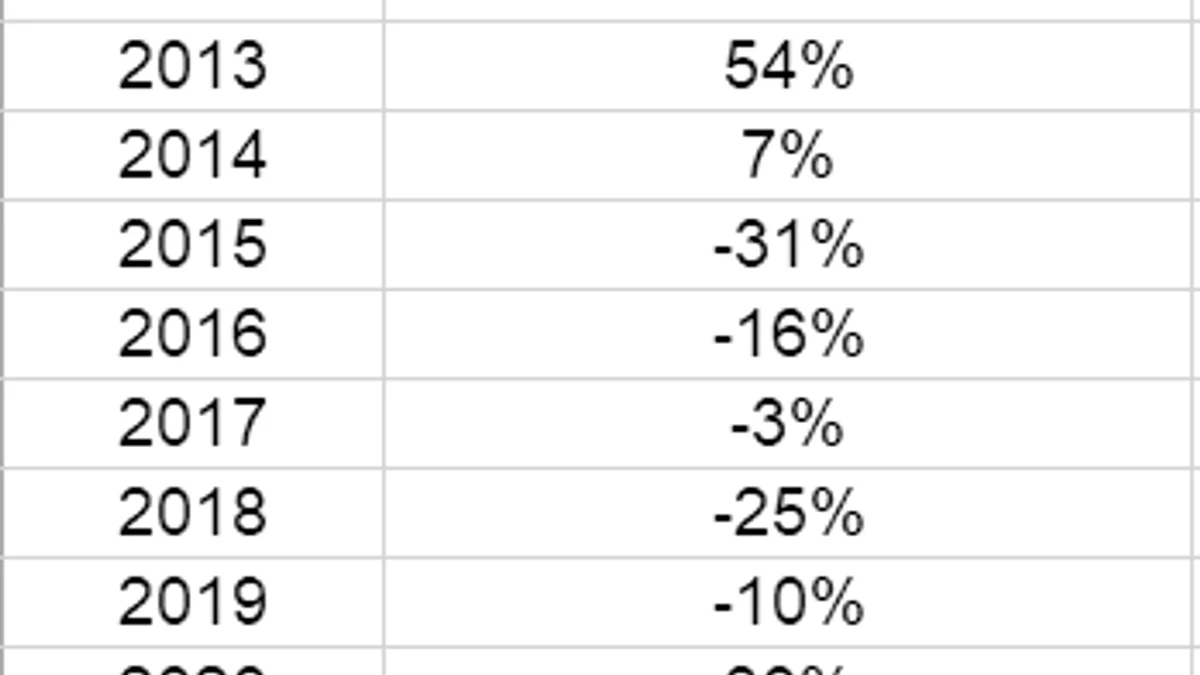
Data shows that Bitcoin prices in the 8 years from 2014 to 2021 presented relatively special market trends before and after the Spring Festival holiday, specifically: they fell more before the Spring Festival, rebounded mainly during the Spring Festival, and had mixed rises and falls after the Spring Festival.You can specifically refer to the OKX Academy article: "New Year Begins with 'Quiet Decline', Will Bitcoin's 'Spring Festival Effect' Still Come?"
The performance of this year's Spring Festival effect is that Bitcoin and the crypto market continued to quietly decline before the Spring Festival, falling from the opening price of $47,999 in 2022 to a low of $32,928 (January 24 data), with a cumulative maximum decline of 31% this year. Other digital assets all followed Bitcoin's significant decline, with drops basically exceeding 30% or even being cut in half.
During the Spring Festival, that is, from Chinese New Year's Eve to today, Bitcoin led the crypto market to oscillate upward, rising from $36,800 at 10 am on January 31 to $38,000 at 2 pm on February 4, a gain of 3%, and other digital assets all followed Bitcoin in a small rebound.
Next, we need to focus on market performance after the Spring Festival holiday ends on February 7. After this Spring Festival, we will face the Fed's mid-March monetary policy meeting, global economic recovery, and whether the epidemic is controlled, among other factors. Users need to pay special attention to market trends after the Spring Festival and pay attention to risk control.
As everyone knows, major festivals have a certain impact on socioeconomics, and financial markets are no exception. As an emerging field with a late start and low maturity, the crypto investment circle may be even more significantly affected by festival activities. In European and American stock markets, the "Santa Claus Rally" pattern is much discussed by investors, that is, the sustained rise of stock markets in the last week of December to the first two trading days of January. Relevant researchers believe that the "Santa Claus Rally" phenomenon still applies to the crypto market, which is Bitcoin's Christmas effect.
Corresponding to the Christmas effect is Bitcoin's Spring Festival effect. The significance of the Spring Festival to Eastern countries is just like Christmas to the Western world. During the Spring Festival, China, Japan, South Korea, and Vietnam, and even the overseas Chinese communities around the world, will spend a certain amount of funds in advance to cope with living and social needs during the Chinese New Year period. Therefore, the flow of hot money in the market inevitably shrinks in the short term, creating a net outflow state in the crypto space, leading to a decrease in the value of crypto assets.
Of course, as the crypto market matures day by day, whether Bitcoin's "Spring Festival effect" and "Christmas effect" can be verified by a larger market remains to be seen. For crypto investors, February needs to focus on the follow-up effects of the Spring Festival.
IV. Other Important Events
The three major events mentioned above may have a global impact on market trends and should rightfully occupy the highest priority of investor attention. In addition, the following certain events on the agenda may also create some waves in the crypto space in February.
First is the US Senate Committee, scheduled to hold a digital assets hearing on February 9. The hearing mainly revolves around specific topics of crypto assets development, with participating members mainly consisting of several key officials from the US Congress financial sector and representatives composed of senior executives from leading crypto companies, with the former two forming opposing sides, the proponents raising questions and the opponents providing answers.
The last hearing was held at 11 pm on December 8, 2021 Beijing time, focusing on crypto investor protection and market integrity issues. Among them, Web3 and the metaverse became hot topics discussed by the attending representatives.
Generally speaking, the key topics and some focal points of US digital asset hearings may point to subsequent market hotspots and trends, and investors need to maintain a certain level of attention to them.
Second, Russia has determined to prepare a crypto assets regulatory draft before February 11. Russia is an international energy powerhouse and has unique soil for digital asset mining. At the same time, as one of the world's important economies and a major country with a population of over 100 million, its attitude toward crypto assets is enough to trigger global concern. It is worth mentioning that on February 4, the Russian Central Bank registered Atomyze as the country's first digital asset management company. Simply put, this decision may allow ordinary users to enjoy more freedom in crypto asset trading. At the same time, the Russian Central Bank has also formulated relevant tax proposals for subsequent discussion.
Russia's various statements seem to be gradually accepting crypto assets, but its final attitude still needs to be based on official regulatory policies. When the time comes, the detailed content of Russia's crypto assets regulatory draft will be worth reading carefully. In contrast, there is the clear attitude of another major country, India.
On February 2, Indian Prime Minister Modi stated that Indian cryptocurrency can be exchanged for rupees, using Indian Central Bank cryptocurrency payment will be safer, and using cryptocurrency helps reduce printing costs. Indian Ministry of Finance officials also stated on the same day that crypto assets are not illegal assets in India, and India's attitude toward crypto assets will be affected by global regulation. The most milestone significance is that Indian Finance Minister Sitaraman stated on February 1 that India plans to launch a Central Bank cryptocurrency in fiscal year 2023 starting in April of this year. In addition, the Indian government will impose a 30% tax on income from digital assets.
Just as Micro Strategy CEO Michael Saylor stated on February 3, clear crypto regulation will accelerate institutional adoption of Bitcoin. Although the crypto market has entered a bear market affected by the Fed's rate hike and cyclical patterns, with the accelerated global spread of blockchain technology, as well as new business formats such as Web3 and the metaverse, the future market is still promising and contains greater room for imagination. What investors need to do is to continuously improve their cognition while traversing bull and bear markets.
Bonus:
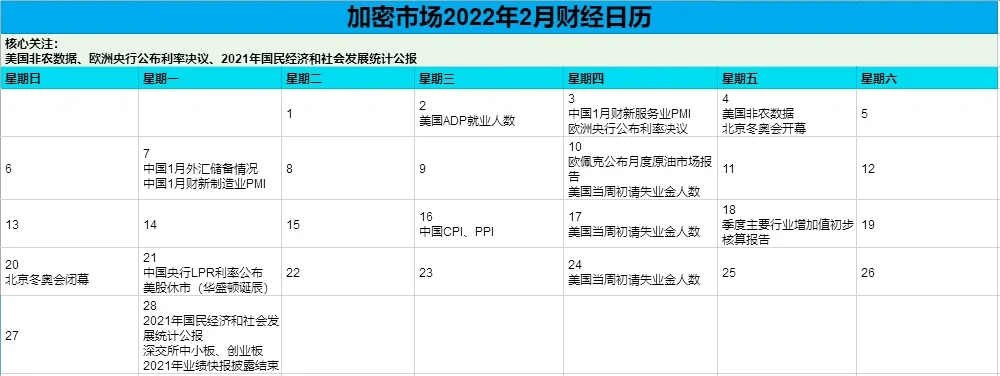
Crypto Market February 2022 Financial Calendar (Produced by: OKX Academy)
Disclaimer
This article may contain product-related content that is not applicable to your region. This article is only committed to providing general information and is not responsible for any factual errors or omissions therein. This article represents only the author's personal views and does not represent the views of OKX. This article is not intended to provide any of the following advice, including but not limited to: (i) investment advice or investment recommendations; (ii) offers or solicitations to buy, sell, or hold digital assets; or (iii) financial, accounting, legal, or tax advice. Holding digital assets (including stablecoins) involves high risk, may fluctuate significantly, and even become worthless. You should carefully consider whether trading or holding digital assets is suitable for you based on your financial situation. For questions regarding your specific situation, please consult your legal/tax/investment professional. The information appearing in this article (including market data and statistical information, if any) is for general reference only. Although we have taken all reasonable precautions in preparing these data and charts, we assume no responsibility for any factual errors or omissions expressed herein. © 2025 OKX. This article can be reproduced or distributed in full, or excerpts of 100 words or less from this article can be used, provided that such use is non-commercial. Any reproduction or distribution of the entire article must also prominently state: "This article is copyrighted © 2025 OKX, used with permission." Permitted excerpts must cite the article name and include the source, for example "Article Name, [Author Name (if applicable)], © 2025 OKX". Some content may be generated or assisted by artificial intelligence (AI) tools. Derivative works or other uses of this article are not permitted.
Show More
Recommended Reading
OKX Pay: Opening a New Era of Next-Generation Crypto Payments
The choice of tens of millions of users, register on OKX, enjoy the ultimate trading experience and diverse wealth management products. A letter from OKX CEO Star: Today, we officially launch the first version of OKX Pay to over 100 million global users. As the industry's first payment application that truly achieves non-custodial and compliant integration, OKX Pay will be embedded in the OKX App, currently open to some markets, and expected to be fully launched within a few months
March 22, 2026

New Chapter: Building Next-Generation Financial Infrastructure Together
The partnership between OKX and Intercontinental Exchange (ICE) is an important moment for OKX and equally significant for the evolution of the entire digital assets market. ICE establishes and operates the world's most important financial infrastructure, including the New York Stock Exchange as well as global derivatives and clearing platforms. This ICE strategic investment in OKX and joining our board reflects both parties' shared belief—digital assets technology will serve in financial markets
March 10, 2026
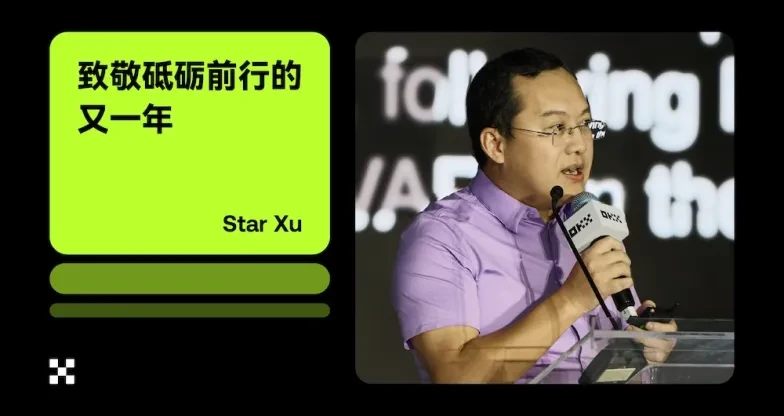
Paying Tribute to Another Year of Forging Ahead
As OKX's CEO, and also a builder who never forgets the original intention, I am proud to look back on the extraordinary growth and progress OKX has made this year. Despite many challenges, 2024 was still a year filled with focus, innovation, and resilience. We not only expanded and optimized our products, but also made important progress in launching transparent and regulatory-compliant localized businesses, while further expanding our global management team. Notably, after experiencing
January 29, 2026

2025: Steady Progress Toward Financial Freedom Together
—— Year-end letter from OKX Founder and CEO Star to global users "Financial freedom" is often misunderstood. It doesn't mean no rules, but rather having the right to choose while rules exist—and when the system is truly tested, it remains reliable and effective. This is exactly what we have consistently focused on in 2025. First, I would like to extend my sincere gratitude to global customers, partners, and regulatory agencies
January 16, 2026

OKX Officially Launches in Germany and Poland
Author: Erald Ghoos, CEO of OKX Europe Today is significant for OKX—and also for crypto users across Europe. We have officially launched fully compliant centralized cryptocurrency trading platforms in Germany and Poland! For us, this is not just a geographic expansion, but a commitment to building the cryptocurrency future the right way: secure, transparent, and meeting local needs. If you are in Germany
October 21, 2025
Partnership Upgrade! OKX Partners with Standard Chartered to Expand European Market
On October 15, OKX Europe CEO Erald Ghoos stated that OKX is expanding its strategic partnership with Standard Chartered to the European Economic Area (EEA). Earlier this year, OKX first partnered with Standard Chartered in the UAE to launch the collateral mirroring program—this is a
October 15, 2025