OKX Blockchain 60 Lessons | Special Episode 1: The Evolution of Money and Cryptocurrency
Hello everyone, I'm Xiao K. Today we'll be discussing: "The Evolution of Money and Cryptocurrency."
Most people don't understand cryptocurrency because we are born into a world of fiat currency. However, the money we use today has also evolved over a long period of time.
In the earliest days of primitive society, people engaged directly in barter Trading — for example, if I needed a cow, I would find a merchant and exchange something they needed. Because production resources were relatively simple, barter fully met people's daily needs, so at this stage there was no concept of "money" at all, and people had no awareness of using "money."
But later, as the things people traded became increasingly complex, they realized that this trading model was not only inconvenient but also had a major problem: exchange rates were chaotic, leading to price inequalities and inconsistent quantities when exchanging goods. People recognized the need for a medium that could serve as a standard to measure the prices of other goods, and thus the concept of "money" came into being.
In early times, shells and animal skins served as currency for a period, but due to their susceptibility to wear, difficulty in long-term preservation, and the advancement of metallurgical technology, they were gradually replaced by gold and silver.

For a considerable time afterward, precious metals like gold, silver, and copper, due to their relatively stable composition, resistance to natural disasters, and ease of preservation and portability, were particularly well-suited as "money" in circulation. As such, they served as "hard currency" and performed monetary functions for a long period in human history.
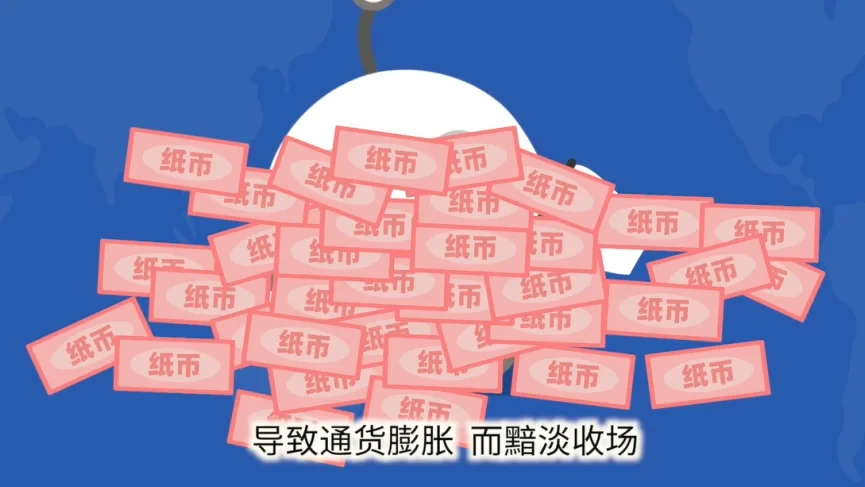
During this period, although many countries attempted to use paper money to replace gold and silver — for example, China saw the world's earliest paper money, Jiaozi, during the Song Dynasty — due to historical limitations, people failed to understand the laws of financial markets and issued money without restraint, ultimately leading to inflation. Paper money became increasingly worthless and lost credibility, eventually fading away.
It wasn't until the 20th century, after World War II, when the Bretton Woods System led by the United States was established, that the paper money system officially took center stage in history. The Bretton Woods System refers to the post-World War II international monetary system agreement centered on the US dollar. This agreement established clear rules and measures regarding currency exchange rates between countries, international balance of payments adjustment, and the composition of international Assets reserves. Simply put, the United States established a global monetary standard: each country's fiat currency was pegged to the US dollar, and the US dollar was pegged to gold. This formed the prototype of our current fiat currency system.
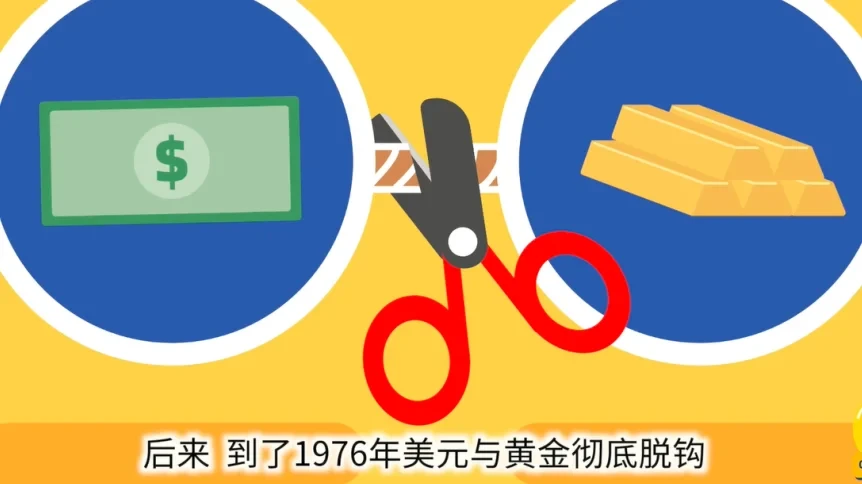
Later, in 1976, the US dollar completely severed its link with gold, giving rise to the credit monetary system we know today — the first globally implemented concept of converting money from a physical object into "credit." Therefore, the current fiat currency system also underwent a lengthy development; it is merely one form of currency at this point in time.
In recent decades, with the rise of the internet revolution and the growing flaws in the US dollar system — excessive dollar issuance causing financial crises to spread worldwide — new monetary concepts emerged to address these issues, and cryptocurrency was born.
Overall, with the development of society, money has evolved from shells to gold, and then to paper currency. In the long run, cryptocurrency is certainly a trend in the future evolution of money. Rather than staying conservative and unchanged, let's innovate and move forward, finding our own opportunities in this new wave of finance!
Special thanks to Professor Cao Huining for his assistance and guidance on this episode.
Disclaimer
This article may contain information about products not applicable in your region. This article is solely dedicated to providing general information and accepts no responsibility for any factual errors or omissions. The views expressed herein are those of the author and do not represent the views of OKX. This article is not intended to provide any advice, including but not limited to: (i) investment advice or investment recommendations; (ii) offers or solicitations to buy, sell, or hold digital assets; or (iii) financial, accounting, legal, or tax advice. Holdings in digital assets (including stablecoins) involve a high degree of risk and may fluctuate significantly, or even become worthless. You should carefully consider whether trading or holding digital assets is appropriate for you based on your financial situation. For questions specific to your circumstances, please consult your legal/tax/investment professional. The information contained in this article (including market data and statistics, where applicable) is for general reference purposes only. Although all reasonable precautions have been taken in preparing such data and charts, we accept no liability for any factual errors or omissions expressed herein. © 2025 OKX. This article may be reproduced or distributed in its entirety, or excerpts of 100 words or fewer may be used, provided that such use is non-commercial. Any reproduction or distribution of the full article must prominently state: "This article is copyrighted © 2025 OKX, used with permission." Permitted excerpts must cite the article title and include attribution, for example "Article title, [author name (if applicable)], © 2025 OKX." Some content may have been generated or assisted by artificial intelligence (AI) tools. Derivative works and other uses of this article are not permitted.
Show More
Recommended Reading
OKX Blockchain 60 Lessons | Episode 43: The Rise of the Mining Circle (Part 2) — The Rise of Bitmain
Hello everyone, I'm Xiao K. Today we'll be discussing: "The Rise of the Mining Circle (Part 2) — The Rise of Bitmain." In the previous lesson, we talked about two people who opened the door to capitalization and commercialization of the mining circle: one was "Pumpkin Zhang" — Zhang Nan-geng, and the other was "Fried Cat" — Jiang Xinyu. Although together they launched the golden age of the mining circle, the person who truly brought the mining industry to its peak was someone else — and that person's name is Wu Jihan.
2025年9月18日
OKX Blockchain 60 Lessons | Episode 2: Why Is the Blockchain Called Blockchain?
"OKX Blockchain 60 Lessons" is a blockchain educational animation series co-produced by OKX and Sina Technology, targeting users with zero knowledge of blockchain. Through articles, educational animations, and other formats, it covers blockchain concepts from the perspectives of concepts, technology, and applications. Through 5 major sections and 60 knowledge points, it vividly explains blockchain concepts. The content of this episode was guided by Meng Yan, Deputy Dean of the Digital Assets Research Institute. 2008, a global financial crisis erupted. On October 31st, "
2025年9月18日
OKX Blockchain 60 Lessons | Episode 16: What Is the PoW Consensus Mechanism
"OKX Blockchain 60 Lessons" is a blockchain educational animation series co-produced by OKX and Sina Technology, targeting users with zero knowledge of blockchain. Through articles, educational animations, and other formats, it covers blockchain concepts from the perspectives of concepts, technology, and applications. Through 5 major sections and 60 knowledge points, it vividly explains blockchain concepts. The content of this episode was guided by Huang Fangyu, Co-founder of Wanyou Computing Power. Hello everyone, I'm Xiao K. Today we'll be discussing:
2025年9月18日
OKX Blockchain 60 Lessons | Episode 51: 2019, Giants Enter the Market — Facebook's Cryptocurrency Dream
Previously, we discussed how in 2018, as blockchain was excessively hyped and prosperity peaked, a major de-bubbling process began, and the entire industry entered a winter. However, danger and opportunity coexisted — this cyclical downturn in the industry also provided international giants with the best opportunity to enter the market. In February 2019, JPMorgan Chase, a Wall Street financial beast, officially sounded the horn for international giants to enter the blockchain space. Subsequently, giants such as Goldman Sachs, UBS, Citibank, and Microsoft
2025年9月18日
OKX Blockchain 60 Lessons | Episode 7: What Does a Fork in the Blockchain Mean?
"OKX Blockchain 60 Lessons" is a blockchain educational animation series co-produced by OKX and Sina Technology, targeting users with zero knowledge of blockchain. Through articles, educational animations, and other formats, it covers blockchain concepts from the perspectives of concepts, technology, and applications. Through 5 major sections and 60 knowledge points, it vividly explains blockchain concepts. The content of this episode was guided by Bool Feimo, an Austrian School economist. A fork in the blockchain can be described as something unique to blockchain networks —
2025年9月18日

OKX Blockchain 60 Lessons | Episode 25: What Is the Lightning Network?
Hello everyone, I'm Xiao K. Today we'll be discussing: "What Is the Lightning Network"? The Lightning Network refers to a technology first proposed in 2015 by Joseph Poon and Thaddeus Dryja in a whitepaper, designed to solve Bitcoin trading congestion. This technology arose from a problem left over from Bitcoin's early days. Because when Bitcoin was originally designed, a
2025年9月18日