The Battle for Ethereum On-Chain Interests: A Look at the Recent Sharp Drop in Transaction Fees
On April 25, data from OK Link showed that Ethereum's average daily Gas price dropped to 53.24 Gwei, marking a new low since December 20, 2020. Compared to the high of 431.97 Gwei recorded on February 23, this represents a decline of 87.7%.
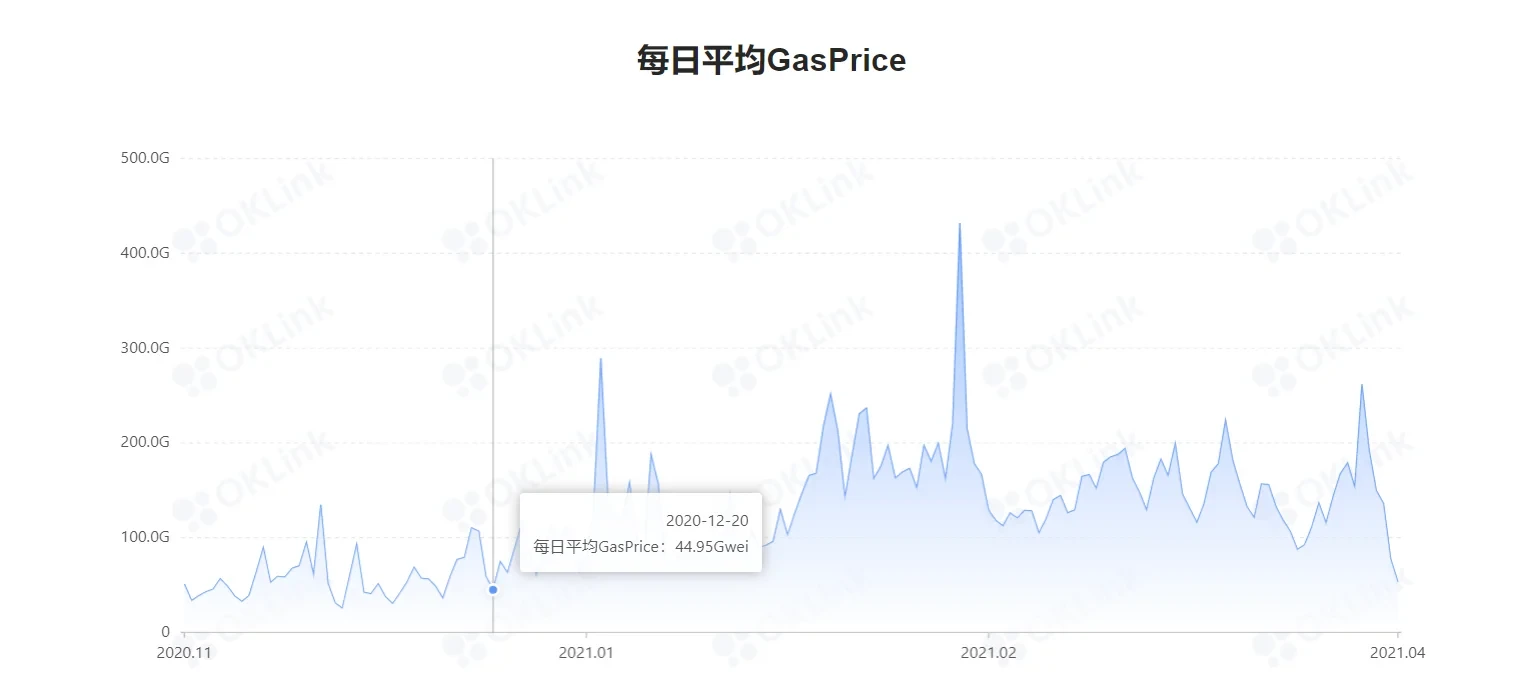
If only involving transfers without complex on-chain operations, based on Ethereum's closing price of $2,341.86 on April 25, the average daily single transaction fee was $2.62. In contrast, on February 23, when the price of a single Ethereum was $1,574.40, the average daily single transaction fee reached $14.28—a difference of nearly 4.5 times. No wonder many users happily expressed: "We can play on Ethereum again!"
Reports indicate three reasons for this sharp drop in Ethereum transaction fees: first, the cooling of the cryptocurrency market; second, Ethereum's Block Gas Limit increase from approximately 12.5 million Gwei to 15 million Gwei; and third, the adoption of Flashbots.
Previously, Ethereum had been widely criticized for its high transaction fees, which became a constraint on the expansion and implementation of the Ethereum ecosystem. Now, with on-chain fees significantly declining and Layer 2 solutions about to be widely deployed, Ethereum's "spring" seems to be returning.
Prohibitive Transaction Fees
In the second half of 2020, DeFi exploded. OK Link data shows that in less than a year, the Total Value Locked (TVL) in DeFi on Ethereum grew from $2 billion in early July 2020 to $85.4 billion—an increase of at least 41 times.
The wealth creation effect brought by DeFi led to increased on-chain activity on Ethereum. The number of on-chain transactions and active addresses repeatedly broke historical records set during the previous bull market peak.
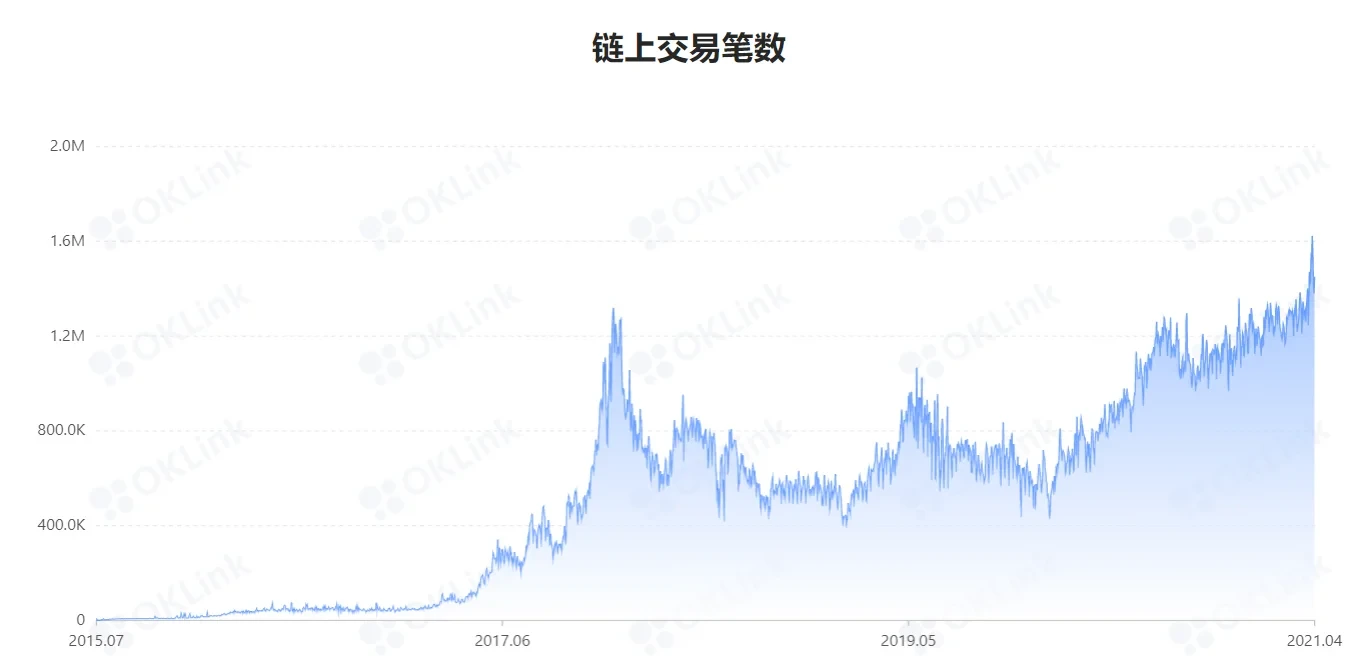
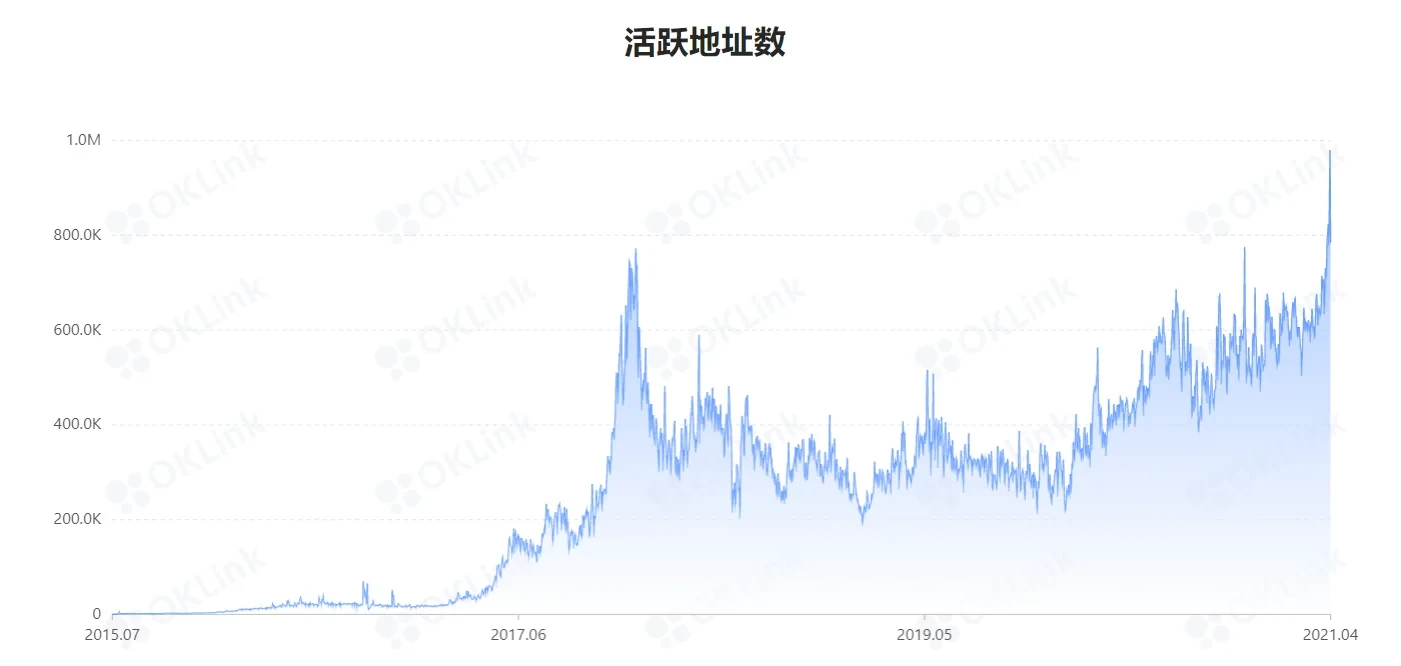
This also caused Ethereum transaction fees to surge. According to data from Glassnode, during the peak of the 2017-2018 bull market, the highest daily average Ethereum fee was only $4.11, with most remaining below $0.50. However, since the comprehensive explosion of the DeFi ecosystem in the second half of 2020, especially entering 2021, Ethereum daily fees above $10 became commonplace. On February 23, the average daily single transaction fee soared to an astonishing $38.24. This shows that high fees are indeed an important factor constraining the further development of the Ethereum network.
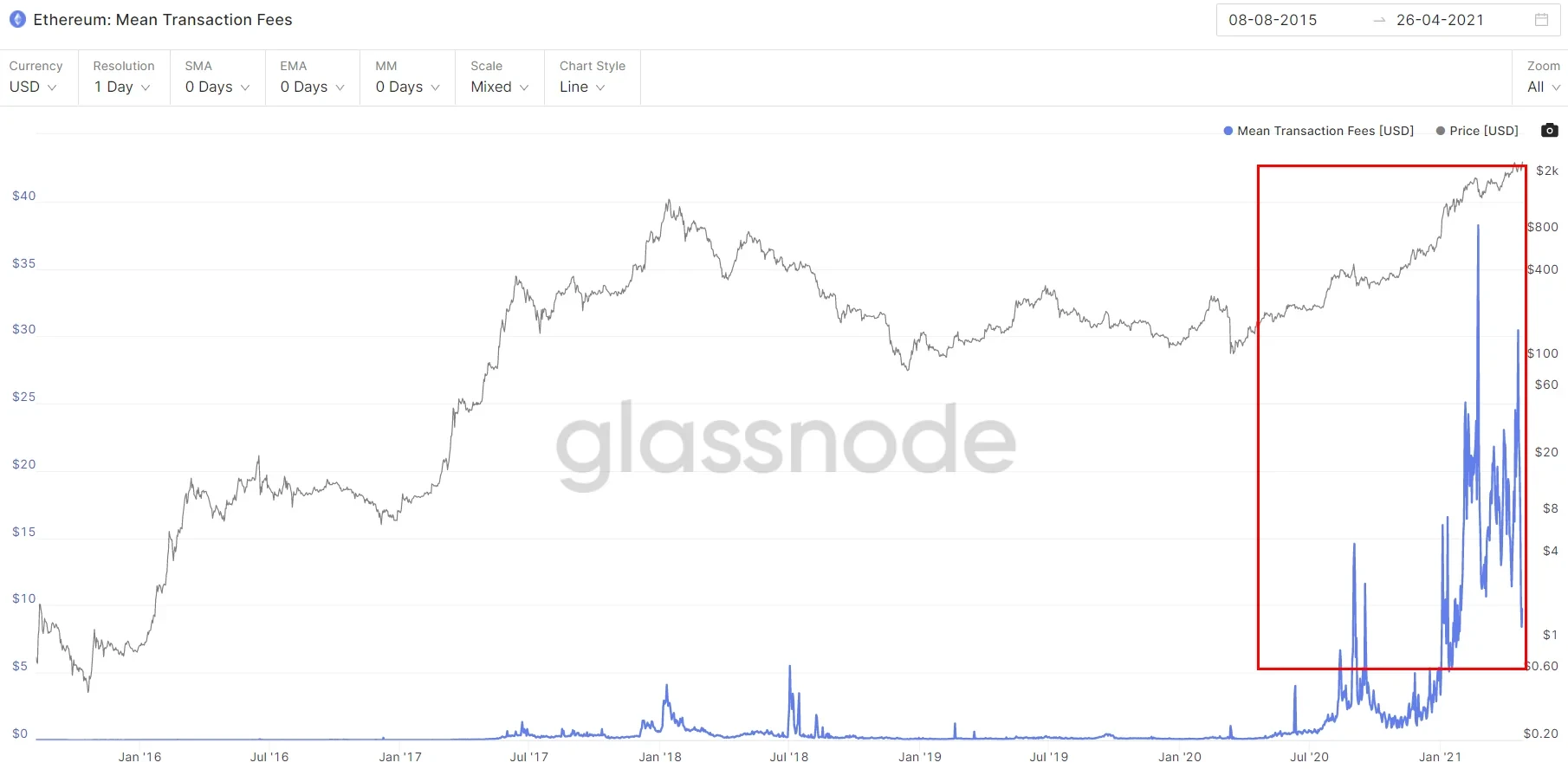
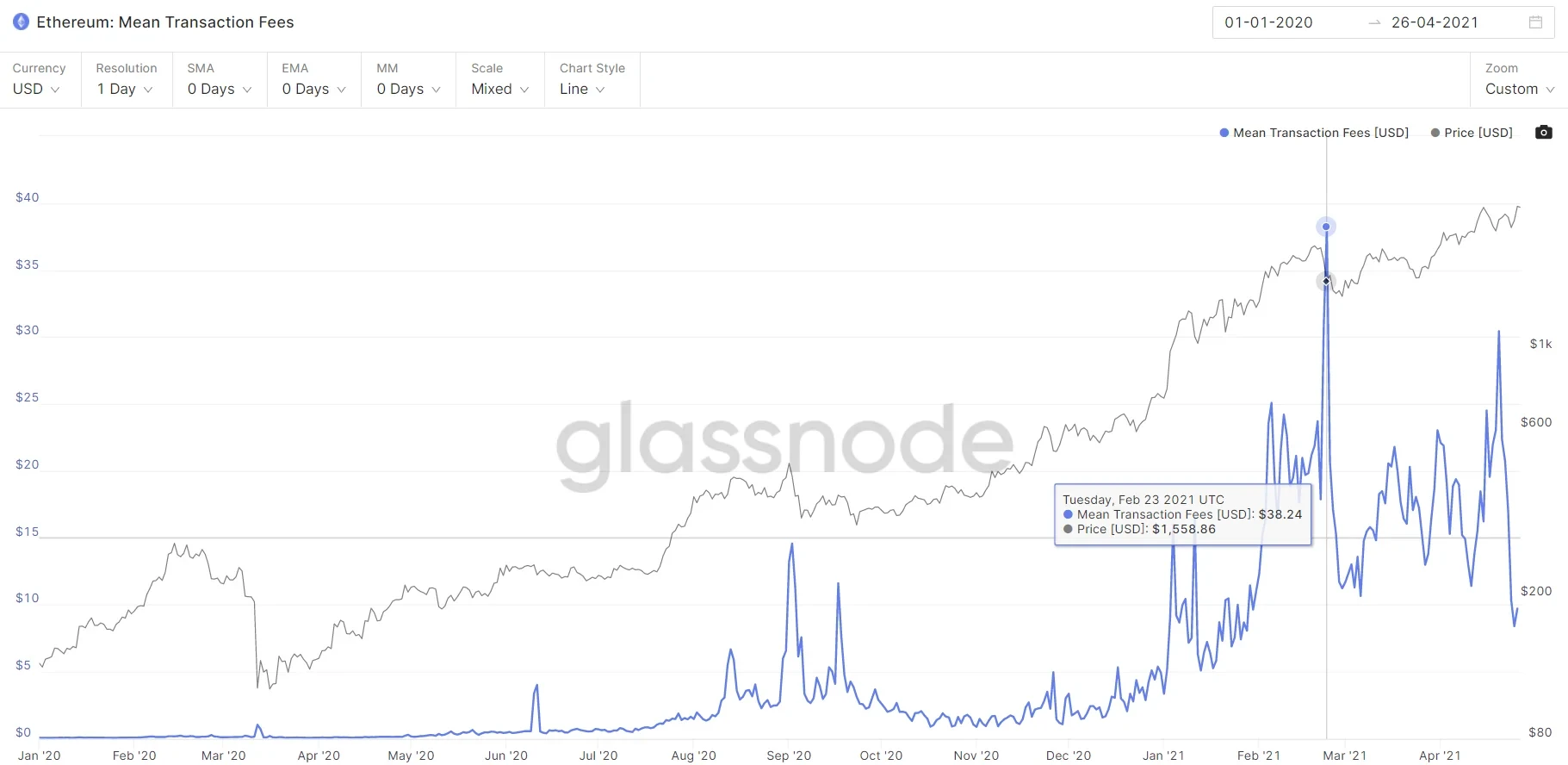
However, recently we've noticed that Ethereum's daily fees have started to decline again, returning to below $10, with Gas prices falling back to around 50 Gwei. Compared to the previous period when Gas prices often reached several hundred or even over a thousand Gwei, this is much more user-friendly.
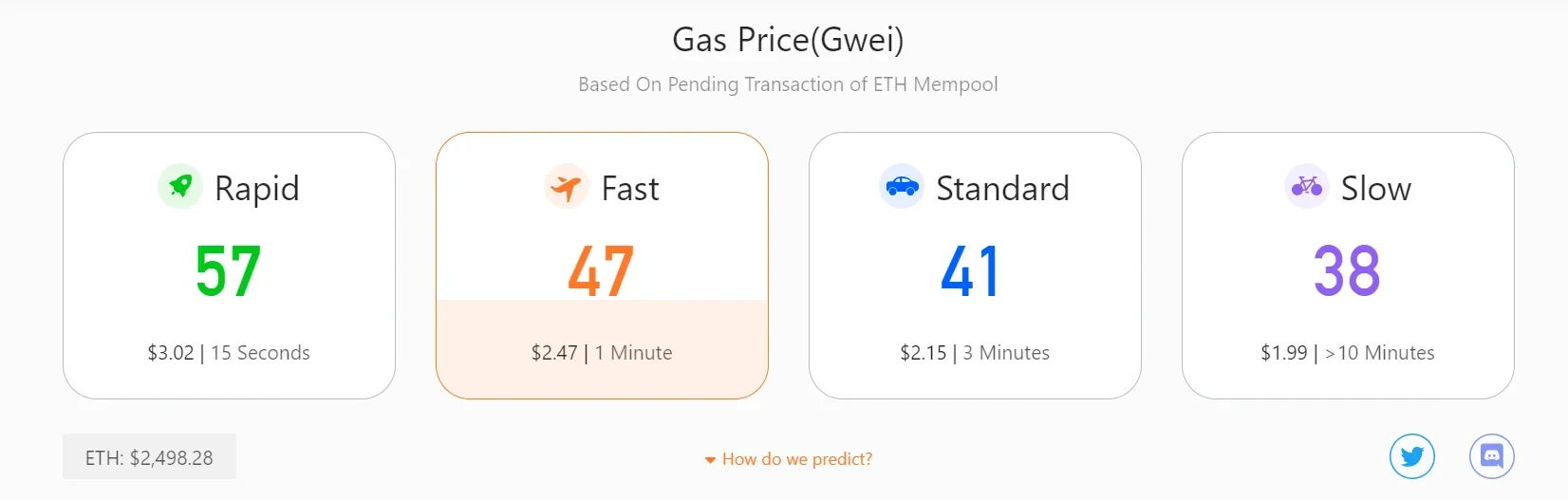
So why did Ethereum transaction fees suddenly drop so much? Before analyzing this question, we need to understand what Ethereum Gas is and how Ethereum fees are calculated.
Keyword: Gas
Sending transactions or interacting with dApps on Ethereum requires paying fees to miners, commonly known as transaction fees. The fee calculation formula is: Transaction Fee (ETH) = Gas Price × Gas Used. Gas is essentially a measure of the computational work required to execute an operation on Ethereum.
The unit of Gas price is Gwei, and its relationship to Ethereum is 1 ETH = 1,000,000,000 Gwei. Therefore, Gas prices are affected by two factors: first, the price of Ethereum itself—for example, with the same Gas price of 50 Gwei, when Ethereum is at $1,500 versus $2,500, the corresponding dollar value of the Gas price will change. Second, Gas prices themselves are not fixed and can be manually set. Since Ethereum's fee model operates on "miners prioritize packaging higher-bid transactions," the more active on-chain activity and network congestion leads users to tend to increase their Gas prices to ensure transactions are confirmed quickly. This is also why Gas prices previously surged as high as 1,900 Gwei.
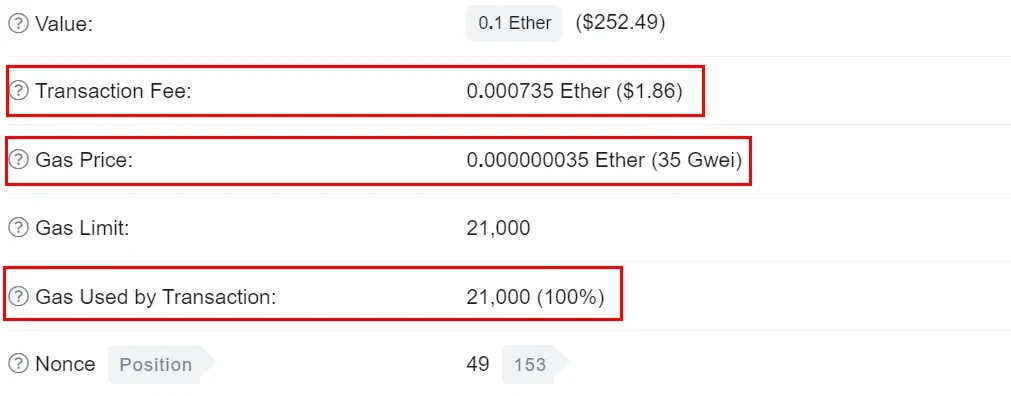
The amount of Gas used relates to the computational requirements of the transaction. The Ethereum system defines two types of accounts: Externally Owned Accounts (EOA) and Contract Accounts. Simply put, EOAs are controlled by private key holders and can be understood as the accounts users use, while Contract Accounts are controlled by smart contract code. Ordinary transfer transactions only invoke EOAs and consume a fixed 21,000 Gas, as shown below.
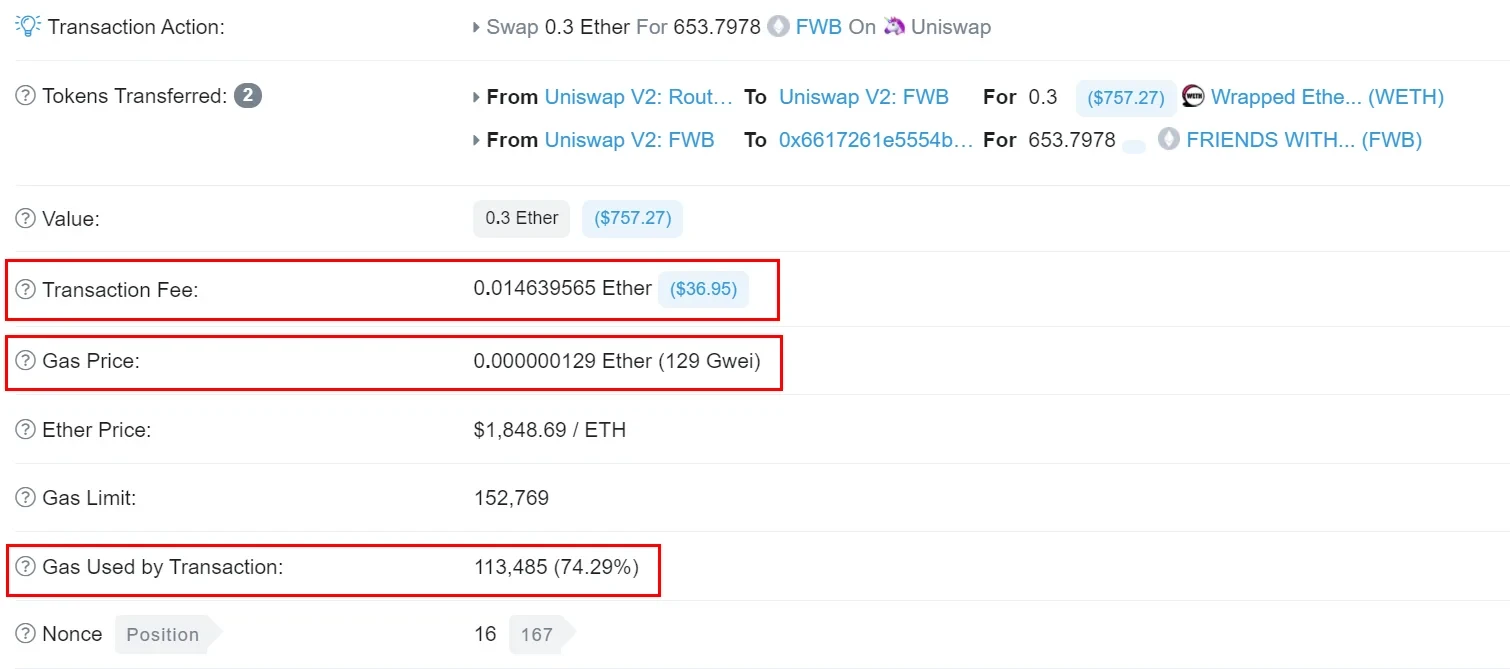
However, if complex on-chain operations are involved, such as participating in liquidity mining or buying/selling tokens on a DEX, the amount of Gas consumed increases. In the figure below, this user purchases tokens on Uniswap; the transaction consumes 113,485 Gas, and when multiplied by the then-Gas price of 129 Gwei, the final fee is $36.95.
After the above analysis, we understand why it was previously said that fees were soaring and mining on Ethereum was unfriendly to retail investors. First, due to profitability, fierce on-chain competition drove Gas prices higher. Second, mining operations are not simple transfer actions but involve contract calls, naturally consuming more Gas. Finally, with Ethereum prices at high levels, when Gas price and Gas consumed are multiplied, fees of ten, twenty, or thirty dollars are naturally normal.
Fees Down: Is Ethereum's "Spring" Here?
So why have fees recently dropped? We analyze this in relation to three reasons.
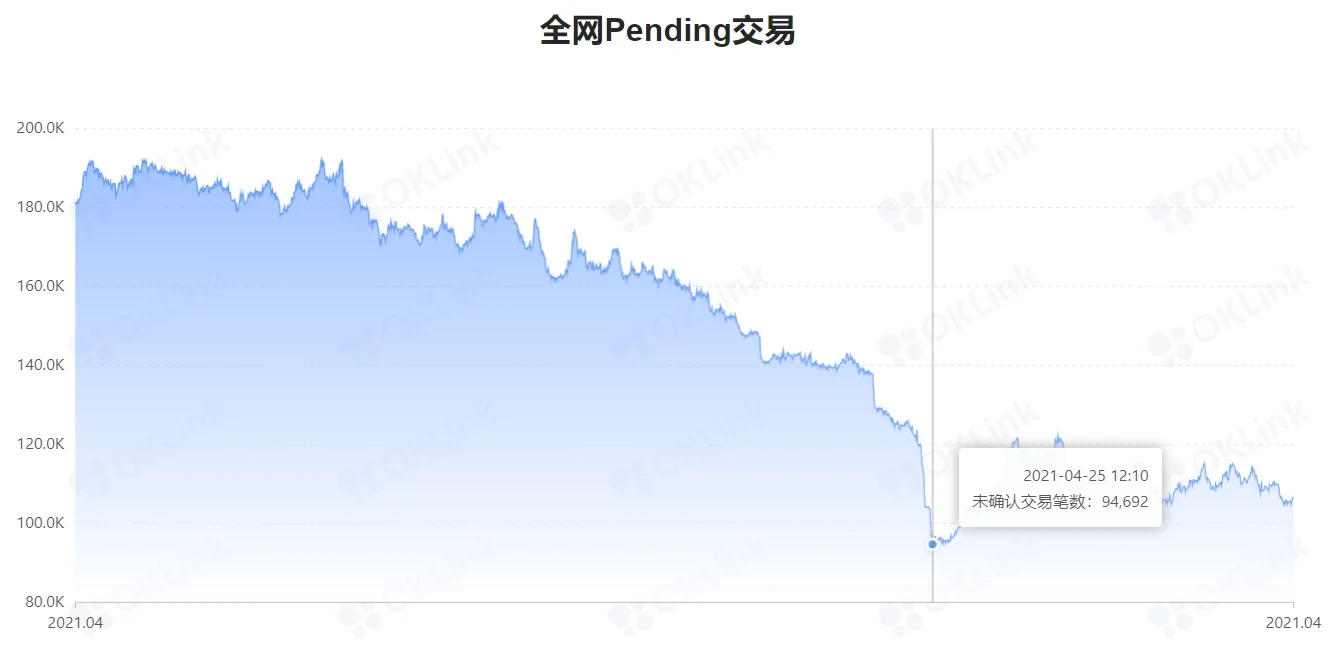
First, due to a series of policy crackdowns in recent days—such as the Turkish central bank potentially banning citizens from using and purchasing cryptocurrency, rumors that the U.S. Department of the Treasury might charge financial institutions with using crypto assets for money laundering, and the Biden administration planning to levy a 39.6% capital gains tax on individuals earning $1 million or more—the cryptocurrency market's heat cooled sharply. Bitcoin, after hitting a historic high of $64,846.9, declined all the way to a low of $46,988.1. Although Ethereum was supported by on-chain ecosystem activity, its price was also affected, falling from its April 23 historic high of $2,644.0 to a low of $2,107.9. After a peak of DeFi lending margin additions and liquidations, on-chain activity declined. Currently, with fewer Ethereum pending transactions and network congestion alleviated, Gas prices naturally came down.
Second, on April 22, Ethereum increased the Block Gas Limit from approximately 12.5 million Gwei to 15 million Gwei, a 20% increase. The Block Gas Limit means the maximum total Gas allowed per block, which determines how many transactions can be packaged in a block. The increase in Block Gas Limit means individual blocks can package more transactions, which greatly alleviates on-chain congestion and consequently lowers Gas prices.
Third is the adoption of Flashbots. This view comes from Anthony Sassano, co-founder of Eth Hub. Before discussing Flashbots, we need to introduce the concept of Miner Extractable Value (MEV). As is well known, an important reason for Ethereum's soaring fees is that arbitrage bots, to win arbitrage opportunities, aggressively raise Gas prices while maintaining certain profit margins to ensure arbitrage transactions are prioritized for block inclusion. In this vicious bidding war for Gas, Ethereum's Gas prices are continuously pushed higher, leading to surging fees.
Since the number of transactions per block is limited, miners have complete autonomy in selecting which pending transactions from the memory pool (Mempool) to process. To obtain more profits, miners typically process transactions with the highest Gas prices. Therefore, miners can leverage their arbitrary ability to reorder transactions to extract additional profits from users, and the value created from this is called Miner Extractable Value (MEV).
Of course, most forms of MEV we see today don't come from miners themselves but from third-party bots. These bots manipulate their transaction order within a block by changing the transaction fees paid to miners, so current MEV is also referred to as Maximum Extractable Value.
To what extent has MEV grown? According to statistics from the Explore.Flashbots website, since January 1, 2021, extracted MEV has exceeded $410 million, with extracted MEV valued at approximately $68.9 million in the last 30 days and $4.7 million in the last 24 hours.
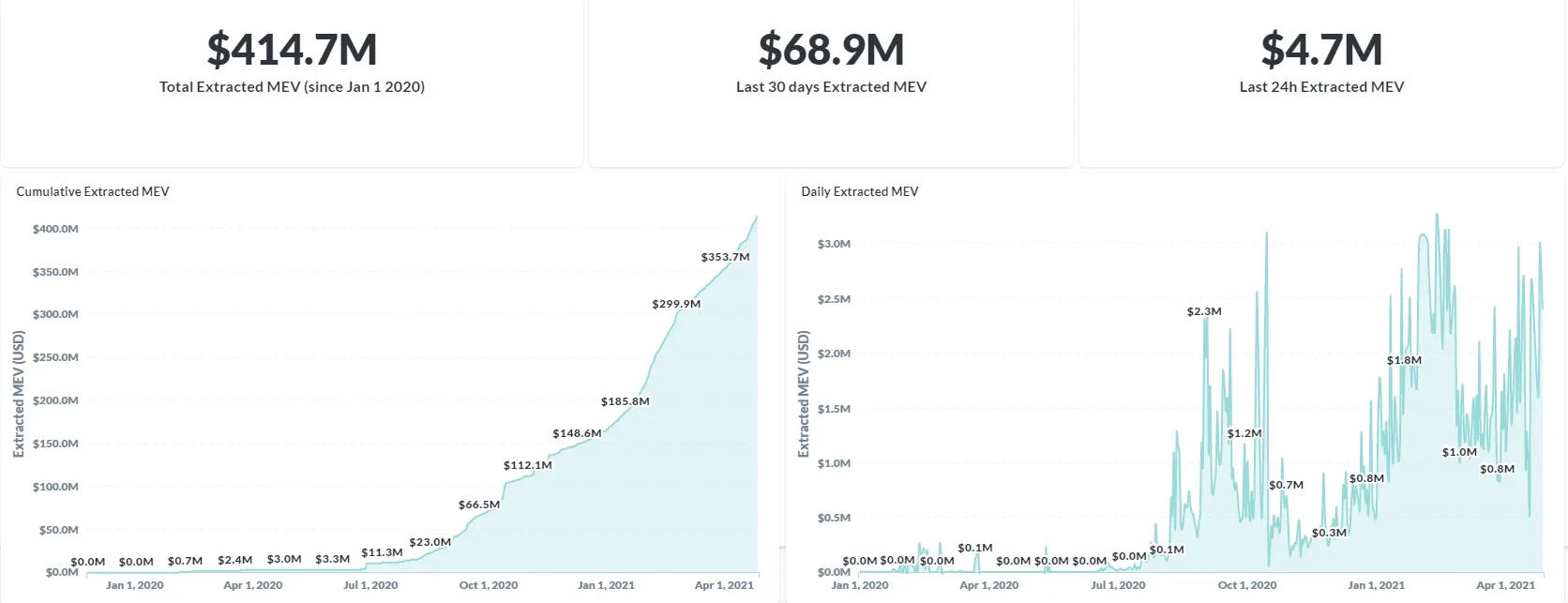
The development of Ethereum's on-chain ecosystem provides ample opportunities for MEV, but MEV comes at the expense of ordinary users. Therefore, solving the MEV problem as much as possible is an important pathway to reducing Ethereum fees. Flashbots is a research and development organization established to mitigate the network congestion, block space tension, and potential threats to Ethereum consensus security caused by MEV.
According to industry media reports, Flashbots' current solution to mitigate MEV consists of three parts: visualizing MEV data (MEV-Explore), introducing MEV-Geth to reduce Gas fees, and distributing MEV returns to all ecosystem participants.
Stephane, an anonymous developer of the Mist protocol, stated via Twitter: "News from a major Ethereum mining pool indicates that Flashbots is the reason Gas prices have recently become cheaper, because traders have shut down their PGA bots." Stephane further stated, "Flashbots will be able to significantly reduce the Gas price paid by regular Ethereum users while increasing miners' overall fees." PGA bots refer to bots used for on-chain arbitrage.
In the short term, Ethereum fees have declined under the influence of three factors, but these three points are still not "fundamental" solutions. First, Ethereum's Block Gas Limit increase from 10 million to 12.5 million Gwei was approved on June 19, 2020, when DeFi had not yet exploded. Now with DeFi in large-scale development, the Block Gas Limit increase of only 20% may not be sustainable. Moreover, blindly increasing the Block Gas Limit could raise network security and centralization issues, so this can only alleviate rather than solve the contradiction. Second, Ethereum has shown strong price performance in the past two days, with its total market capitalization exceeding $29 million, leading a strong rally in altcoins. With on-chain activity recovering, we can foresee that Gas prices will rise as on-chain activity increases. Finally, Flashbots' implementation is still in the exploratory stage, and proposed solutions remain to be verified.
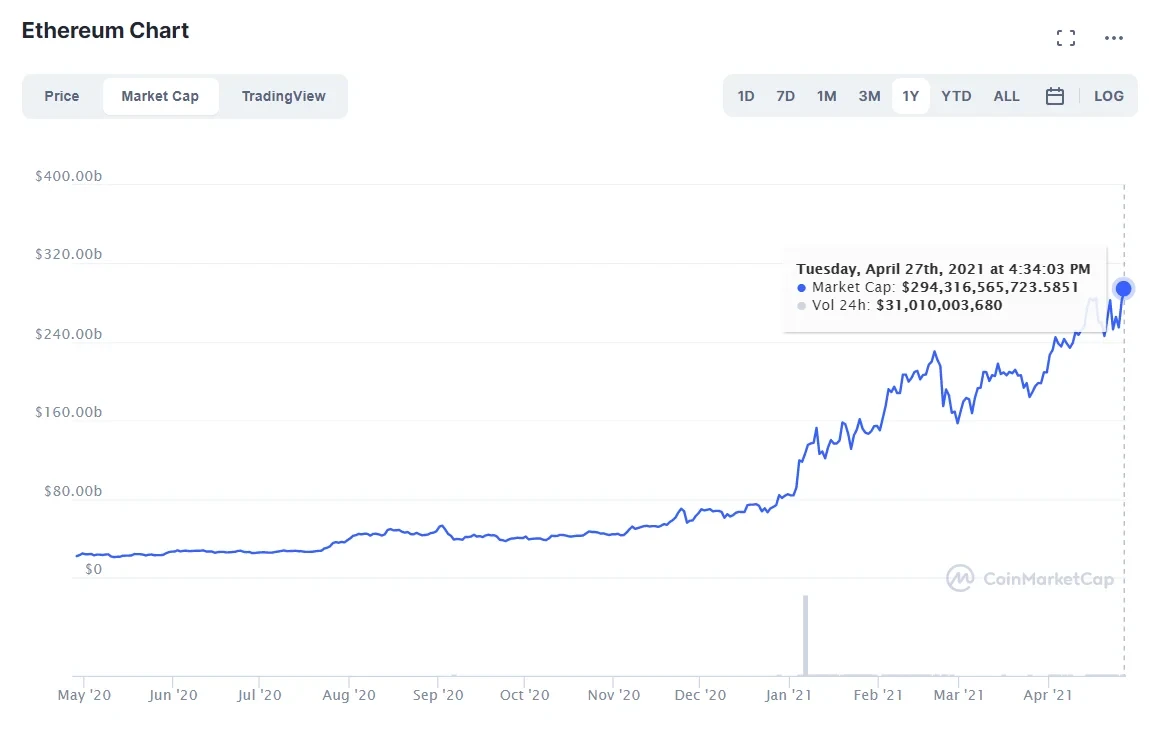
Reports indicate that the rapid development of other public chains is also accelerating the capture of Ethereum's resources, which is another reason why the public is again calling for the speedy launch of Ethereum Layer 2 solutions. In the short term, with lower fees, we can enjoy playing on Ethereum again, but maintaining fees at a consistently low level still requires a long journey for Ethereum.
Disclaimer
This article may contain product-related content not applicable to your region. This article is intended to provide general information only and does not assume responsibility for any factual errors or omissions herein. This article represents only the author's personal views and does not represent the views of OKX. This article is not intended to provide any advice, including but not limited to: (i) investment advice or investment recommendations; (ii) offers or solicitations to buy, sell, or hold digital assets; or (iii) financial, accounting, legal, or tax advice. Holding digital assets (including stablecoins) involves high risk, may fluctuate significantly, and may even become worthless. You should carefully consider whether trading or holding digital assets is suitable for you based on your financial situation. For questions regarding your specific circumstances, please consult your legal/tax/investment professional. The information appearing in this article (including market data and statistics, if any) is for general reference only. Although we have taken all reasonable precautions in preparing these data and charts, we assume no responsibility for any factual errors or omissions expressed herein. © 2025 OKX. This article may be reproduced or distributed in its entirety, or excerpts of 100 words or less may be used, provided such use is non-commercial. Any reproduction or distribution of the entire article must prominently state: "Copyright © 2025 OKX. Used with permission." Permitted excerpts must cite the article title and include attribution, for example "Article Title, [Author Name (if applicable)], © 2025 OKX". Some content may be generated or assisted by artificial intelligence (AI) tools. Derivative works or other uses of this article are not permitted.
Show More
Recommended Reading
OKX Pay: Opening a New Era of Next-Generation Crypto Payments
The choice of tens of millions of users. Register OKX to enjoy the ultimate trading experience and diverse wealth management products. A letter from OKX CEO Star: Today, we are officially launching the first version of OKX Pay to over 100 million global users. As the industry's first payment application to truly achieve non-custodial and compliant integration, OKX Pay will be embedded within the OKX App, currently available in select markets and expected to fully
March 22, 2026

New Chapter: Building Next-Generation Financial Infrastructure Together
The partnership between OKX and Intercontinental Exchange (ICE) marks an important moment for OKX and holds equally profound significance for the evolution of the entire digital assets market. ICE establishes and operates the world's most important financial infrastructure, including the New York Stock Exchange and global derivatives and clearing platforms. This investment by ICE in OKX and joining our board reflects both parties' shared belief—digital assets technology will serve financial markets
March 10, 2026
Tribute to Another Year of Forging Ahead
As OKX's CEO and a builder who remains true to our original mission, I proudly look back on OKX's extraordinary growth and progress this year. Despite numerous challenges, 2024 was a year of focus, innovation, and resilience. We not only expanded and optimized our products but also made significant progress in launching transparent and compliant localized operations, while further strengthening our global management team. Notably, after experiencing
January 29, 2026

2025: Steady Progress Toward Financial Freedom Together
— Year-End Letter from OKX Founder and CEO Star to Global Users "Financial freedom" is often misunderstood. It doesn't mean an absence of rules, but rather the power to choose within the framework of rules—and when the system is truly tested, it remains reliable and effective. This is the direction we've remained focused on throughout 2025. First, I want to extend my sincere gratitude to our global clients, partners, and regulatory bodies
January 16, 2026

OKX Officially Launches in Germany and Poland
Author: Erald Ghoos, CEO of OKX Europe Today is a significant moment for OKX—and for cryptocurrency users across Europe. We have officially launched our fully compliant centralized cryptocurrency trading platform in Germany and Poland! For us, this is not merely a geographic expansion, but a commitment to building the cryptocurrency future the right way: secure, transparent, and meeting local needs. If you're in Germany
October 21, 2025

Partnership Expanded! OKX Partners with Standard Chartered to Expand into European Markets
On October 15, OKX Europe CEO Erald Ghoos announced that OKX is expanding its strategic partnership with Standard Chartered to the European Economic Area (EEA). Earlier this year, OKX first partnered with Standard Chartered in the UAE to launch the Collateral Mirroring program—a
October 15, 2025