Do crypto assets futures markets affect spot market price movements?
According to Tokeninsigt data, the total trading volume in crypto assets futures markets reached $12.314 trillion throughout 2020, while the spot market recorded over $21 trillion in annual trading volume. Looking at the dynamic data, the total market open interest at the beginning of 2020 was $3.51 billion, which grew to $17.03 billion by year-end—an equivalent increase of 389.4%. Q4 2020 futures trading volume was $5.35 trillion, a quarter-over-quarter increase of 98.1%, marking the first time quarterly futures volume exceeded spot trading volume.
Looking back at the development history of the crypto assets futures market, CME Group and CBOE (Chicago Board Options Exchange) are two milestones that cannot be overlooked.
In early December 2017, the CFTC (U.S. Commodity Futures Trading Commission) officially approved CME Group and CBOE's applications to list Bitcoin futures contracts, meaning Wall Street funds gained a new channel to participate in Bitcoin trading.
At that time, Bitcoin was in the peak phase of its third major bull run in history. As OKX market data shows, Bitcoin was trading at around $9,000 in December 2017. Following the CFTC's announcement, Bitcoin prices surged immediately, climbing more than $10,000 within half a month to reach the previous bull market's high of $19,821.9. It then entered a three-year bear market.
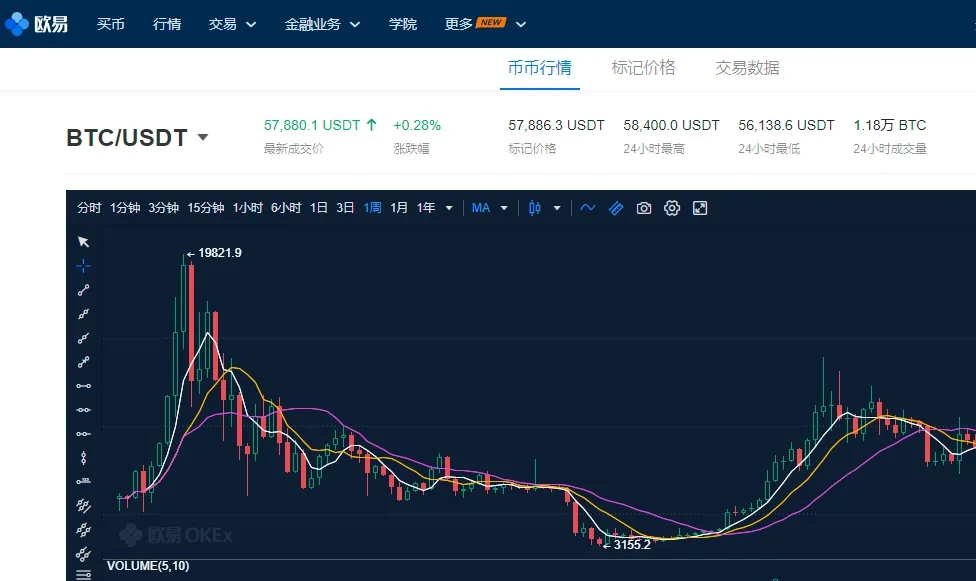
(Bitcoin price trend from 2017 to 2019)
Whether the launch of Bitcoin block trading on Wall Street at the end of 2017 and the end of the Bitcoin bull run was a coincidence in timing or had some deeper connection—whether Wall Street giants potentially ended this bull run through short futures positions—became a widely discussed topic.
From the Tokeninsigt data above, as this bull run progressed, both the trading volume and open interest in the futures market grew significantly compared to the spot market. So, does the futures market exert any influence on the spot market in Bitcoin trading?
Before discussing this question, let's briefly review the main functions of futures trading in financial markets.
First, the arbitrage function. In theory, futures and spot market prices should be aligned, but when the price difference between the two markets becomes too large, arbitrage opportunities arise, allowing traders to buy low and sell high for profit.
Second, the hedging function. The primary reason futures contracts were originally created was to hedge against price risk. For example, if a trader holds a spot position and plans to sell at a future date, they can mitigate losses from potential price declines by taking an equivalent short position in the futures market.
Third, the price discovery function. Prices are determined by market supply and demand. When market information is fully disclosed, investors' sentiment directly drives price movements, and the executed price becomes the benchmark for buying and selling.
Fourth, the speculative function. In the futures market, those willing to bear high market risk are equally entitled to high returns.
Returning to the Bitcoin futures market, while it differs from traditional futures in terms of underlying assets (agricultural products, oil, metals, and other commodities and financial assets) and settlement methods (primarily in USD), there is no fundamental difference in trading mechanisms. This can be seen from CME's Bitcoin futures trading rules below.
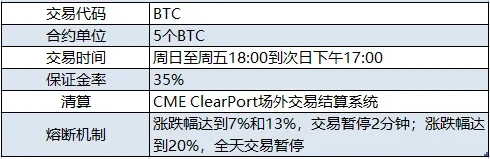
(CME Bitcoin futures trading rules)
Now let's look at another set of data. According to CME's official data, over 2.2 million Bitcoin futures contracts were traded on the CME platform in 2020 (each contract worth 5 Bitcoin), equivalent to 11 million Bitcoin. Particularly after Bitcoin broke above its 2017 all-time high on December 1st, market trading sentiment continued to heat up. A CME representative noted: "(In 2020), the Bitcoin average daily volume (ADV) in December reached 11,179 contracts contracts (equivalent to 55,900 BTC), representing a year-over-year increase of 114%."
However, as Bitcoin open interest grew on CME, Bitcoin prices did not decline significantly—instead, they surged higher and continued to hit new highs.
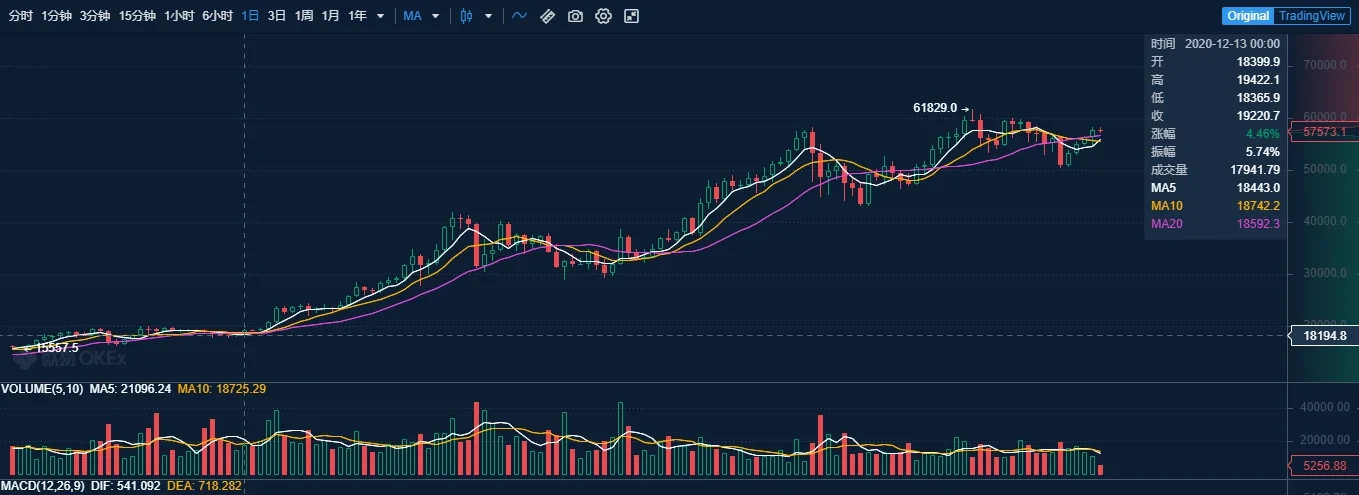
(Bitcoin price trend since December 2020, source: OKX)
Similarly, on OKX markets, Bitcoin futures open interest and trading volume both rose simultaneously.
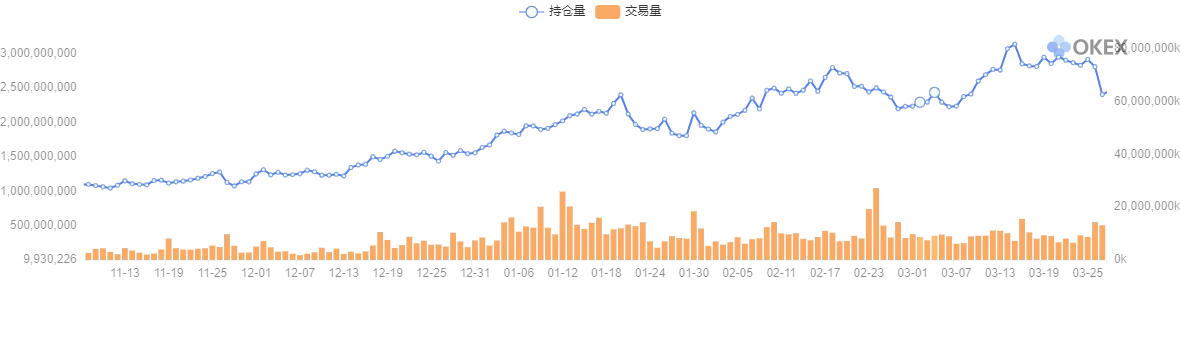
(OKX Bitcoin futures open interest and trading volume trend since December 2020)
Let's return to CME, given its significant position in the Bitcoin futures market. Traders don't just focus on its open interest and trading volume. Since it does not support 24-hour trading, compared to 7*24H trading platforms like OKX, during periods of extreme market volatility, so-called "gaps" can form. The closing of these "gaps" is a closely watched topic—statistics show that historically, the market has closed CME gaps more than 90% of the time. This has become one of the bases for people speculating that large capital influences the spot market through the futures market, though this lacks strong supporting evidence. Taking the most recent CME gap as an example, on Monday's open, CME Bitcoin futures gapped up, creating a $54,285–$55,360 gap. However, as of now, this gap has not been fully closed.
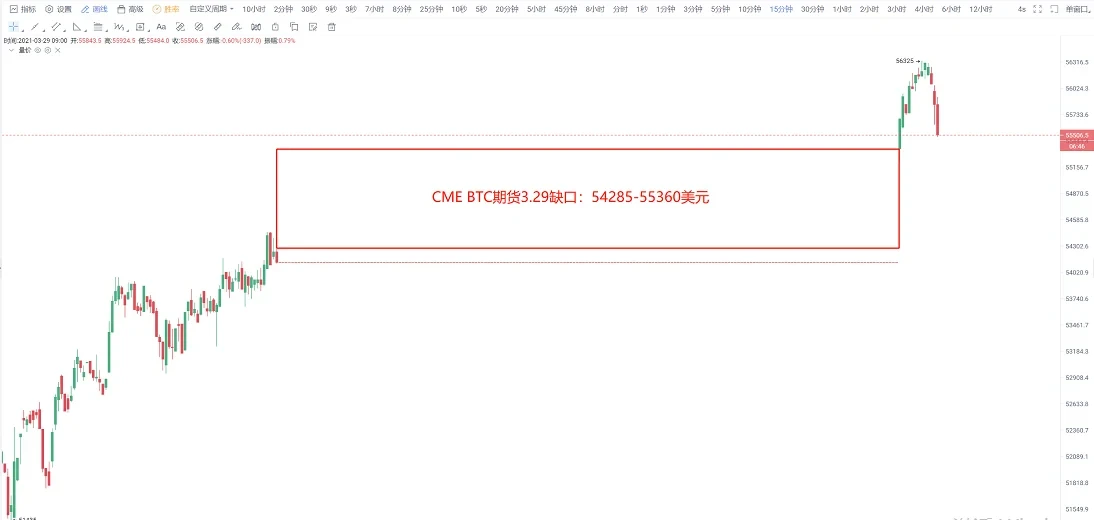
At least Bitcoin's price action over the past six months demonstrates that there is no clear evidence of large capital shorting Bitcoin through the futures market.
So, why does this misconception arise?
A key factor is the repeated reinforcement of the view that "Bitcoin is a market manipulated by large funds," and investors default to accepting and even embrace this narrative.
Reinforcing this viewpoint is none other than the U.S. Securities and Exchange Commission (SEC). Every time the agency has rejected a Bitcoin ETF application, it has listed a series of reasons that change slightly over time, but one thing remains constant: Bitcoin is vulnerable to market manipulation.
As an authoritative institution, the SEC's negative characterization of Bitcoin has become deeply ingrained. Of course, those reinforcing such views also include crypto conspiracy theorists, investors with a poor understanding of the industry, and media outlets.
Additionally, many investors believe that the rapid growth of derivatives trading impacts spot prices. These investors reason that if Bitcoin is easily manipulated, then with the added leverage of derivatives, manipulating prices would become even easier.
But is this actually the case? Clearly not. Let's look at the more mature U.S. financial markets. In traditional financial markets, derivatives trading volume far exceeds spot trading—futures trading volume is approximately 7 times that of spot trading. By this metric, the U.S. stock market is clearly more compelling as evidence. Taking the S&P 500 index as an example, by comparing the S&P 500 index and leveraged instruments like "S&P 500 continuous futures" with Bitcoin spot and futures trading, we can observe that the growth of the futures market did not affect the S&P 500's unilateral bull run that began in 2008. Over ten years, the S&P 500 rose from around 800 to a high of 4,000—a 7x increase.
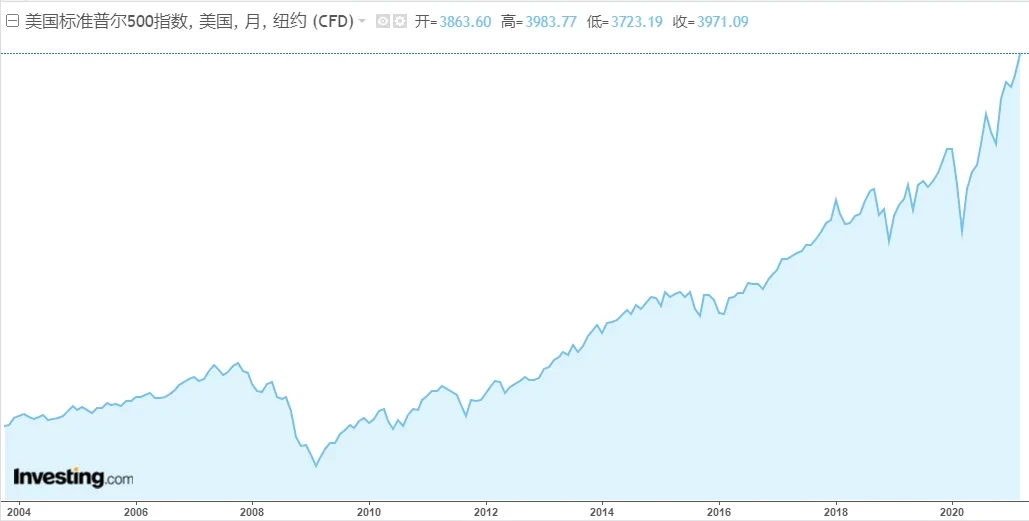
(S&P 500 trend over the past 10 years, source: Investing.com)
Therefore, based on all available information, it would be premature to conclude that the Bitcoin futures market drives spot market price movements. The most complex issues are often best resolved with the simplest common sense. Placing Bitcoin spot price changes within the context of global supply and demand, and allowing the futures market to fulfill its roles of arbitrage, hedging, and price discovery—with Bitcoin's market cap breaking back above $1 trillion, this emerging asset class is being re-evaluated by more and more institutional investors, government agencies, and retail investors. Well-known companies including Tesla and Meitu have chosen to hold Bitcoin, and global payment giants such as PayPal and Visa have announced support for crypto assets payments including Bitcoin. As Bitcoin's market capitalization grows and liquidity continues to strengthen, manipulating its price—through either the futures or spot market—will become increasingly difficult.
Disclaimer: Digital assets trading involves significant risk. This material should not be relied upon as an investment decision-making basis, nor should it be construed as investment trading advice. Please ensure you fully understand the risks involved and invest with caution. The OKX Academy provides information for reference only and does not constitute any investment advice. All investment activities by users are unrelated to this site.
Disclaimer
This article may contain product information not applicable to your region. This article is committed to providing general information and does not accept responsibility for any factual errors or omissions. This article represents the author's personal views only and does not represent OKX's views. This article is not intended to provide any advice, including but not limited to: (i) investment advice or investment recommendations; (ii) offers or solicitations to buy, sell, or hold digital assets; or (iii) financial, accounting, legal, or tax advice. Holdings in digital assets (including stablecoins) involve a high degree of risk and may fluctuate significantly, or even become worthless. You should carefully consider whether trading or holding digital assets is appropriate for you based on your financial situation. For questions specific to your circumstances, please consult your legal/tax/investment professional. The information contained in this article (including market data and statistics, where applicable) is provided for general reference purposes only. Although we have taken all reasonable precautions in preparing such data and charts, we do not accept any responsibility for factual errors or omissions expressed herein. © 2025 OKX. This article may be reproduced or distributed in its entirety, and excerpts of 100 words or fewer may be used, provided that such use is non-commercial in nature. Any reproduction or distribution of the full article must prominently state: "This article is copyrighted © 2025 OKX, used with permission." Permitted excerpts must cite the article title and include attribution, for example: "Article title, [author name if applicable], © 2025 OKX." Some content may have been generated or assisted by artificial intelligence (AI) tools. Derivative works or other uses of this article are not permitted.
Show More
Recommended Reading
OKX Pay: Ushering in a New Era of Next-Gen Crypto Payments
The choice of tens of millions of users. Register with OKX and enjoy an exceptional trading experience along with a diverse range of wealth management products. A letter from OKX CEO Star: Today, we officially launched the first version of OKX Pay to over 100 million global users. As the industry's first truly integrated non-custodial and compliant payment application, OKX Pay is embedded within the OKX App and is currently available in select markets, with a full global rollout expected
2026年3月22日

A New Chapter: Building the Next Generation of Financial Infrastructure Together
The collaboration between OKX and the Intercontinental Exchange (ICE) marks a significant milestone for OKX and holds profound meaning for the evolution of the entire digital assets market. ICE builds and operates the world's most critical financial infrastructure, including the New York Stock Exchange and global derivatives and clearing platforms. This strategic investment by ICE in OKX and its joining of our Board of Directors reflects our shared conviction that digital assets technology will
2026年3月10日
Reflecting on Another Year of Building
As CEO of OKX and a builder who stays true to the mission, I take great pride in looking back on the remarkable growth and progress OKX has achieved this year. Despite challenges, 2024 was a year defined by focus, innovation, and resilience. We not only expanded and optimized our products but also made significant strides in launching transparent, regulation-compliant localized businesses while further strengthening our global management team. It is worth noting that after
2026年1月29日

2025: Steady Progress Toward Financial Freedom
— An End-of-Year Letter to Global Users from OKX Founder & CEO Star "Financial freedom" is often misunderstood. It does not mean the absence of rules, but rather having the freedom to choose even when rules exist—and ensuring that when the system is truly tested, it remains reliable and effective. This has been our unwavering focus throughout 2025. First, I would like to extend my sincere gratitude to our global customers, partners,
2026年1月16日

OKX Officially Launches in Germany and Poland
By Erald Ghoos, CEO of OKX Europe — Today is a significant day for OKX and for crypto users across Europe. We have officially launched a fully compliant centralized cryptocurrency trading platform in Germany and Poland! For us, this is more than a geographic expansion—it is a commitment to building the future of cryptocurrency the right way: secure, transparent, and tailored to local needs. If you are based in Germany
2025年10月21日

Partnership Upgrade! OKX and Standard Chartered Expand into Europe
On October 15, Erald Ghoos, CEO of OKX Europe, stated that OKX is expanding its strategic partnership with Standard Chartered to the European Economic Area (EEA). Earlier this year, OKX first partnered with Standard Chartered in the UAE to launch the Collateral Mirroring program—a
2025年10月15日