London Upgrade Officially Activated: Has Ethereum Entered "Deflation"?
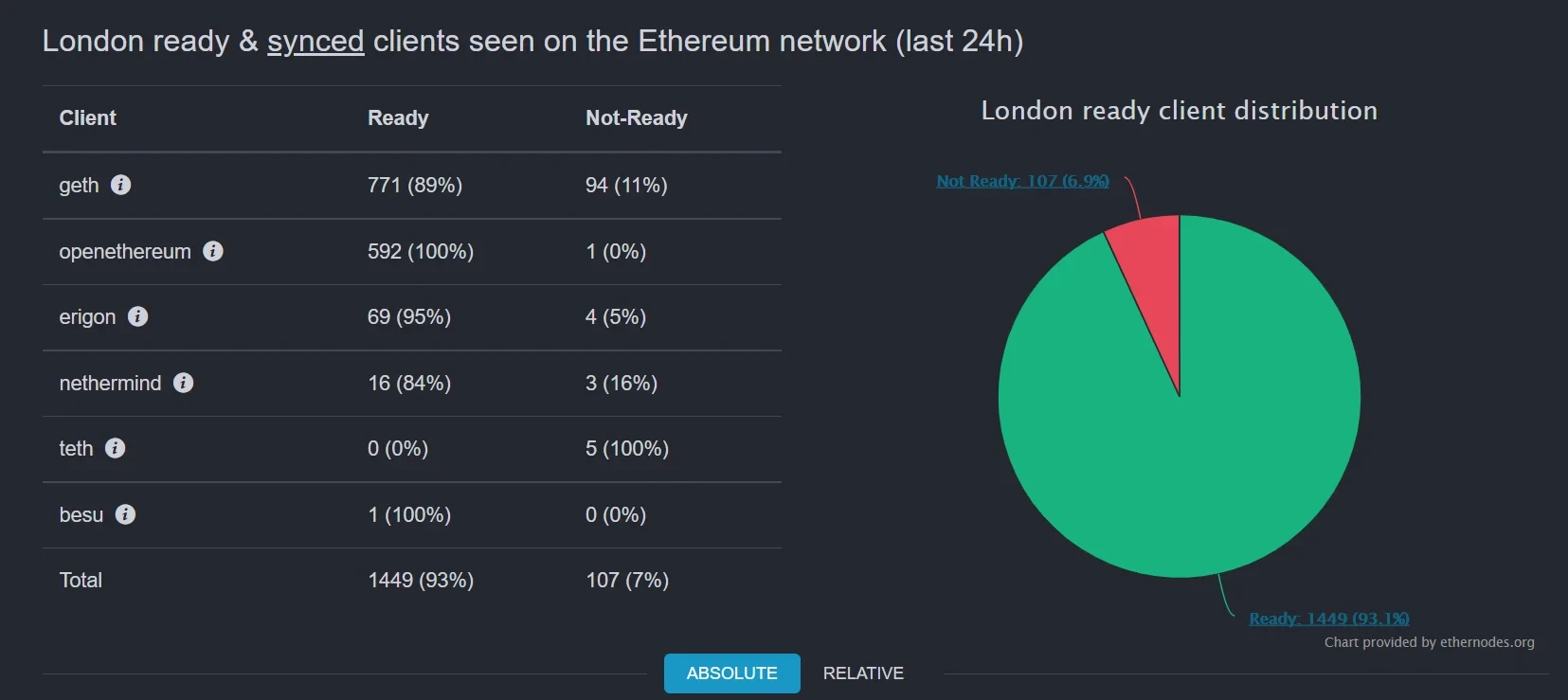
The long-awaited London Upgrade has finally arrived. At 20:33 on August 5, 2021, as the Ethereum block height reached 12,965,000, the London hard fork was officially completed. This marks not only the most important system update for the Ethereum network in recent years but also a critical upgrade before Ethereum's transition to 2.0. Five proposals were successfully deployed in this upgrade: EIP-1559, EIP-3198, EIP-3554, EIP-3541, and EIP-3529. Ethernodes shows that 6.9% of nodes have not yet completed the upgrade.
The highlight EIP-1559 has been controversial from proposal to implementation. Because it thoroughly changes the fee mechanism that the Ethereum network has used since its inception, splitting the Gas fees previously paid directly to miners into Base Fees and Tips, with Base Fees being directly burned, it initially impacted miners' revenue. As a result, miners once hoped to demonstrate by pooling hashrate, but ultimately failed.
Before implementation, the London Upgrade also faced numerous setbacks. First, the launch time was postponed from July to August, then just before implementation, EIP-1559-related bugs on the testnet were urgently fixed. Ethereum community member Jimmy Ragosa's sarcastic tweet "EIP-1559 will be delayed until 2022 because most Ethereum core developers are suffering from 'Raave hangover'" was even used to short Ethereum. Fortunately, everything settled yesterday, and the London Upgrade was finally implemented.
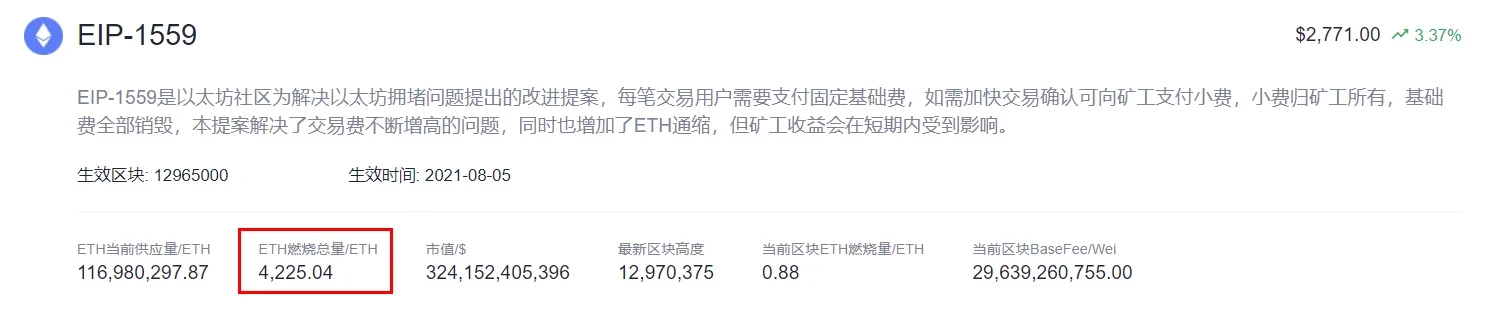
As of this writing, in the 20 hours since EIP-1559 went live, OK Link data shows that 4,225.04 Ethereum have been burned. Calculated at Ethereum's real-time price of $2,771, the total value is approximately $11.7076 million. Ryan Watkins, senior research analyst at crypto analysis firm Messari, previously stated that Ethereum's burning mechanism would cause Ethereum's burn rate to exceed its new supply rate. It will change in Ethereum 2.0, not only being lower than Bitcoin's inflation but actually becoming deflationary.
Next, Ethereum will undergo its final upgrade before transitioning to Ethereum 2.0—the Shanghai Upgrade, tentatively scheduled for October 2021. With Ethereum 2.0 approaching, and the recent resurgence of on-chain ecosystems like DeFi and NFTs driving Ethereum's development, many Ethereum supporters have begun rallying and envisioning a brighter future for Ethereum.
Will Ethereum Enter "Deflation" Mode?
On August 5, EIP-1559 was officially incorporated into the Ethereum mainnet, meaning the Ethereum fee mechanism that had operated for years was thoroughly rewritten. As is well known, before EIP-1559's implementation, Ethereum's fee mechanism used an auction model where users submitted to the Ethereum network the fees they were willing to pay. Since individual blocks have capacity limits for transaction records, when generating a new block, miners would package and sort by fee level. Previously, this mechanism could protect Ethereum's security and prevent spam transactions from clogging the network. However, after DeFi exploded last year, Ethereum's on-chain ecosystem flourished, and users inevitably engaged in fee "bidding wars" to gain priority packaging from miners. At this point, Gas fees became an unavoidable topic for Ethereum, and high fees even caused DeFi resources to migrate to other public chains.
We know that Ethereum miners' revenue consists of block rewards and fees. The Block data shows that before last year's DeFi Summer arrived, Ethereum miners' revenue in May last year was $97.73 million, of which fee revenue was $10.04 million, accounting for 10%. By this May, when Ethereum broke through historical highs, miner revenue also set a new record, with total monthly revenue reaching $2.41 billion, of which fee revenue reached $1.03 billion, accounting for as much as 43%. Over nearly one year, Ethereum miner revenue grew nearly 24-fold. If we exclude block rewards and only calculate fee revenue, miner fees grew nearly 102-fold year-over-year. It's not hard to see that the rise of Ethereum's on-chain ecosystem brought miners substantial returns. In February this year, as DeFi climbed with the broader market, Ethereum's total miner revenue for that month was $1.37 billion, with fee revenue at $720 million, exceeding that month's block rewards and reaching an astonishing 53%.
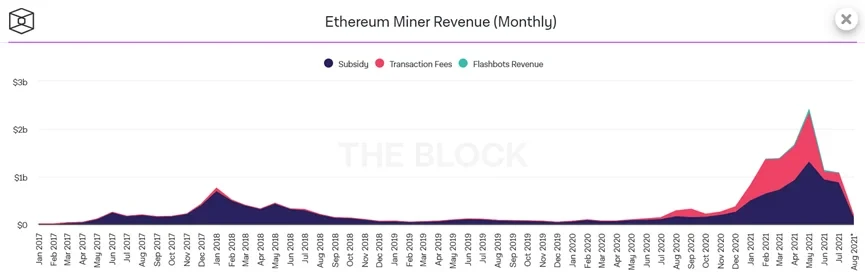
Due to Bitcoin's poor performance over the past 3 months, which drove the overall market decline, Ethereum could not escape and failed to deliver independent performance. Additionally, with the decline of DeFi, NFT, and other tokens, mining returns sharply decreased, and on-chain activity declined. We saw that in June and July, Ethereum miner returns decreased for two consecutive months. Taking July as an example, Ethereum miners' total revenue was $1.08 billion, down 55% from the May peak, with fee revenue at $200 million, dropping to 19%.
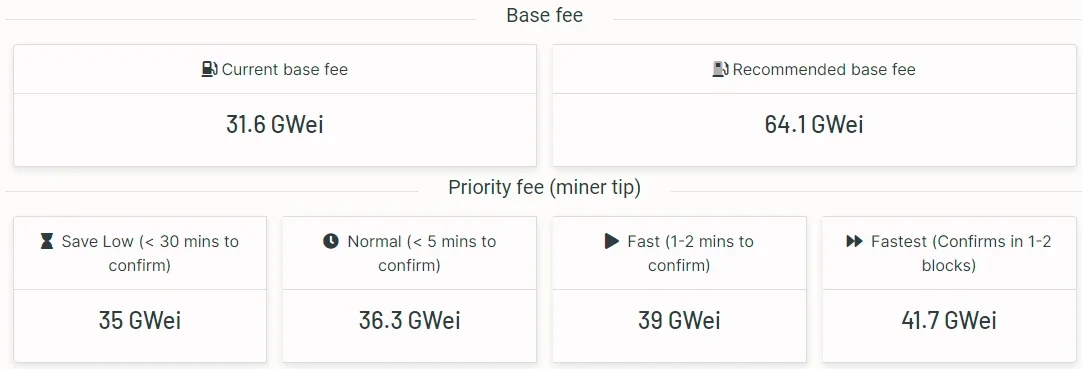
In this context, the EIP-1559 proposal, first put forward in 2018, once again entered the public spotlight. We detailed EIP-1559 in our article "Ethereum London Upgrade to Deploy These 5 EIPs: Which One Do You Favor?". The core problem this proposal aims to solve is reducing user fee levels and alleviating network congestion during peak periods by changing the method of paying Gas fees to miners. The specific solution is introducing a variable "Base Fee" concept that tracks Ethereum network's Gas price, meaning users can more easily and accurately estimate transaction fees and avoid "bidding wars" as much as possible. This fee will ultimately be burned or destroyed, with only an optional tip paid to miners as a reward.
Because of the burning mechanism, most believe this is beneficial for both Ethereum network's economics and user experience. From an economic perspective, since each transaction requires burning a portion of Ethereum, this means the richer Ethereum's on-chain activity, the more Ethereum is burned. When the burn rate exceeds the block reward issuance rate, Ethereum enters a deflationary state.
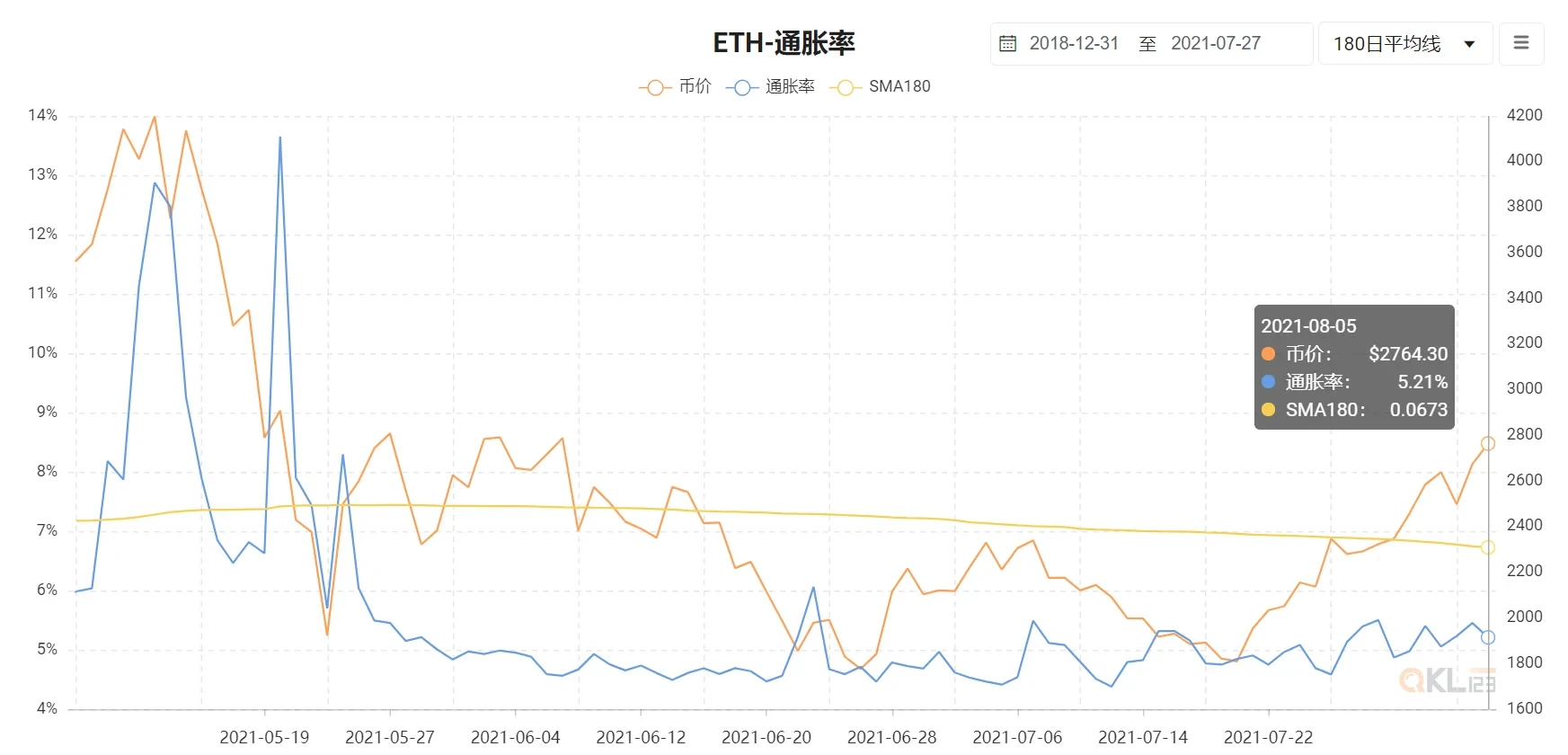
QKL123 data shows that Ethereum's current inflation rate is 5.21%. Based on Ethereum's current total supply of 117 million, we can estimate that approximately 16,700 new Ethereum are added daily.
OK Link data shows that from yesterday's upgrade to 16:33 on August 6, in these 20 hours, EIP-1559 burned 4,225 Ethereum, averaging 211.25 Ethereum burned per hour, meaning 5,070 Ethereum will be burned in one day. This means 30% of daily Ethereum output is offset, and Ethereum's annual supply will decrease by approximately 3.5%-4%. As Ethereum transitions to PoS, the supply may further decline. Meanwhile, with continuous innovation in DeFi, GameFi, NFTs, and more, demand will continue growing, so more people are becoming bullish on Ethereum.
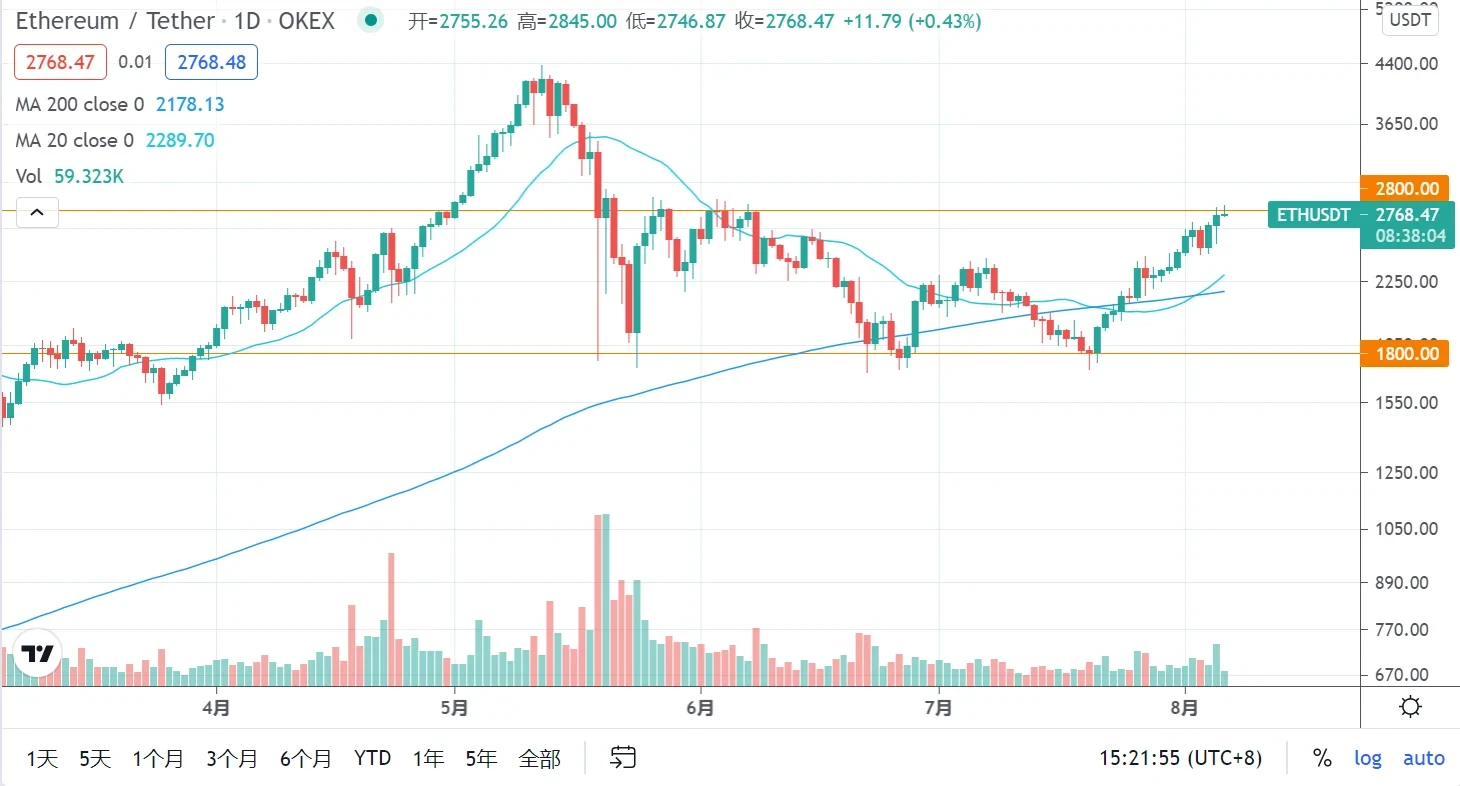
After the London Upgrade completion, OKX real-time market data showed Ethereum rose 6.67% within 4 hours, with enthusiastic market response. Ethereum ultimately closed at $2,756.68 on August 5. From a daily chart perspective, since Ethereum bottomed at $1,718.29 on July 20, it began nearly half a month of upside, reaching as high as $2,845.0, a maximum gain of 66%. Currently, Ethereum is testing the $2,800 resistance level. It can be seen that both yesterday and today there were attempts, but it failed to firmly establish.
Ethereum and Its Ecosystem Continue to Heat Up
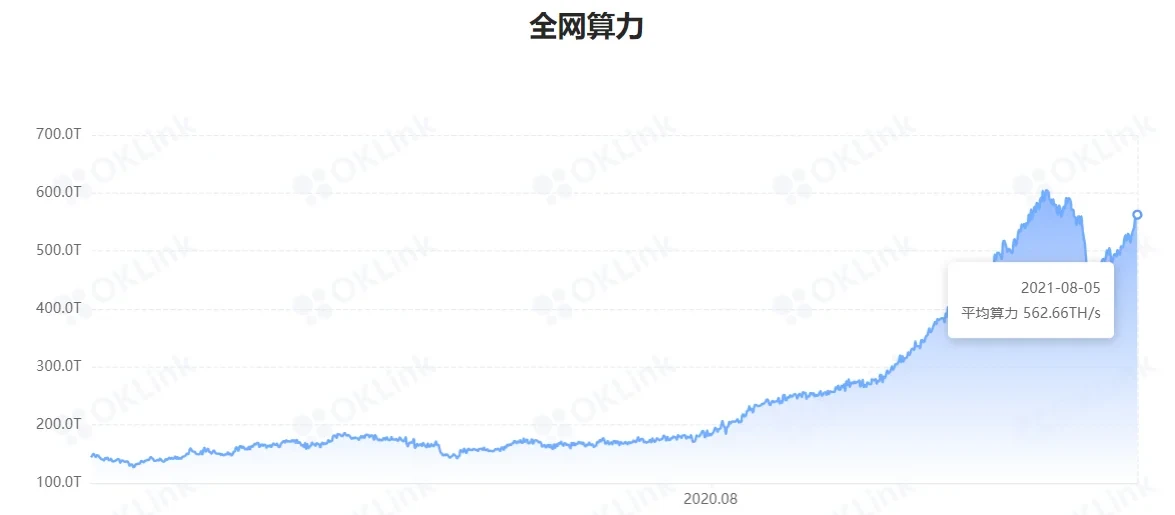
This Ethereum London Upgrade, considering the current development state of the entire Ethereum ecosystem, enjoys perfect timing, location, and human harmony—of course, if we ignore miners' dissatisfaction with the EIP-1559 proposal. OK Link data shows that Ethereum's total network hashrate reached 562.66 TH/s, a new high since June 12, still 7% away from the historical high of 604.57 TH/s on May 19.
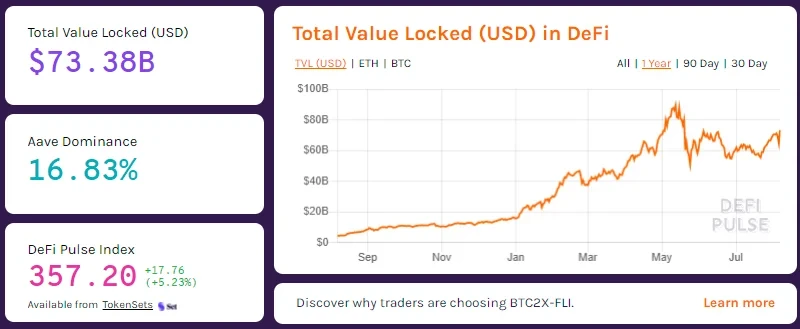
Looking at the hot DeFi within the Ethereum ecosystem, according to DeFi Pulse statistics, the total value locked (TVL) in Ethereum-based DeFi smart contracts has significantly recovered recently. As of 9:00 on August 6, TVL has returned above $73 billion, recovering to 82% of its peak in May.
Meanwhile, DeFi's total market capitalization has also seen significant growth. According to CoinGecko data, as of this writing, DeFi's total market cap has exceeded $100 billion, reaching $100.733 billion. Compared to the recent three-month low of $60.93 billion, this represents a 65% increase.
Beyond DeFi's recovery, NFTs, which have emerged prominently this year, have also brought more vibrant fresh blood to the Ethereum ecosystem. From an external perspective, giants from various fields such as the NBA, Coca-Cola, LV, Porsche, and Christie's have ventured into NFTs, objectively providing NFTs with broader markets and popularity for "breaking out" and expanding influence.
From NFT's internal development momentum, since entering 2021, it can be said to be the undisputed dark horse. Especially with the recent consecutive impetus from the European Cup, Olympics, and Axie Infinity, NFT's popularity has risen accordingly. Particularly with the London Upgrade approaching, Ethereum's NFT collectibles sector also welcomed a boom. In our article "7-Day Sales Hit $236 Million High: Is NFT Market Heat Making a Strong Comeback?", we provided an explanation: participants are betting that Ethereum will fully go mainstream. If Ethereum becomes the settlement layer for value, then it will also become the settlement layer for culture. More people will realize that this is not only a financial revolution but also an artistic and cultural revolution.
Next, let's intuitively feel this from a data perspective. According to CoinGecko statistics, as of this writing, NFT's market cap has exceeded $20.52 billion, equivalent to approximately 20% of current DeFi market cap. Notably, the vast majority of NFT's current market cap scale was achieved this year. From a growth perspective, it's developing rapidly with tremendous potential.
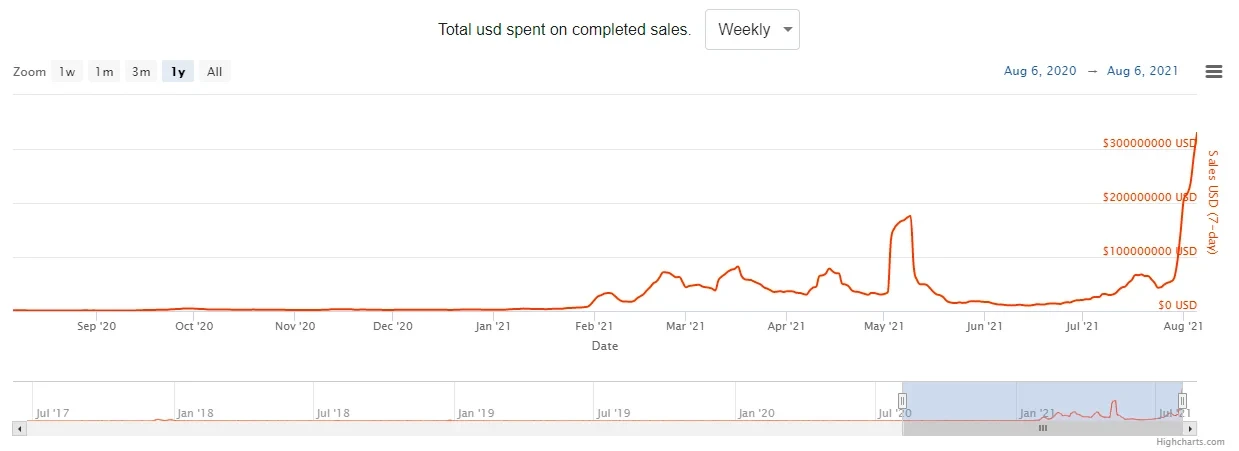
Looking at NFT sales over the past year, we can also observe similar trends. Nonfungible statistics show that before 2021, NFT trading was quite quiet. After entering 2021, between January and April, clear signs of activity emerged, then the first trading climax arrived in May; subsequently experiencing a two-month lull, it erupted again in late July, with trading volume surging. Whether viewed by amount or slope, the development momentum far exceeds the first climax period in May.
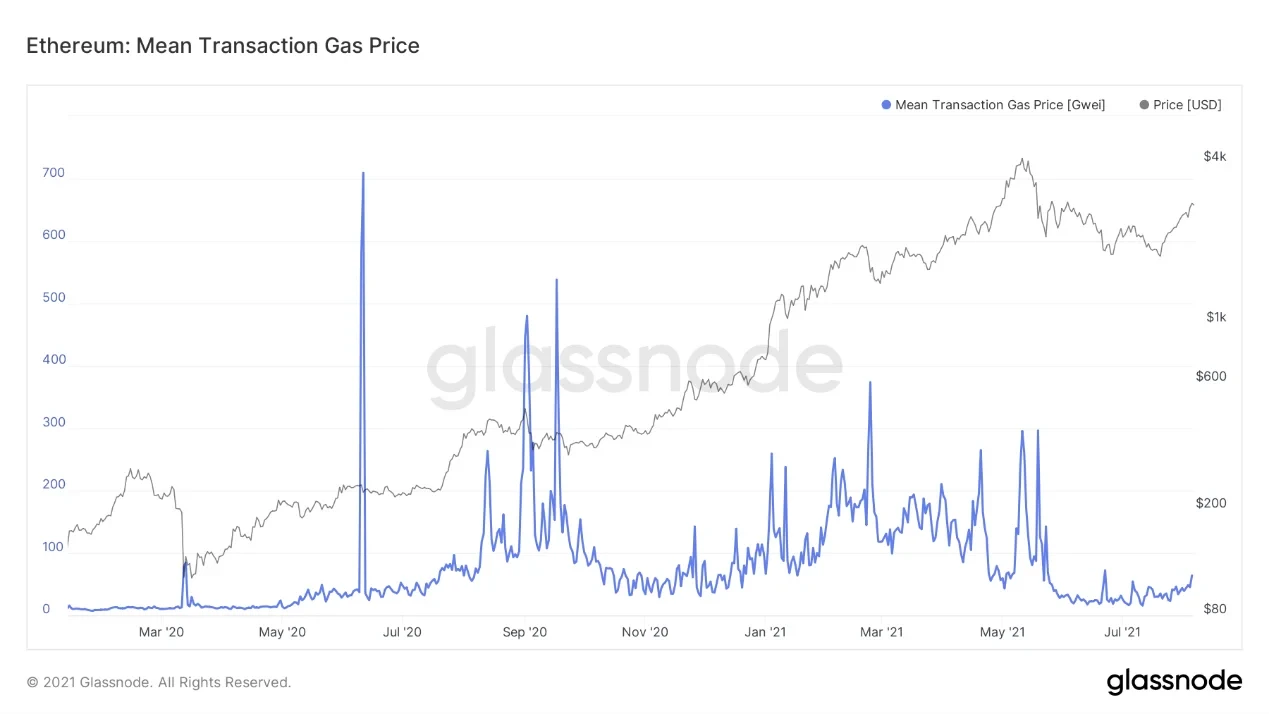
However, overall, recent Ethereum on-chain transaction Gas fee levels remain in relatively reasonable ranges. According to Glassnode data, during May 25 - August 4, 2021, Gas prices were basically below 50 Gwei, comparable to levels before last year's DeFi Summer rise.
"Investment Queen" Cathie Wood expressed on Twitter ARK Invest's appreciation for Ethereum and DeFi innovation. ConsenSys founder stated in an interview that the internet-like Ethereum ecosystem has already surpassed Bitcoin and will significantly lead in the future. It's foreseeable that after the London Upgrade, the next focus will revolve around Ethereum 2.0's upgrade, which represents Ethereum's future.
Disclaimer
This article may contain product-related content not applicable to your region. This article is intended only to provide general information and assumes no responsibility for any factual errors or omissions herein. This article represents only the author's personal views and does not represent OKX's views. This article is not intended to provide any recommendations, including but not limited to: (i) investment advice or investment recommendations; (ii) offers or solicitations to buy, sell, or hold digital assets; or (iii) financial, accounting, legal, or tax advice. Holding digital assets (including stablecoins) involves high risk, may fluctuate significantly, and may even become worthless. You should carefully consider whether trading or holding digital assets suits your financial situation. For questions about your specific situation, please consult your legal/tax/investment professional. Information appearing in this article (including market data and statistics, if any) is for general reference only. While we have taken all reasonable precautions in preparing these data and charts, we assume no responsibility for any factual errors or omissions expressed herein. © 2025 OKX. This article may be reproduced or distributed in full, or excerpts of 100 words or less from this article may be used, provided such use is non-commercial. Any reproduction or distribution of the entire article must prominently state: "© 2025 OKX, used with permission." Permitted excerpts must cite the article title and include attribution, for example "Article Title, [Author Name (if applicable)], © 2025 OKX". Some content may be generated or assisted by artificial intelligence (AI) tools. Derivative works or other uses of this article are not permitted.
Show More
Recommended Reading
OKX Pay: Opening a New Era of Next-Gen Crypto Payments
The choice of tens of millions of users. Register with OKX and enjoy ultimate trading experience and diverse wealth management products. A letter from OKX CEO Star: Today, we officially launch the first version of OKX Pay for our hundreds of millions of global users. As the industry's first payment app to truly achieve non-custodial and compliant integration, OKX Pay will be embedded in the OKX App, currently open to select markets, expected to fully launch within months
March 22, 2026

New Chapter: Building Next-Gen Financial Infrastructure Together
The partnership between OKX and Intercontinental Exchange (ICE) marks an important moment for OKX and holds equally profound significance for the evolution of the entire digital assets market. ICE establishes and operates the world's most important financial infrastructure, including the New York Stock Exchange and global derivatives and clearing platforms. ICE's investment in OKX and joining our board demonstrates our shared belief—digital assets technology will transform financial markets
March 10, 2026
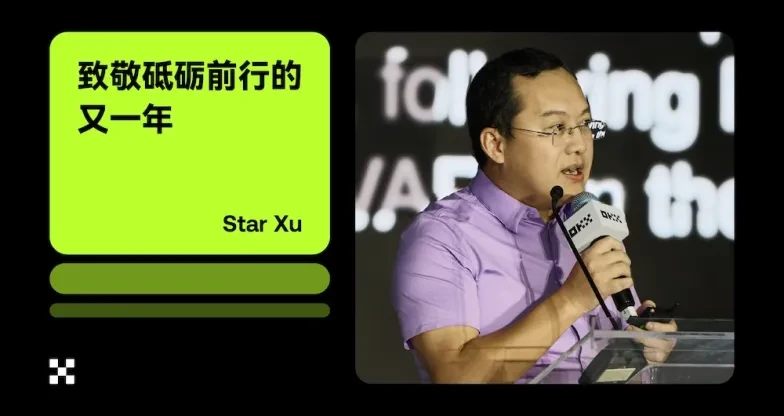
Tribute to Another Year of Forging Ahead
As OKX's CEO and also a builder who remains true to our original mission, I proudly reflect on OKX's extraordinary growth and progress this year. Despite numerous challenges, 2024 was a year of focus, innovation, and resilience. We not only expanded and optimized our products but also made significant progress in launching transparent and compliant localized operations, while further strengthening our global management team. Notably, after experiencing
January 29, 2026

2025: Steady Progress Toward Financial Freedom Together
— Year-end letter from OKX Founder and CEO Star to global users "Financial freedom" is often misunderstood. It doesn't mean absence of rules, but rather having the right to choose when rules exist—and when the system is truly tested, it remains reliable and effective. This is exactly what we focused on throughout 2025. First, I want to extend my sincere gratitude to our global clients, partners, and regulatory authorities
January 16, 2026

OKX Officially Launches in Germany and Poland
Author: Erald Ghoos, CEO of OKX Europe Today is significant for OKX—and also for crypto users across Europe. We have officially launched our fully compliant centralized cryptocurrency trading platform in Germany and Poland! For us, this is not just geographic expansion, but a commitment to building the cryptocurrency future the right way: secure, transparent, and meeting local needs. If you're in Germany
October 21, 2025
Partnership Upgrade! OKX Partners with Standard Chartered to Expand European Market
On October 15, OKX Europe CEO Erald Ghoos stated that OKX is expanding its strategic partnership with Standard Chartered to the European Economic Area (EEA). Earlier this year, OKX first partnered with Standard Chartered in the UAE to launch the Collateral Mirroring program—this is a
October 15, 2025