Ethereum London Upgrade Approaching: Will It Be a Shot in the Arm for Long-Term Holders?
The Ethereum mainnet London upgrade will be activated at block height 12965000, expected to go live between August 3 and 5. During the period from the beginning of this year to April when the crypto market was booming, the London upgrade was once considered a positive factor that would further stimulate Ethereum's rise, serving as one of the driving forces pushing Ethereum to $5,000 or even higher.
But the reality is that after the crypto market has been declining for more than two consecutive months, the London upgrade seems unable to save Ethereum. After falling from its high of $4,371.96, Ethereum even broke below $1,800 on July 20, touching $1,718.29, with a drop that once exceeded 60%.
Although its price performance has been disappointing, Ethereum's on-chain data, such as the number of Ethereum 2.0 staking addresses, the amount of Ethereum locked in DeFi protocols, and the number of holding addresses, have conveyed some positive signals. Regarding Ethereum's future price direction, the vast majority of the market remains optimistic about its prospects, though they are still waiting for the perfect opportunity to re-enter.
London Upgrade Fails to Mask Ethereum's Downturn
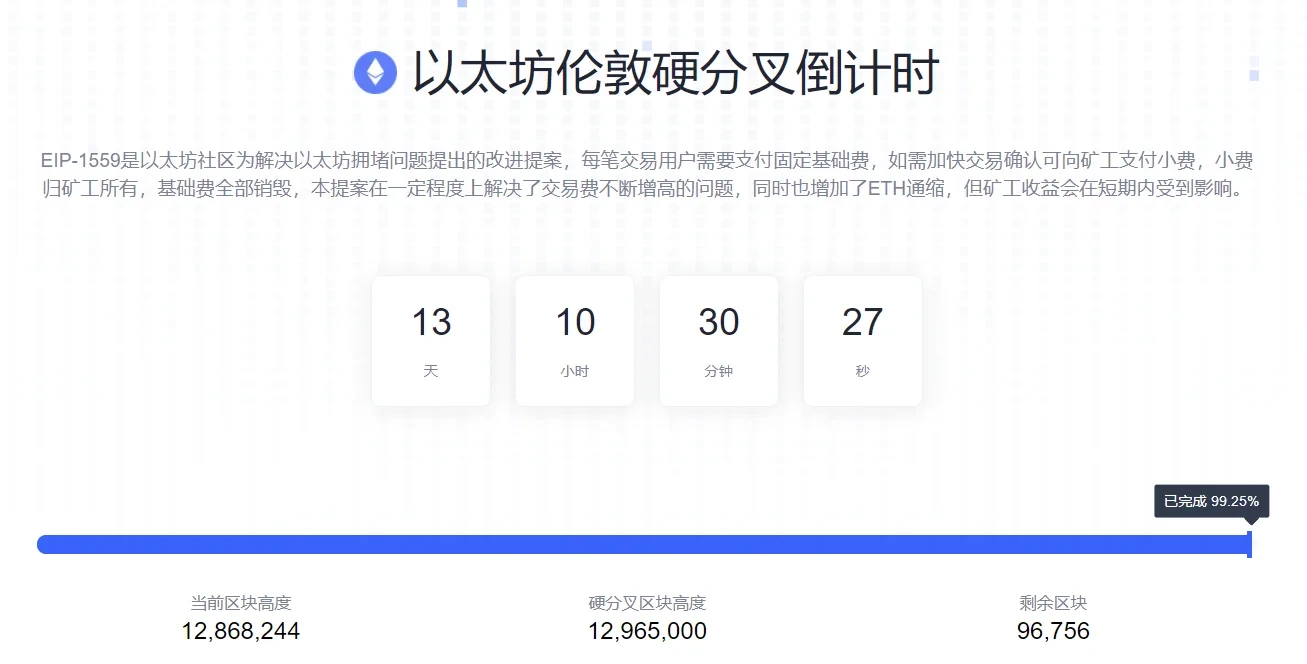
On July 15, the Ethereum Foundation released an official announcement stating that after successful deployment on testnets, the London upgrade is ready to go live on the Ethereum mainnet at block height 12965000, with an expected activation time between August 3 and August 5, 2021. OK Link has simultaneously launched an EIP-1559 special page, which includes a countdown to the London hard fork and an introduction to EIP-1559.
To be compatible with the London upgrade, node operators also need to upgrade the client versions they run. The following image shows the client versions that support the London upgrade.
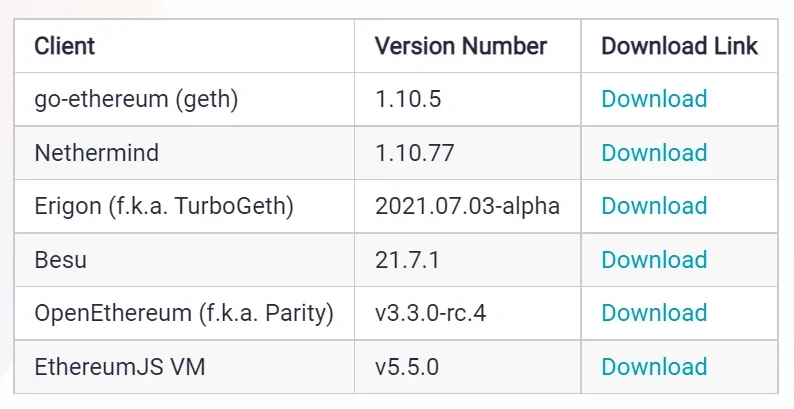
It should be noted that after the London upgrade, the Open Ethereum client will be deprecated. The Open Ethereum team is working with Erigon to provide users with a smooth transition path.
We introduced in "Ethereum London Upgrade Confirms Deployment of These 5 EIPs, Which One Do You Favor?" that this London upgrade will encompass 5 aspects: EIP-1559, EIP-3198, EIP-3529, EIP-3541, and EIP-3554. EIP-1559 is the most discussed among them; it will change Ethereum 1.0's transaction fee collection model - the current miner fee revenue will be split into Base Fees and Tips. Since the implementation of EIP-1559 will result in the burning of Base Fees, most people in the community believe this is an important measure for improving Ethereum's network economy. We can see that the testnets Ropsten, Goerli, and Rinkeby have already activated the London upgrade on June 24, July 1, and July 8, respectively.
EIP-3198 adds the BASEFEE opcode and is a companion solution to EIP-1559. This opcode returns the Base Fee value of its containing block, with the purpose of allowing smart contracts on Ethereum to access this value, which helps in submitting fraud proofs and can also establish Gas price futures based on this value.
EIP-3529 reduces Gas refunds. The Ethereum network initially introduced Gas refunds (SELFDESTRUCT and SSTOR opcodes). Simply put, in the current version, contract deployers can receive Gas refunds by actively cleaning up contracts. The original purpose of this design was to reduce network congestion and improve stability, but in reality, people often fill the network with garbage data when Gas prices are low, and delete the garbage data when Gas prices are high to obtain refunds for arbitrage, which actually exacerbates Ethereum network congestion. Therefore, the EIP-3529 proposal eliminates refunds for certain opcodes, thereby making the network more stable.
EIP-3541 is a simple change that lays the foundation for another proposal - EIP-3540's EVM improvement proposal. After EIP-3541 is implemented, new contracts starting with 0xEF bytecode will not be deployable, while existing contracts will not be affected. After the Ethereum mainnet undergoes the London upgrade, the shortest byte sequences starting with 0xEF do not match the beginning sequences of existing contracts, and they can be retained as methods to identify contracts compliant with EIP-3540 semantics.
As for EIP-3554, it delays the difficulty bomb until December 2021. Here we need to briefly introduce the difficulty bomb. The difficulty bomb is a piece of code that was written into Ethereum's mining algorithm as early as 2015. Once activated, mining difficulty will grow exponentially with block height until miners can no longer obtain rewards and blocks. The purpose of setting the difficulty bomb is that Ethereum wants to transition from the PoW mechanism to the PoS mechanism. To achieve a smooth transition, by artificially increasing block difficulty and causing miners to lose development motivation, thereby gradually shifting to Ethereum 2.0, the difficulty bomb became the obvious choice.
Why has the difficulty bomb, which was written into the Ethereum network in 2015, been delayed again and again? The main reason is that Ethereum's PoS progress has not met expectations. Its original purpose was to allow Ethereum to smoothly transition from PoW to PoS, but with PoS not yet ready, if the difficulty bomb is not stopped, when mining difficulty increases and block times lengthen, against the backdrop of Ethereum's booming DeFi ecosystem, it will not only cause severe congestion to the Ethereum network but also have a destructive impact on the on-chain ecosystem.
In March 2017, when Ethereum's block height reached 3.7 million, the difficulty bomb exploded for the first time, extending block times and causing block rewards to plummet. It was precisely because of this that developers added EIP-649 in the Byzantine upgrade to delay the difficulty bomb. In October 2017, the Byzantine upgrade was activated at block height 4.37 million, which eliminated the impact of the difficulty bomb.
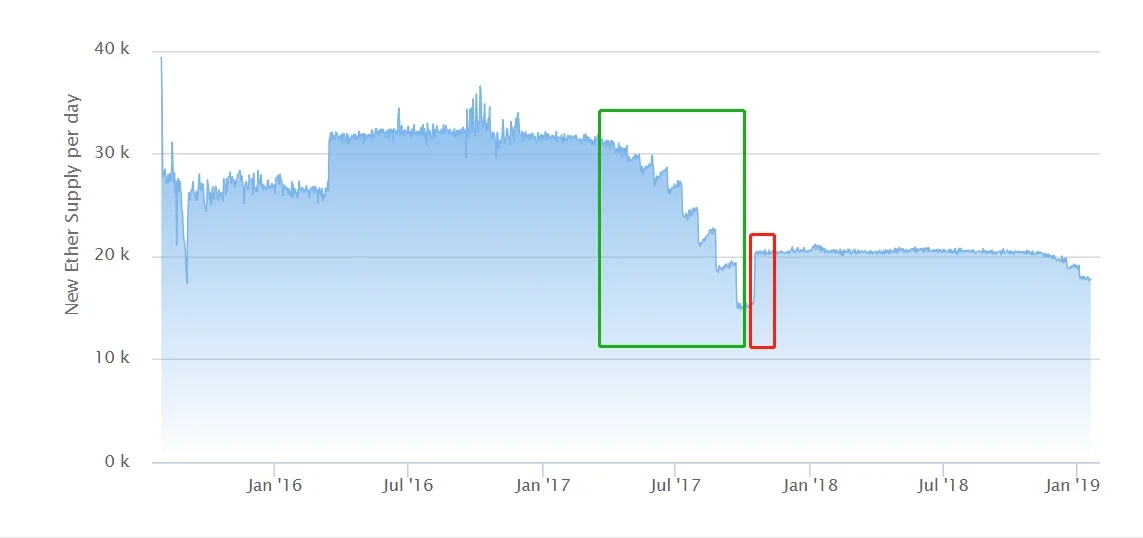
In this London upgrade, the implementation of EIP-3554 is also to delay the difficulty bomb until December 2021. Looking back at history, this is the fourth time the Ethereum development team has postponed the detonation of the difficulty bomb. The first time was the Byzantine upgrade in October 2017 mentioned above, the second was the Constantinople upgrade in February 2019, and the third was the Muir Glacier hard fork in January 2020, when the difficulty bomb was delayed by 4 million blocks.
Ethereum developer Tim Beiko posted that the most optimistic scenario is that by December 2021, Ethereum has completed the merge of Ethereum 1.0 and 2.0, transitioning from PoW to PoS. Of course, if development progress does not meet expectations and the team cannot transition to PoS in December of this year, the difficulty bomb is very likely to be further postponed during the Ethereum Shanghai upgrade, which will launch as early as October this year. It is currently unclear whether the name "Shanghai" will be retained or another ice age-themed name will be used. If only delaying the difficulty bomb, the upgrade's testing and implementation would be greatly simplified, with no need to deploy to testnets before mainnet, only needing to select an appropriate delay in October, release clients in November, and complete the upgrade in December.
During the period from the beginning of this year to April, when the crypto market was still in a booming phase, the London upgrade was considered a major positive for the Ethereum network. Its implementation would drive Ethereum's price higher, but the reality is that with Bitcoin already recording 3 consecutive negative monthly candles, Ethereum has also been unable to chart its own independent course.
According to OKX real-time market data, Ethereum has been in a downtrend for more than 2 months since hitting its all-time high on May 12. From the high of $4,371, it fell as low as $1,700. Although there were several rallies during this period, in terms of strength and trading volume, they cannot be considered strong. At the same time, as ETH broke below the $2,000 integer mark again on July 15, bullish confidence was once again dealt a blow. As of the time of writing, Ethereum is currently reporting $1,868.78, basically flat with early April prices.
Ethereum 2.0 Staking Exceeds 6.36 Million, Market Remains Bullish on Its Future
From the beginning of 2021 to now, Ethereum balances on exchanges have fallen from 19.2287 million to 15.7821 million, a decrease of 3.4666 million. Among this, Ethereum outflows accelerated starting from June 24, with this curve rapidly steepening. In less than a month, the amount of Ethereum held by exchanges dropped by 1.7344 million, accounting for 50% of total outflows, even slightly higher than the total outflows of the previous 6 months.
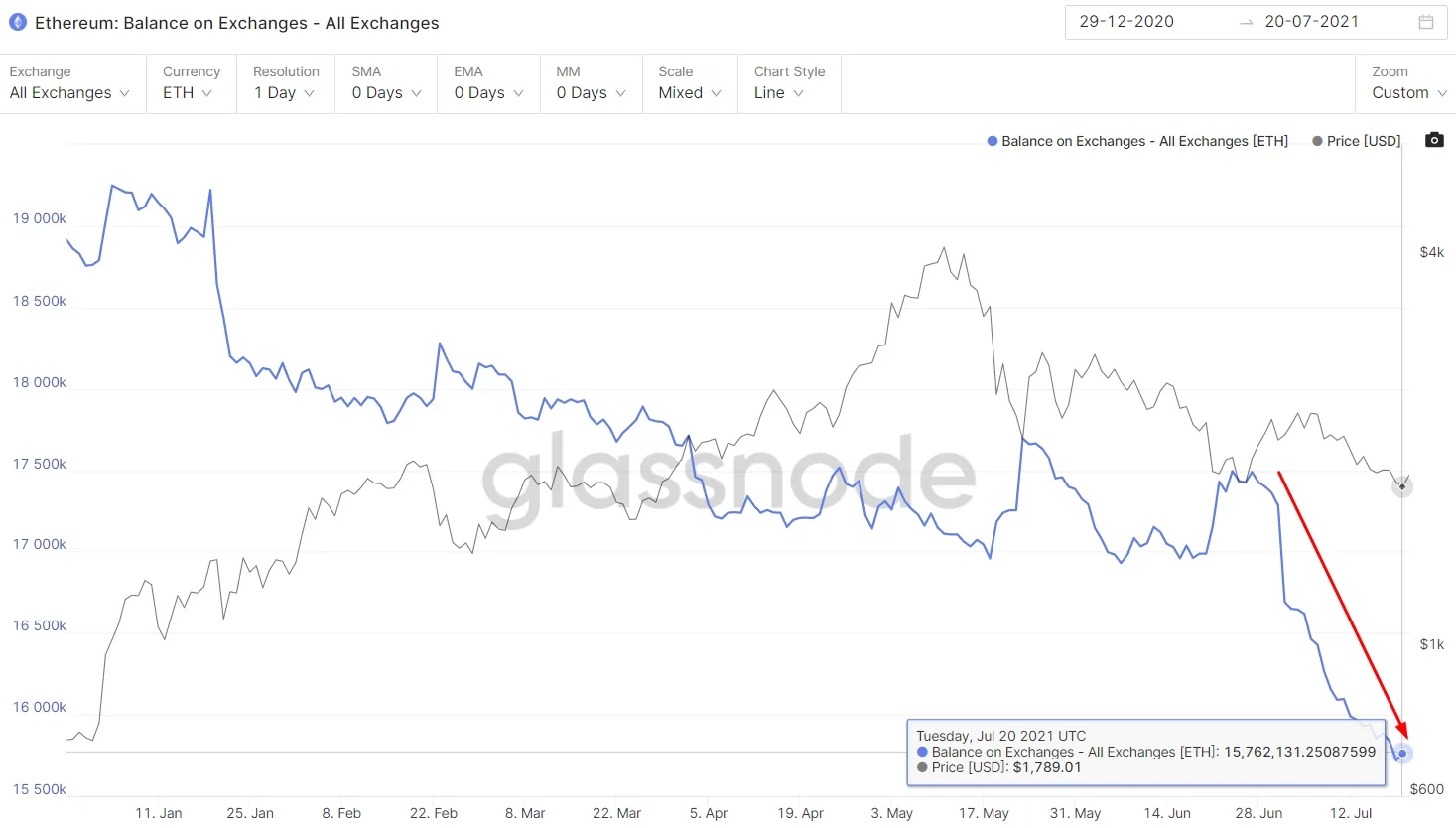
Generally, if assets continuously flow into exchanges, we consider that holders have relatively strong selling intentions, while if they continuously flow out of exchanges, it indicates that holders are showing signs of reluctance to sell. At this point, we can pair this with three other sets of data: Ethereum 2.0 staking addresses, the amount of Ethereum locked in DeFi protocols, and the number of on-chain holding addresses.
OK Link data shows that Ethereum 2.0 staking addresses have already exceeded 6.36 million. Based on Ethereum's current circulation of 116 million, the amount of staked Ethereum accounts for 5.45% of the supply.
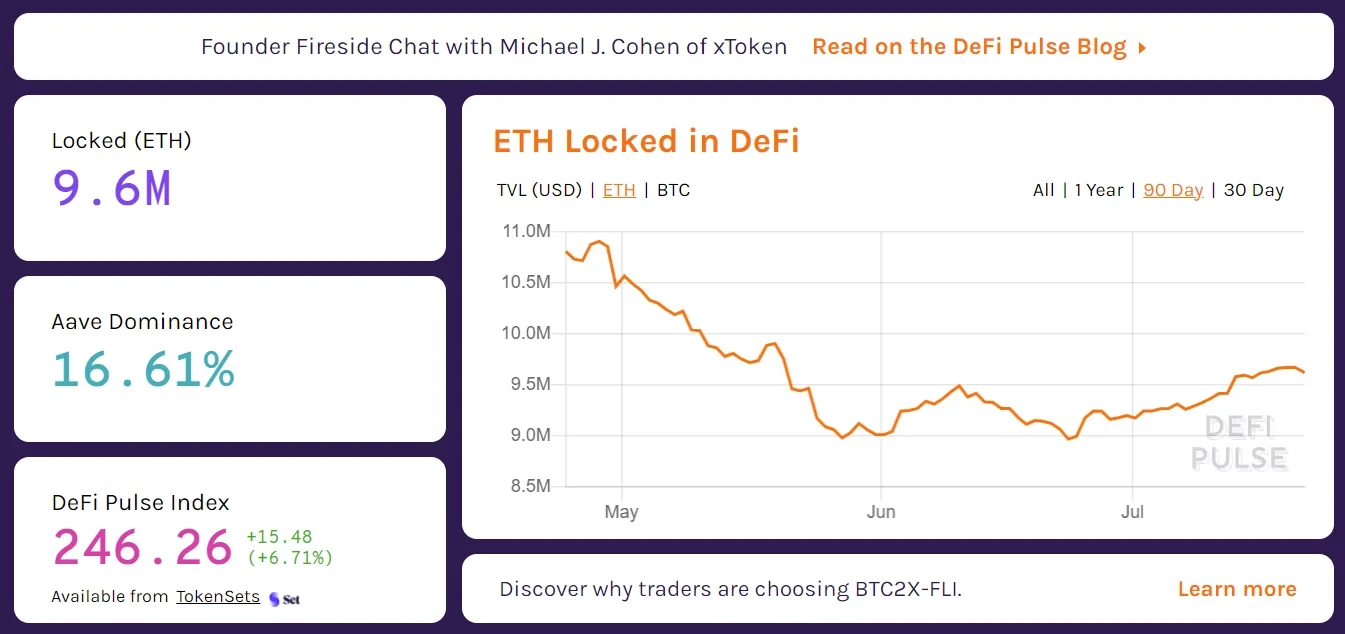
Currently, the amount of Ethereum locked in DeFi has reached 9.62 million. Although this is a decline from the 10.9 million Ethereum locked at the end of April, compared to 8.968 million on June 23, the amount of locked Ethereum has increased by 7.27% in the past month.
In addition, we have seen some positive changes in the number of holding addresses. OK Link shows that Ethereum holding addresses have increased to 60.76 million, with an increase of 46,912 in 24 hours. Combining Glassnode data, Ethereum addresses with balances greater than 0.1, 1, and 10 have increased by 34,157, 6,970, and 850 respectively over the past month or so. However, the number of Ethereum addresses with balances of 1,000 and 10,000 or above has not yet shown significant changes.
Although Ethereum's price has fallen 57% from its high over the past 3 months, its year-to-date gains remain at 153.48%. Many analysts still insist that Ethereum's total market cap will surpass Bitcoin. Goldman Sachs, for example, stated that Ethereum is the crypto asset with the highest actual use potential and the most popular platform for smart contract application development.
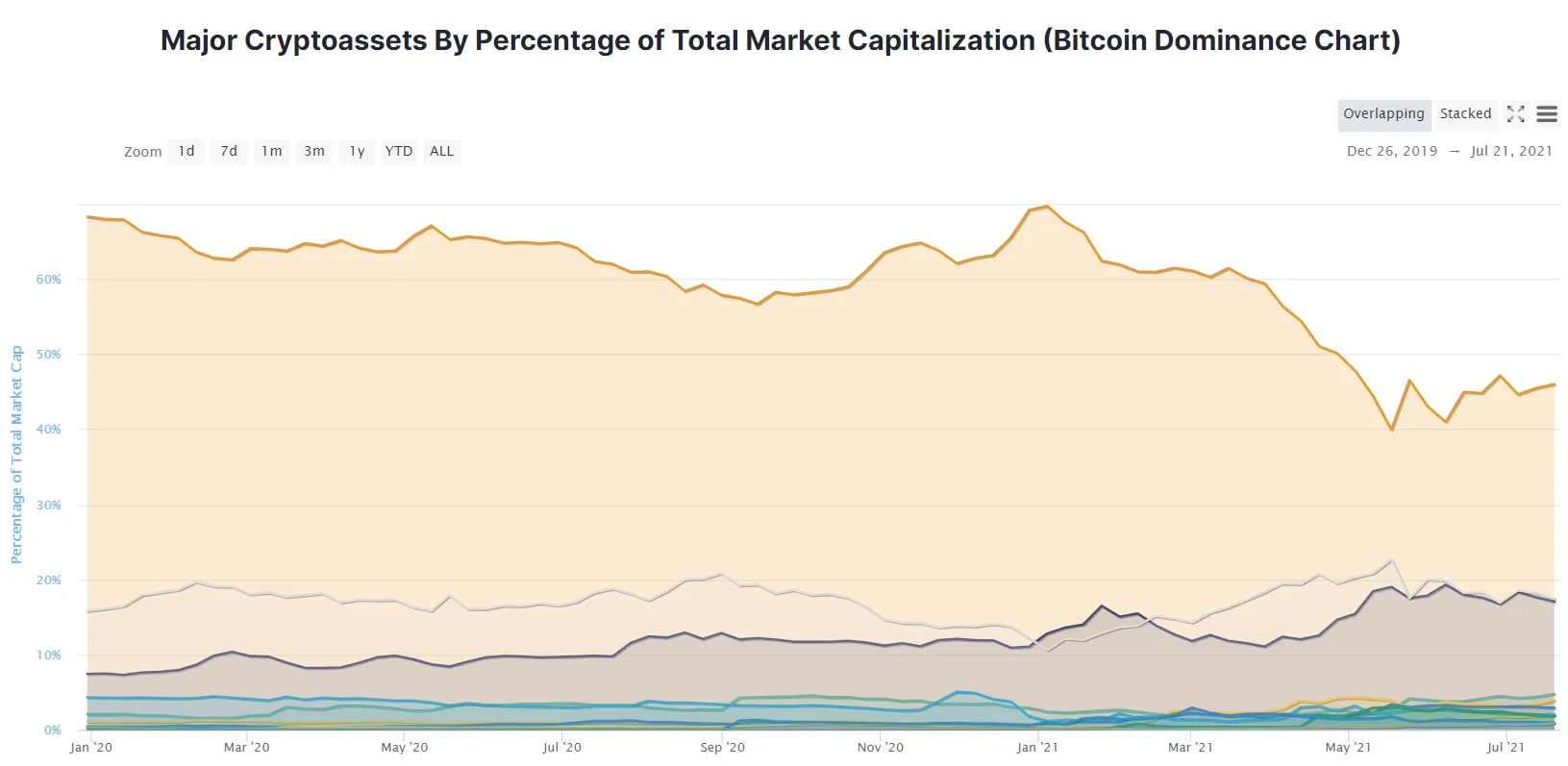
Others use the following example to illustrate: one year ago today, Bitcoin's total market cap was $172.862 billion, while Ethereum's total market cap was $27.406 billion. Bitcoin's market cap was 6.31 times that of Ethereum. Now, Bitcoin's total market cap is $577.486 billion, while Ethereum has reached $217.789 billion. Bitcoin's market cap is only 2.65 times that of Ethereum. When Bitcoin reached this cycle's historical high on April 14, its market cap was $1.18 trillion, while Ethereum was $28.1184 million, making Bitcoin 4.20 times that of Ethereum.
One year ago, Ethereum's DeFi ecosystem was in a stage of gradual emergence, but its overall ecosystem has not shown significant changes compared to a few years ago, and the imagination space has not yet opened up. Meanwhile, whether in terms of narrative or mainstream breakout degree, Bitcoin was superior to Ethereum. Therefore, against the backdrop of global liquidity flooding, institutions began entering the market to purchase Bitcoin. However, with institutional support, the ratio between Bitcoin and Ethereum has decreased from the initial 6.31 to 4.20 times.
And after more than two months of market downturn, the market cap ratio between Bitcoin and Ethereum has further declined, reaching 2.65 times as of the time of writing. This means that Ethereum's gains driven by DeFi scenarios have outperformed Bitcoin, and it is also more resilient to declines when the market is sluggish.
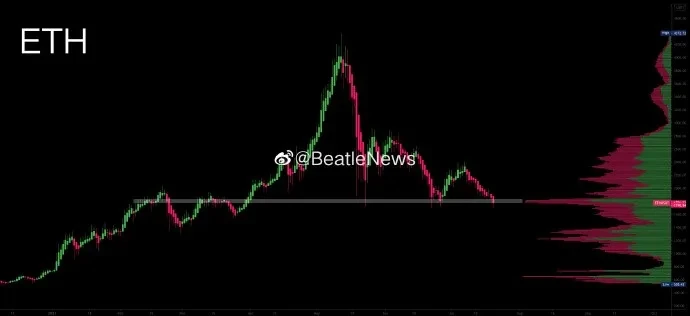
Of course, while being bullish on Ethereum's prospects, one must also be wary of its current weak market trend. Weibo financial blogger Beatle News posted an image yesterday with the caption "Ethereum tests the area with highest volume above $700 again."
Disclaimer
This article may contain content related to products that are not available in your region. This article is intended only to provide general information and does not take responsibility for any factual errors or omissions contained herein. This article represents only the author's personal views and does not represent the views of OKX. This article is not intended to provide any of the following advice, including but not limited to: (i) investment advice or investment recommendations; (ii) offers or solicitations to buy, sell, or hold digital assets; or (iii) financial, accounting, legal, or tax advice. Holding digital assets (including stablecoins) involves high risk, may fluctuate significantly, and may even become worthless. You should carefully consider whether trading or holding digital assets is suitable for you based on your financial situation. For questions regarding your specific situation, please consult your legal/tax/investment professional. The information appearing in this article (including market data and statistics, if any) is for general reference only. Although we have taken all reasonable precautions in preparing these data and charts, we accept no responsibility for any factual errors or omissions expressed herein. © 2025 OKX. This article may be reproduced or distributed in its entirety, or excerpts of 100 words or less from this article may be used, provided that such use is non-commercial. Any reproduction or distribution of the entire article must prominently state: "Copyright © 2025 OKX. Used with permission." Permitted excerpts must cite the article name and include attribution, for example "Article Name, [Author Name (if applicable)], © 2025 OKX". Some content may be generated or assisted by artificial intelligence (AI) tools. Derivative works or other uses of this article are not permitted.
Show More
Recommended Reading
OKX Pay: Opening a New Era of Next-Generation Crypto Payments
Tens of millions of users' choice, register with OKX to enjoy the ultimate trading experience and diverse wealth management products. A letter from OKX CEO Star: Today, we are officially launching the first version of OKX Pay to over 100 million global users. As the industry's first payment app to truly achieve non-custodial and compliance integration, OKX Pay will be embedded in the OKX App, currently open to select markets, expected to fully launch within months
March 22, 2026

New Chapter: Building Next-Generation Financial Infrastructure Together
The partnership between OKX and Intercontinental Exchange (ICE) is an important moment for OKX and equally significant for the evolution of the entire digital assets market. ICE establishes and operates the world's most important financial infrastructure, including the New York Stock Exchange and global derivatives and clearing platforms. This ICE strategic investment in OKX and joining our board reflects both parties' shared belief - that digital assets technology will be in financial markets
March 10, 2026
Tribute to Another Year of Forging Ahead
As OKX's CEO, and also a builder who never forgets his original intention, I am proud to look back on the remarkable growth and progress OKX has achieved this year. Despite many challenges, 2024 has been a year of focus, innovation, and resilience. We have not only expanded and optimized our products, but also made significant progress in launching transparent and regulatory-compliant localized businesses, while further strengthening our global management team. Notably, after experiencing
January 29, 2026

2025: Steady Progress Toward Financial Freedom Together
— Annual Letter from OKX Founder and CEO Star to Global Users "Financial freedom" is often misunderstood. It doesn't mean no rules, but rather having the right to choose when rules exist - and, when the system is truly tested, it remains reliable and effective. This is precisely the direction we have remained focused on throughout 2025. First, I would like to extend my sincere gratitude to our global clients, partners, and regulatory authorities
January 16, 2026

OKX Officially Launches in Germany and Poland
Author: Erald Ghoos, CEO of OKX Europe Today is significant for OKX - and so is it for crypto users across Europe. We have officially launched a fully compliant centralized cryptocurrency trading platform in Germany and Poland! For us, this is not just a geographic expansion, but a commitment to building the cryptocurrency future the right way: secure, transparent, and meeting local needs. If you are in Germany
October 21, 2025

Partnership Upgrade! OKX Partners with Standard Chartered to Expand European Market
On October 15, OKX Europe CEO Erald Ghoos stated that OKX is expanding its strategic partnership with Standard Chartered to the European Economic Area (EEA). Earlier this year, OKX first partnered with Standard Chartered in the UAE to launch the collateral mirroring program - a
October 15, 2025