Can Ethereum Replace Bitcoin to Lead the Next Market Rally?
As the two most important investment targets in the crypto market, since Ethereum demonstrated strong development potential in 2016, the debate about whether Ethereum can surpass Bitcoin has never stopped. In May of this year, Ethereum co-founder Vitalik Buterin stated in an interview that if Bitcoin's technology remains unchanged, it will face the significant risk of being eliminated, and he also predicted that Ethereum's market capitalization could potentially exceed Bitcoin's market capitalization. A few days later, Wall Street giant Goldman Sachs released a report titled "Global Macro Research," which also spoke highly of Ethereum, believing that based on factors such as real-world utility, user base, and technology iteration speed, Ethereum is poised to replace Bitcoin's dominant position in the crypto market.
Historically, on June 19, 2017, Ethereum's market capitalization once approached Bitcoin's market capitalization scale, with the gap at its smallest being less than 7 percentage points. At that time, Bitcoin's market share was 37.84%, while Ethereum reached 31.17%. At that moment, Bitcoin's price was $2,599.89, while Ethereum was $354.90 (according to OKX platform data), and the ETH/BTC exchange rate exceeded 0.13, marking the highest level to date. Since then, it began a volatile downward trend, and for over four years, the 0.1 exchange rate target has become a "small goal" that Ethereum supporters have continuously pursued.
Looking back at the market performance over the past half month, since Bitcoin and Ethereum prices both hit new highs on November 10, 2021 (Hong Kong time), they have entered a new adjustment period. According to OKX platform data, as of this writing, Bitcoin fell from its high of $69,040 to a low of $55,342, a maximum decline of 19.85%; Ethereum fell from its high of $4,871 to a low of $3,958, a maximum decline of 18.75%, slightly lower than Bitcoin. In contrast, during the same period, the ETH/BTC exchange rate trend rose from a low of 0.06937 to 0.0758, demonstrating a relatively strong buyer-dominated market.
So the oft-discussed question mentioned above—whether Ethereum can surpass Bitcoin—may once again become a topic worth bringing up for discussion, or if we narrow the scope a bit, assuming the bull market can continue (if market trends develop differently, that's another matter), can Ethereum replace Bitcoin in leading the next market rally?
Number of Addresses Holding Over 0.1 ETH Hits New High
According to Glassnode data, as of November 24, the number of addresses holding over 0.1 ETH has exceeded 6.2 million, reaching 6.25 million, marking a historic high.
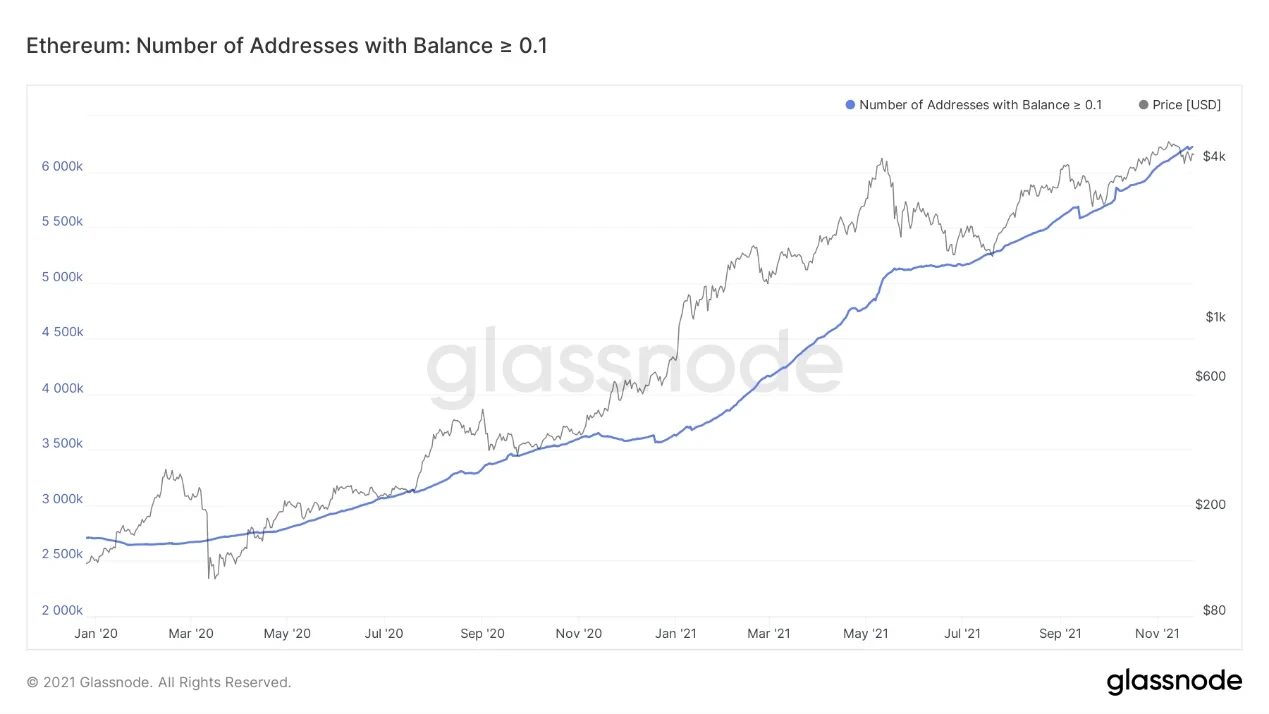
Change in the number of addresses holding over 0.1 ETH, data source: Glassnode
For comparison, let's also observe the change in the number of addresses holding over 0.01 BTC (author's note: to ensure the objectivity of the comparison as much as possible, considering the price difference between Bitcoin and Ethereum in current US dollars, 0.1 ETH—approximately $440, and 0.01 BTC—approximately $560 were selected). According to Glassnode data, as of November 24, the number of addresses holding over 0.01 BTC has also exceeded 9.26 million,同样创下历史新高.
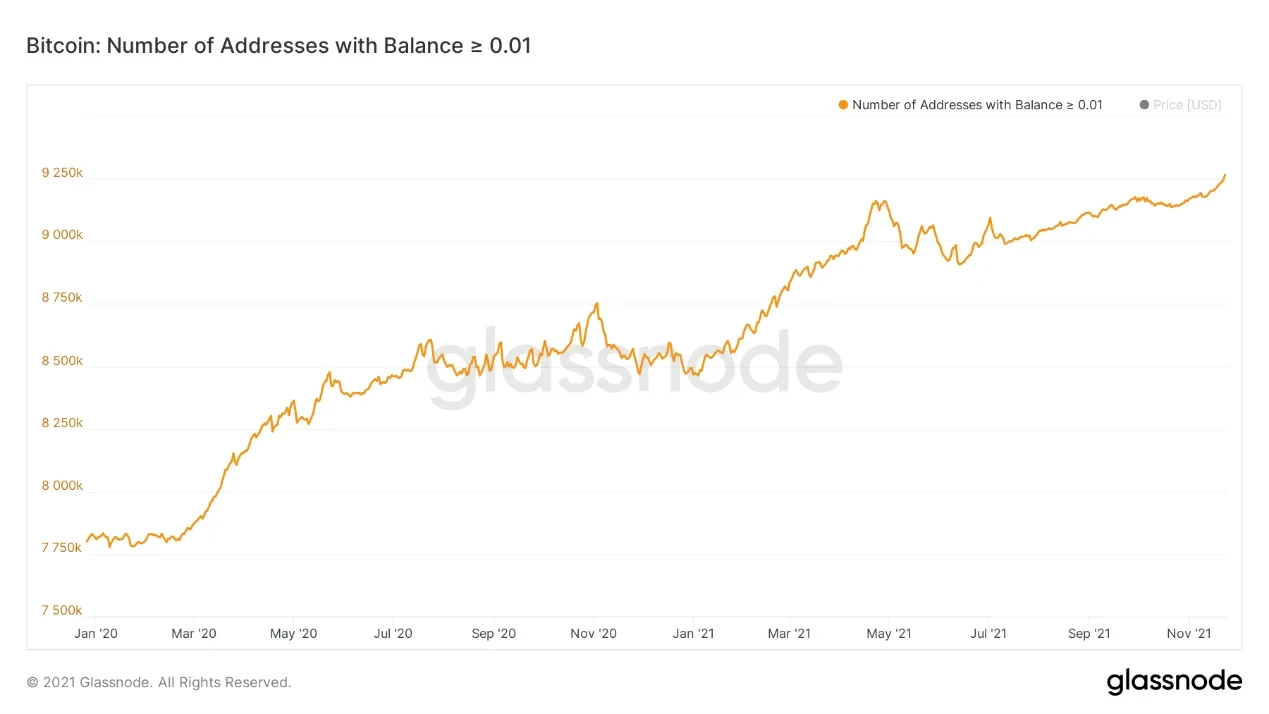
Change in the number of addresses holding over 0.01 BTC, data source: Glassnode
However, since Bitcoin was born 5 years earlier than Ethereum, a simple comparison of cumulative address numbers would appear unfair, so let's take data from January 2021 onwards for further comparison. On January 1, 2021, the number of addresses holding over 0.01 Bitcoin was 8.467 million, while the number of addresses holding over 0.1 Ethereum on that day was 3.626 million. In terms of growth rate, from the beginning of the year to now, the number of addresses holding over 0.01 Bitcoin grew by 9.37%, while the number of addresses holding over 0.1 Ethereum grew by 72.4%. This change to some extent corroborates some of the views in Goldman Sachs' "Global Macro Research" report.
Ethereum 2.0 Merge Approaching, Ethereum May Enter Full Deflationary Mode
In the article "Ethereum 2.0 One-Year Anniversary: What Information Is Worth Watching?" first published by OKX Academy this Monday, we highlighted the slowdown in Ethereum network net issuance due to ETH destruction since the EIP-1559 proposal went live. According to statistics from OKLink on-chain masters, as of November 25, 2021, the network has cumulatively burned over 1 million ETH, and since officially welcoming the first deflationary day on September 3, there have been multiple deflationary scenarios where burning exceeded issuance. From an economic perspective, this will undoubtedly lead market investors to place greater expectations on Ethereum's future.
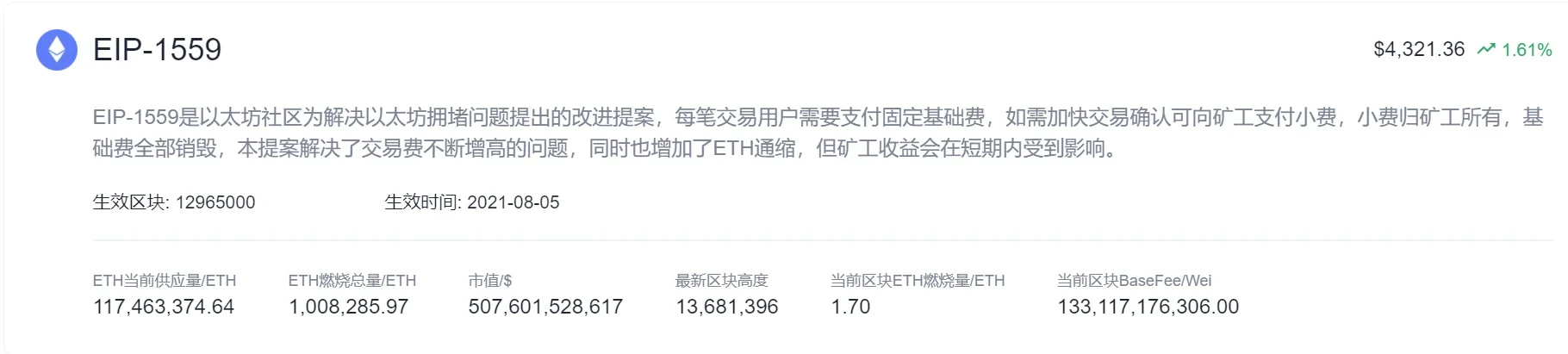
Ethereum network supply and burning overview after EIP-1559 went live, data source: OKLink on-chain masters
In the Goldman Sachs report mentioned above, another viewpoint was proposed—"Bitcoin's scarcity is insufficient to support its store of value function, and Ethereum will replace it." For this view, Goldman Sachs' rationale is that the key to successful store of value lies in demand, not scarcity. Currently, major store of value assets in the market have stable supply, such as gold increasing at a rate of 2% annually, yet it remains a recognized store of value asset. In contrast, rare elements like osmium are not store of value means because fixed and limited supply stimulates hoarding, which leads new buyers to bid higher than existing buyers, thereby pushing up price volatility and creating financial bubbles.
Looking at Ethereum, although it has maintained an inflation rate of 4%-8% for most of the past 6 years and has no cap on total supply in its design mechanism, it's important to note that the total amount of currency Ethereum generates per unit of time is a fixed value. Moreover, considering the boost from EIP-1559 and the current high-speed development of the Ethereum ecosystem in recent years, gas consumption on its network will also fluctuate accordingly. Therefore, compared to maintaining value through limited supply, it's more important to reduce the sharp increase and unpredictable growth of new supply. Ethereum's current model combining moderate inflation with dynamic adjustment is clearly more flexible and better aligns with future society's requirements for blockchain infrastructure.
Recent Hesitation to Sell Intensifies
Finally, let's bring our focus back to the present. We know that for most investors in the market, transferring assets to trading platforms like OKX is the most common selling method. Therefore, from changes in the amount of Ethereum on trading platform addresses, we can roughly understand the strength or weakness of investors' willingness to sell. Through Glassnode statistics, we can see that since mid-April 2020, the proportion of ETH in trading platform addresses to total circulation has shown a downward trend. Although there was a slight increase between May and July of this year, it soon returned to the downward range. Currently, the amount of Ethereum on trading platform addresses has dropped from a high of 22.51 million in mid-April 2020 to around 14.18 million. Even without considering new issuances during this period, over the past 19 months, the net decrease in Ethereum on trading platform addresses has exceeded 37%. This situation can be interpreted as investors transferring their held Ethereum to independent wallets, DeFi smart contracts, or ETH 2.0 staking. Of course, Ethereum miner addresses are also an important target worth attention.
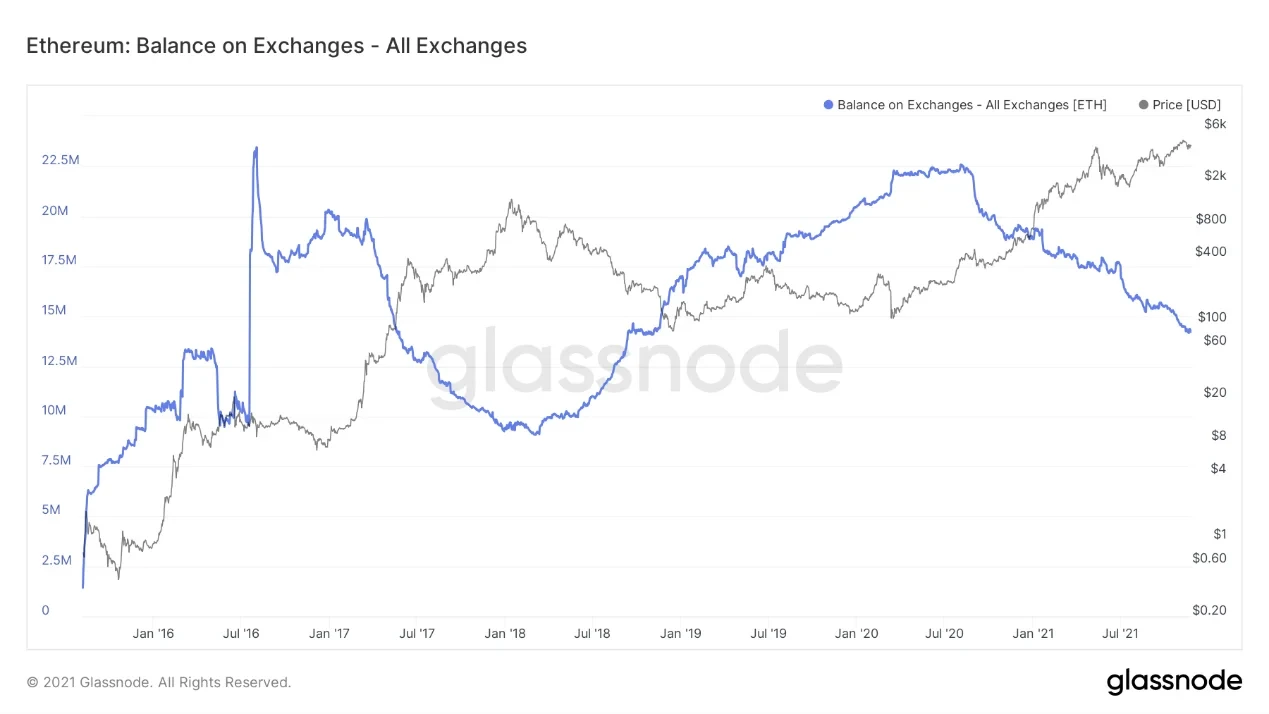
Change in Ethereum amount on trading platform addresses, data source: Glassnode
However, regardless of where these Ethereum ultimately flow, objectively they all reduce selling pressure in the secondary market and to a certain extent reflect intensified hesitation to sell.
Of course, the above content is mostly based on less rigorous speculation derived from on-chain data changes and cannot or should not serve as a reference for everyone's investment decisions. Because in the crypto market, beyond this on-chain visible information, it will also be influenced by multiple complex, unpredictable, and even uncontrollable factors from traditional financial markets and crypto market investor sentiment fluctuations. Only by mastering as much of the above information as possible and conducting comprehensive analysis and judgment can it be possible to make correct investment decisions.
Disclaimer
This article may contain content related to products that are not available in your region. This article is intended to provide general information only and does not take responsibility for any factual errors or omissions herein. This article represents only the author's personal views and does not represent OKX's views. This article is not intended to provide any of the following advice, including but not limited to: (i) investment advice or investment recommendations; (ii) offers or solicitations to buy, sell, or hold digital assets; or (iii) financial, accounting, legal, or tax advice. Holding digital assets (including stablecoins) involves high risk, may fluctuate significantly, and even become worthless. You should carefully consider whether trading or holding digital assets is suitable for you based on your financial situation. For questions regarding your specific situation, please consult your legal/tax/investment professional. The information appearing in this article (including market data and statistics, if any) is for general reference only. Although we have taken all reasonable precautions in preparing these data and charts, we assume no responsibility for any factual errors or omissions expressed herein. © 2025 OKX. This article may be reproduced or distributed in full, or excerpts of 100 words or less from this article may be used, provided such use is non-commercial. Any reproduction or distribution of the entire article must also prominently state: "Copyright © 2025 OKX, used with permission." Permitted excerpts must cite the article name and include attribution, for example "Article Name, [Author Name (if applicable)], © 2025 OKX". Some content may be generated or assisted by artificial intelligence (AI) tools. Derivative works or other uses of this article are not permitted.
Show More
Recommended Reading
OKX Pay: Opening a New Era of Next-Generation Crypto Payments
The choice of tens of millions of users. Register OKX and enjoy the ultimate trading experience and diverse wealth management products. A letter from OKX CEO Star: Today, we officially launch the first version of OKX Pay to over 100 million global users. As the industry's first payment application to truly achieve non-custodial and compliant integration, OKX Pay will be embedded in the OKX App, currently open to select markets, expected to fully launch within months
March 22, 2026

New Chapter: Building Next-Generation Financial Infrastructure Together
The partnership between OKX and Intercontinental Exchange (ICE) is an important moment for OKX and equally significant for the evolution of the entire digital assets market. ICE establishes and operates the world's most important financial infrastructure, including the New York Stock Exchange as well as global derivatives and clearing platforms. This ICE strategic investment in OKX and joining our board reflects both parties' shared belief—digital assets technology will play a crucial role in financial markets
March 10, 2026
Tribute to Another Year of Forging Ahead
As OKX's CEO, and also a builder who remains true to our original mission, I proudly look back on the extraordinary growth and progress OKX has achieved this year. Despite numerous challenges, 2024 was a year filled with focus, innovation, and resilience. We not only expanded and optimized our products but also made significant progress in launching transparent and regulatory-compliant localized businesses, while further strengthening our global management team. Notably, after experiencing
January 29, 2026

2025: Steady Progress Toward Financial Freedom Together
— A year-end letter from OKX Founder and CEO Star to global users "Financial freedom" is often misunderstood. It doesn't mean no rules, but rather having the right to choose even when rules exist—and when the system is truly tested, it remains reliable and effective. This is exactly the direction we've remained focused on throughout 2025. First, I want to extend my sincere gratitude to our global customers, partners, and regulatory authorities
January 16, 2026

OKX Officially Launches in Germany and Poland
Author: Erald Ghoos, CEO of OKX Europe Today is significant for OKX—and equally for crypto users across Europe. We have officially launched a fully compliant centralized cryptocurrency trading platform in Germany and Poland! For us, this is not just a geographic expansion, but a commitment to building the cryptocurrency future the right way: secure, transparent, and meeting local needs. If you're in Germany
October 21, 2025

Partnership Upgraded! OKX Partners with Standard Chartered to Expand European Market
On October 15, OKX Europe CEO Erald Ghoos stated that OKX is expanding its strategic partnership with Standard Chartered to the European Economic Area (EEA). Earlier this year, OKX first partnered with Standard Chartered in the UAE to launch the collateral mirroring program—a
October 15, 2025