Understanding Polkadot Parachain Slot Auctions at a Glance
DOT-5. 81%
As DOT holders voted to pass the referendum for Polkadot's first parachain auction, the highly anticipated Polkadot parachain slot auction is about to officially begin. Over the past year or two, Polkadot's development has made remarkable progress, with its canary network Kusama also successfully launching its 12th slot auction. As of November 1st, Polkadot's total market cap has reached $45.79 billion, Kusama has reached $3.365 billion, and 11 parachains have gone live on the Kusama network. Currently, the Polkadot ecosystem has over 500 projects, with 297 validators.
As an important milestone event for the industry, Polkadot's parachain slot auction holds significant meaning for the blockchain field, marking the beginning of the cross-chain era. This article provides a comprehensive analysis of Polkadot's architecture, the parachain slot auction mechanism, and its impact, helping readers gain a deeper understanding of this event.
1. Polkadot Blockchain Architecture
Before introducing Polkadot's slot auction mechanism, it is first necessary to understand Polkadot's background and architecture.
The reason Polkadot has become a highly watched cross-chain star project is mainly related to the technical team led by its founder, Dr. Gavin Wood, and its grand Web3.0 vision.
In 2015, after leaving Ethereum, Gavin Wood founded Parity Technologies and proposed the concept of "Web3.0". In 2016, with the release of the Polkadot whitepaper "Polkadot: A Scalable Heterogeneous Multi-Chain Framework" and the emergence of the parachain concept, the Polkadot project was officially launched. In 2018, Gavin introduced Substrate, a scalable, modular, and general-purpose blockchain technology framework for Polkadot, dedicated to helping developers achieve "one-click chain launching".
Polkadot's architecture consists mainly of three parts: parachains, the Relay Chain, and bridges. The Relay Chain is a blockchain created based on Substrate that serves as the center of the Polkadot network, responsible for verifying, protecting, and coordinating parachains, and maintaining the security of the entire network; Parachains connect to and interact with the Relay Chain through slots, handling various "day-to-day" operations. Currently, parachains can be smart contract platforms, DeFi hubs, or any protocol focused on different businesses.
Bridges mainly help the Polkadot system connect to external blockchain systems, allowing Polkadot to communicate with independent blockchain networks. These independent blockchain networks do not use Polkadot's Relay Chain for security verification, but instead use their own security mechanisms, such as Bitcoin and Ethereum networks. Another key component related to the auction is the Parachain Slot, which serves as the interface between the Relay Chain and parachains. To share Polkadot's network security and interact with other parachains, one must do so through slots. Slots are divided into community beta slots, commercial slots, with 20% of slots reserved for the Web3 Foundation to deploy and support, serving as community beta parachains to promote the development of the entire Polkadot ecosystem, while the remaining 80% of slots are commercial slots opened through auction methods.
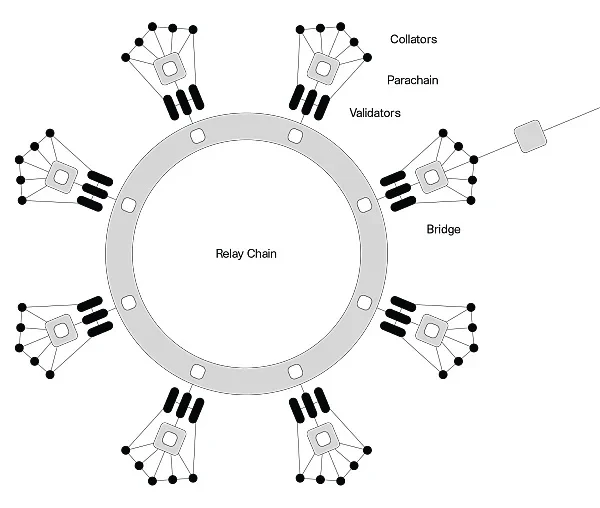
Based on this, Polkadot is a scalable, heterogeneous multi-chain blockchain. The main functions of the Polkadot network are: first, to provide interoperability for blockchains; second, to provide security for blockchains.
Polkadot's network governance has four main roles: Nominators, Validators, Collators, and Fishermen. Users holding DOT can participate in governance as nominators by staking tokens and voting to support validators; validators are responsible for sealing new blocks on the Polkadot network, and to become a validator one must stake a certain amount of DOT tokens, or can be elected through delegation by nominators; collators mainly help validators produce valid parachain blocks, responsible for fully synchronizing databases and operating full nodes (validators can be understood as PoW mining pools, collators as miners); fishermen are somewhat like light nodes, mainly earning generous rewards by detecting misbehaving validators.
In general, Polkadot follows the principle of decentralization and relies primarily on on-chain voting. In addition to these important roles, Polkadot has also established a Council, whose members are elected and can vote with priority, as well as directly veto proposals.
2. Slot Auction Mechanism and Methods
From Polkadot's architecture, it can be seen that blockchain projects can connect to and interact with Polkadot through parachains or bridges. To become a Polkadot parachain, one must connect through a slot. However, there are only about 100 parachain slots available, and only one is released at a time, so Polkadot has designed an auction mechanism allowing projects to compete for slot usage rights.
Polkadot's parachain auction uses a "candle auction + random parameter" mechanism, simulating the "candle auction" process on the blockchain while incorporating the concept of "second-price sealed-bid auction". So how does it work specifically?
"Candle auction" originated in the 16th century when selling ships, named after the "inch of candle" that determined the auction's open period. When the candle flame went out, the auction would suddenly end, and the bidder at that moment would win. When candle auctions are used online, a random number is usually needed to determine the end time.
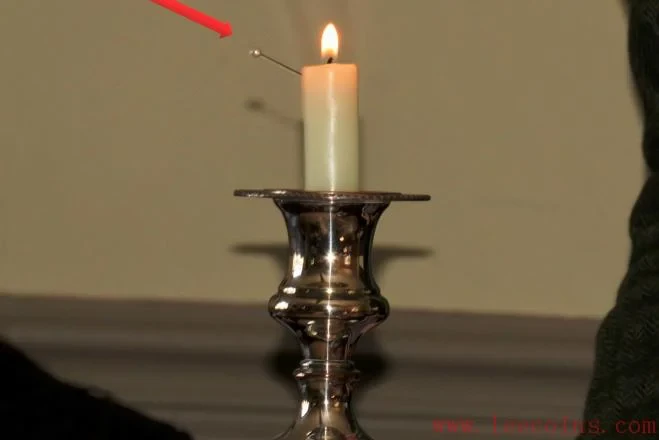
However, parachain slot auctions differ slightly from ordinary candle auctions because they do not use a random number to determine the duration of their opening phase. Instead, there is a known open period, "at normal end, retrospectively determining that it ended at some point in the past". Polkadot will use a VRF-based random beacon to retrospectively determine the auction's "end time". In other words, during the candle auction process, everyone knows the auction status, including other parachain bids, but no one can know the auction end time in advance. This effectively prevents "auction sniping" and encourages projects to participate and bid early.
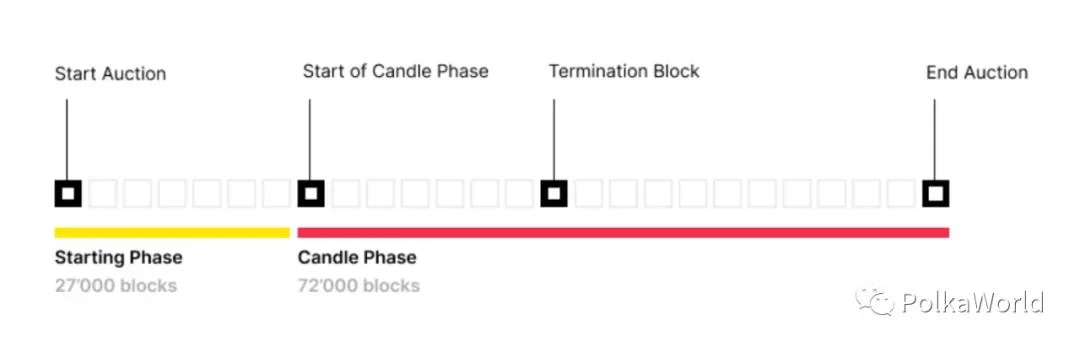
The entire auction process is divided into two phases: the safety period and the random period. In both phases, DOT can be freely staked. During the safety period, projects are more likely to compete with bids. Once the random period begins, the auction will end at any time based on the on-chain random number. At that point, whichever project has staked the most DOT will win the slot rental.
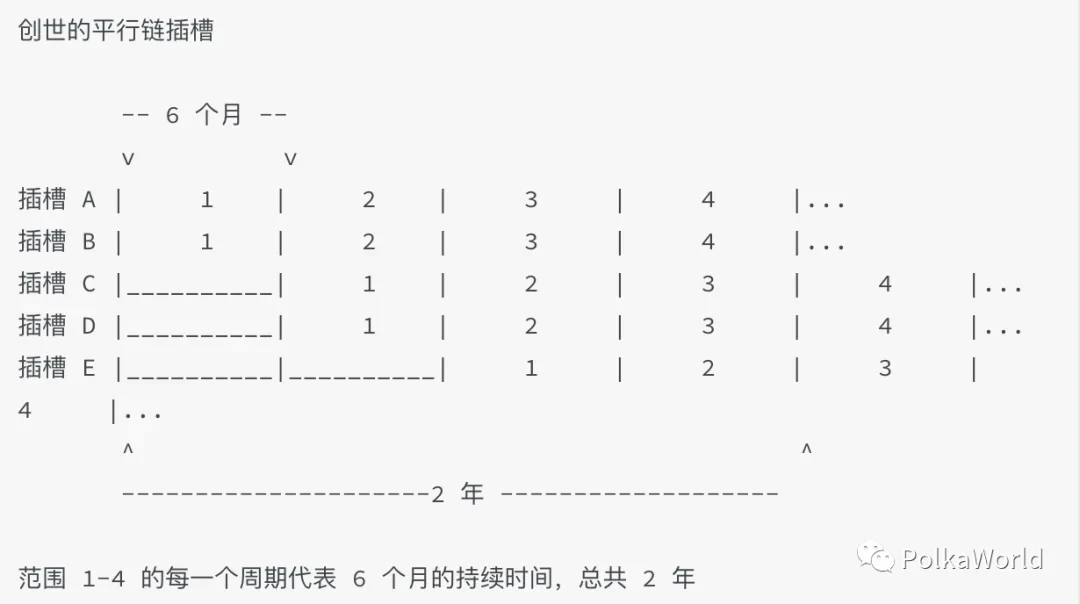
The maximum slot duration is 2 years, with each rental period being 6 months. Projects participating in the auction must bid for individual or adjacent rental periods, meaning they can extend their lease to the full 2-year slot period by renting a continuous slot. Winners need to lock (stake) their DOT during the corresponding rental period.
Regular investors who want to participate in slot auctions can do so through Crowdloan, locking DOT to the project they support to help them participate in the auction. It is important to note that if the project you support wins the auction, these DOT assets will be locked during the project's corresponding rental period; if the auction fails, they will all be returned. The OKX platform will support this Polkadot parachain slot auction, and investors will be able to participate with one click through OKX.
3. What Does It Mean for the Market and Investors?
As an important milestone for Polkadot, the parachain slot auction holds significant meaning for both Polkadot and the entire blockchain field.
First, for Polkadot, parachains are the essential foundation for achieving cross-chain functionality. The connection of parachains means Polkadot will be able to achieve data and asset communication and interoperability between different blockchains. For the Polkadot ecosystem, the parachain slot auction mechanism can help Polkadot filter high-quality, market-recognized, and sustainably developing projects, supporting Polkadot's future development and implementation.
Additionally, the parachain slot auction is a manifestation of DOT's value within the Polkadot ecosystem and enriches DOT's use cases. Since projects bidding for parachain slots and investors participating in voting all need to stake DOT, this will directly increase DOT's locked amount and market demand. With the launch of parachain slot auctions, a significant amount of DOT liquidity is expected to be locked, which to some extent gives DOT space for value appreciation.
Second, for project teams, the parachain slot auction provides a fair and open opportunity. Becoming a Polkadot parachain will allow them to share Polkadot's network consensus and security, while also enabling business sharing and interaction across different business lines, giving them a significant first-mover advantage and helping advance development work and later ecosystem construction as early as possible. It is expected that projects that previously won Kusama slot auctions will very likely continue to "sprint" for Polkadot slot auctions.
Finally, for investors, Crowdloan provides an "easy" way and opportunity to participate in the Polkadot ecosystem. Investors stake DOT by selecting and supporting a project in the auction module to help the project participate in the auction. At the same time, if the project wins the auction, investors will receive incentives or rewards from the project team, but they also need to sacrifice a certain opportunity cost and the liquidity of their assets for a period of time. DOT will only be returned if the project fails the auction or the lease period expires.
However, it is worth noting that the Polkadot ecosystem already has over 500 projects. How should investors verify and filter high-quality projects? Combining official recommendations from the Polkadot Chinese community, we have summarized several points, divided into "hard indicators" and "soft indicators". Hard indicators include: 1) Whether the code is open source and the activity level of the codebase; 2) A reputable team; 3) Projects that have received Web3 Foundation Grants or are part of the Substrate Builders Program; 4) Clear integration relationships with Polkadot. Soft indicators include: 1) Website quality and professionalism; 2) Authenticity of social media presence; 3) Whether media content is objective information. If you confirm that a project is a qualified Polkadot ecosystem project, the last thing you need to understand is the project's use case and what new things it can bring to the Polkadot ecosystem.
Additionally, DOT holders may want to note that recently, Polkadot founder Gavin Wood stated on Twitter that the Polkadot Treasury has allocated over 18.9 million DOT to a development fund that will be disbursed through community governance, and that funds will be mobilized to realize the community's vision of "building, improving, and educating" the Polkadot ecosystem, as well as "anything else that Polkadot governance deems valuable". This demonstrates Polkadot's emphasis on ecosystem development and DOT's allocation value. As Polkadot's cross-chain progress accelerates, will Polkadot be able to compete with Ethereum once again? And will DOT reach new highs? Let's wait and see.
Disclaimer
This article may contain product-related content that does not apply to your region. This article is only intended to provide general information and does not responsible for any factual errors or omissions. This article represents the author's personal views only and does not represent the views of OKX. This article is not intended to provide any advice, including but not limited to: (i) investment advice or investment recommendations; (ii) offers or solicitations to buy, sell, or hold digital assets; or (iii) financial, accounting, legal, or tax advice. Holding digital assets (including stablecoins) involves high risk and may fluctuate significantly, or even become worthless. You should carefully consider whether trading or holding digital assets is suitable for you based on your financial situation. For questions about your specific circumstances, please consult your legal/tax/investment professional. The information contained in this article (including market data and statistical information, if applicable) is provided for general reference purposes only. Although we have taken all reasonable precautions in preparing such data and charts, we assume no responsibility for any factual errors or omissions expressed herein. © 2025 OKX. This article may be reproduced or distributed in full, or excerpts of 100 words or less may be used, provided that such use is for non-commercial purposes. Any reproduction or distribution of the full article must prominently state: "This article is copyrighted © 2025 OKX, used by permission." Permitted excerpts must cite the article name and include attribution, for example, "Article name, [author name (if applicable)], © 2025 OKX". Some content may have been generated or assisted by artificial intelligence (AI) tools. Derivative works and other uses of this article are not permitted.
Show More
Recommended Reading
OKX Pay: Ushering in a New Era of Next-Gen Crypto Payments
The choice of tens of millions of users. Register with OKX and enjoy an exceptional trading experience and diverse wealth management products. A letter from OKX CEO Star: Today, we are officially launching the first version of OKX Pay for over 100 million global users. As the industry's first payment application to truly integrate non-custodial and compliant solutions, OKX Pay will be embedded within the OKX App and is currently available to select markets, with full rollout expected in
2026年3月22日

A New Chapter: Building the Next Generation of Financial Infrastructure Together
The partnership between OKX and the Intercontinental Exchange (ICE) marks a significant moment for OKX and holds equally profound meaning for the evolution of the entire digital assets market. ICE establishes and operates the world's most critical financial infrastructure, including the New York Stock Exchange and global derivatives and clearing platforms. This investment by ICE in OKX and its joining of our board reflects our shared belief that digital assets technology will play a pivotal role in the financial
2026年3月10日
Celebrating Another Year of Resilience and Progress
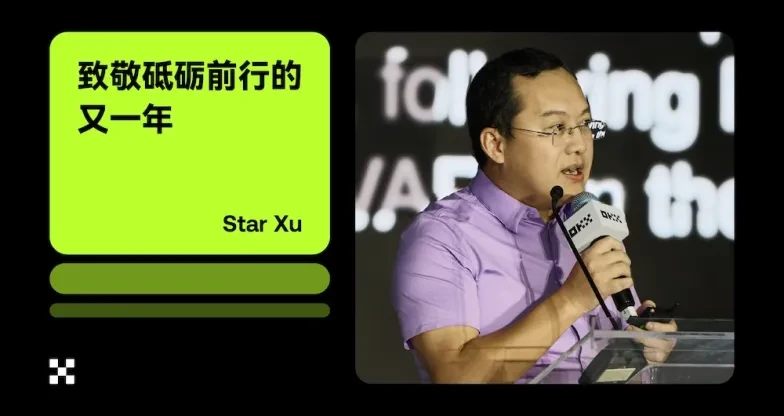
As the CEO of OKX and a builder who stays true to the original mission, I take great pride in reflecting on the extraordinary growth and progress OKX has achieved this year. Despite challenges, 2024 was a year filled with focus, innovation, and resilience. We not only expanded and optimized our products, but also made significant strides in launching transparent and regulation-compliant localized businesses, while further strengthening our global management team. It is worth noting that after
2026年1月29日

2025: Steady Progress Toward Financial Freedom
— An End-of-Year Letter to Global Users from Star, Founder and CEO of OKX "Financial freedom" is often misunderstood. It does not mean the absence of rules, but rather having the freedom to choose — even when rules exist — and having a system that remains reliable and effective when truly put to the test. This has been our unwavering focus throughout 2025. First, I would like to extend my sincere gratitude to our global customers, partners, and regulators for
2026年1月16日

OKX Officially Launches in Germany and Poland
By Erald Ghoos, CEO of OKX Europe Today is a significant day for OKX — and for crypto users across Europe. We have officially launched our fully compliant centralized cryptocurrency trading platform in Germany and Poland! For us, this is not just a geographic expansion, but a commitment to building the future of cryptocurrency the right way: secure, transparent, and tailored to local needs. If you are in Germany
2025年10月21日
Partnership Upgrade! OKX Joins Forces with Standard Chartered to Expand into Europe
On October 15th, Erald Ghoos, CEO of OKX Europe, stated that OKX is expanding its strategic partnership with Standard Chartered into the European Economic Area (EEA). Earlier this year, OKX first partnered with Standard Chartered in the UAE to launch the collateral mirroring program — a
2025年10月15日