Music NFTs Are More Than Just About the Money
To understand "why so many people are willing to spend huge sums on avatars that look rather ugly," Twitter user cwweb3 spent two days researching, trying to grasp the underlying significance. Still unsatisfied, they decided to spend 1.4 million yuan on a Bored Ape. After gaining access to this exclusive community, the final barrier broke down — they began to understand the true meaning behind the seemingly abstract concepts of open spirit, culture and community, celebrity and brand effect that underpin scarce top-tier NFTs. One could say that the 2021 NFT boom was almost entirely centered around culture, community, trends, creativity, and individuality.
So, what interesting stories unfold when we shift our gaze from image NFTs to music NFTs? What do music NFTs truly mean for artists ranging from unknown indie musicians to world-famous singers?
1. Music NFTs Bring Far More Than Just Wealth
If we pose all questions about music NFTs to artists like 3LAU, Kings of Leon, or Whitney Houston, the answers become remarkably straightforward.
On March 5, 2021, the renowned Kings of Leon released their latest album, When You See Yourself, in NFT format. Fans could purchase a token for $50, receiving a limited-edition vinyl record shipped for free, album download rights, and a rare piece of artwork. Over the following two weeks of NFT sales, Kings of Leon earned $2 million. By contrast, releasing the same album's songs through traditional streaming would require approximately 400 million plays on Spotify (roughly 1.3 clicks per person across the entire U.S.) to generate the same revenue.
Kings of Leon's resident crypto expert, Followill, believes that "within the next decade, 70% of albums will be released as NFTs."
For Kings of Leon, music NFTs represent wealth and the future. But for another well-known musician, 3LAU, music NFTs symbolize wealth and career.
In November 2021, Royal — a blockchain-based music tokenization platform — raised $55 million in funding, attracting strategic investments from renowned artists including The Chainsmokers, Nas, Logic, Stefflon Don, Kygo, Joyner Lucas, and Disclosure. Royal was founded by acclaimed musician and producer 3LAU (Justin Blau). This was Royal's second round of funding following a $16 million raise in August of the previous year, and ranks among the largest financings ever secured by a blockchain-based music platform.
3LAU is also one of the earliest artists in the music world to embrace music NFTs. As early as the fall of 2020, 3LAU sold their first batch of NFTs — but this pales in comparison to the auction at the end of February 2021, when this electronic dance music star earned $11.7 million from a three-day auction of their album Ultraviolet. Following this, Justin Blau became one of the most prominent global advocates for music NFTs.
For well-known musicians Diana Sinclair and Whitney Houston, however, music NFTs represent a blend of entertainment and wealth.
On December 13, the music NFT marketplace One Of auctioned Whitney Houston's One of One NFT record, which included a recording demo Houston made at age 17 — a track never heard by anyone before. Paired with a digital video created by the 17-year-old acclaimed artist Diana Sinclair, this single sold for $999,999. The auction winner of One of One received full personal usage rights to the song. While usage rights are not equivalent to public distribution rights, the owner holds complete private usage rights.
But for musicians like Terra Naomi — who started out unknown and gained global attention through sheer talent — music NFTs represent trust, care, empathy, and continuation.
In 2006, Naomi livestreamed their "virtual" summer tour on YouTube, causing a sensation across the global YouTube community. In June 2006, their song Say It's Possible was recorded in their Hollywood apartment using a Sony portable camera, then uploaded to YouTube, generating tremendous interest. With Naomi's healing lyrics and vocals, paired with the song's beautiful melody and rhythm, it instantly inspired hundreds of thousands of fans worldwide. Naomi subsequently signed with Universal Music and Island Records, performed solo concerts at Wembley Stadium, and toured across Europe and the UK.
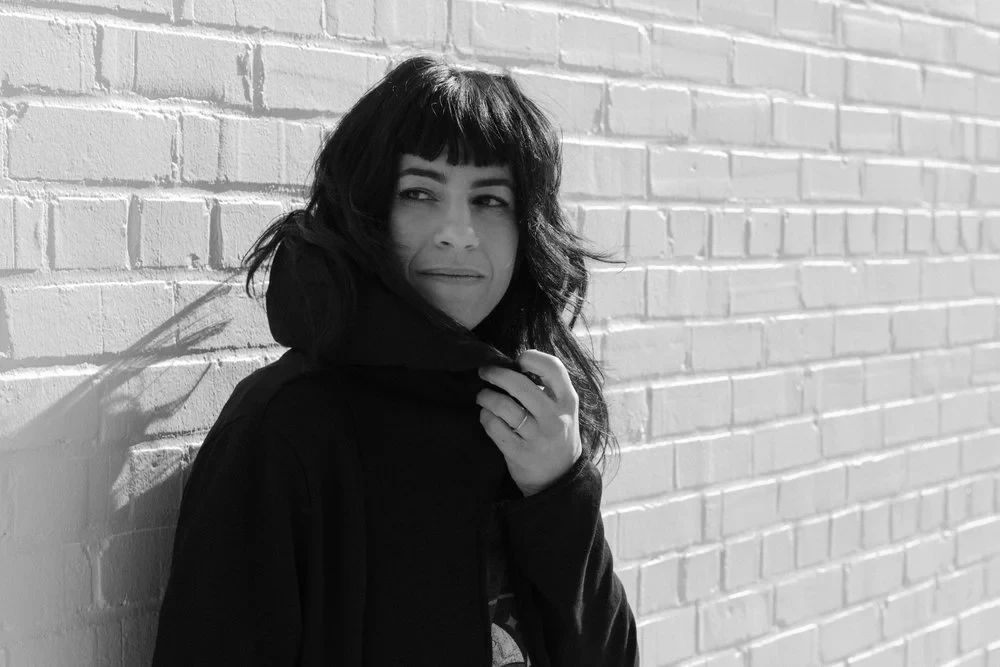
Terra Naomi
In 2021, Naomi reclaimed the copyright to Say It's Possible from Universal Music, recorded a brand-new version, and partnered with the music NFT platform async to release this new version as an NFT.
On async — a music and art NFT minting and trading platform — users can purchase blank film strips issued by the platform using ETH or credit cards. These film strips come in silver, gold, and platinum tiers. Users can then "remix" an original song by a specific artist, ultimately minting an NFT record that is entirely their own. To illustrate the remix process using Say It's Possible as an example: async breaks the song down into components based on its style — bass + strings, guitar, drums + percussion, bells + synthesizers, vocals, and more. Each component is further divided into several subtly different versions for investors to choose from, which are then "synthesized" into a complete song.
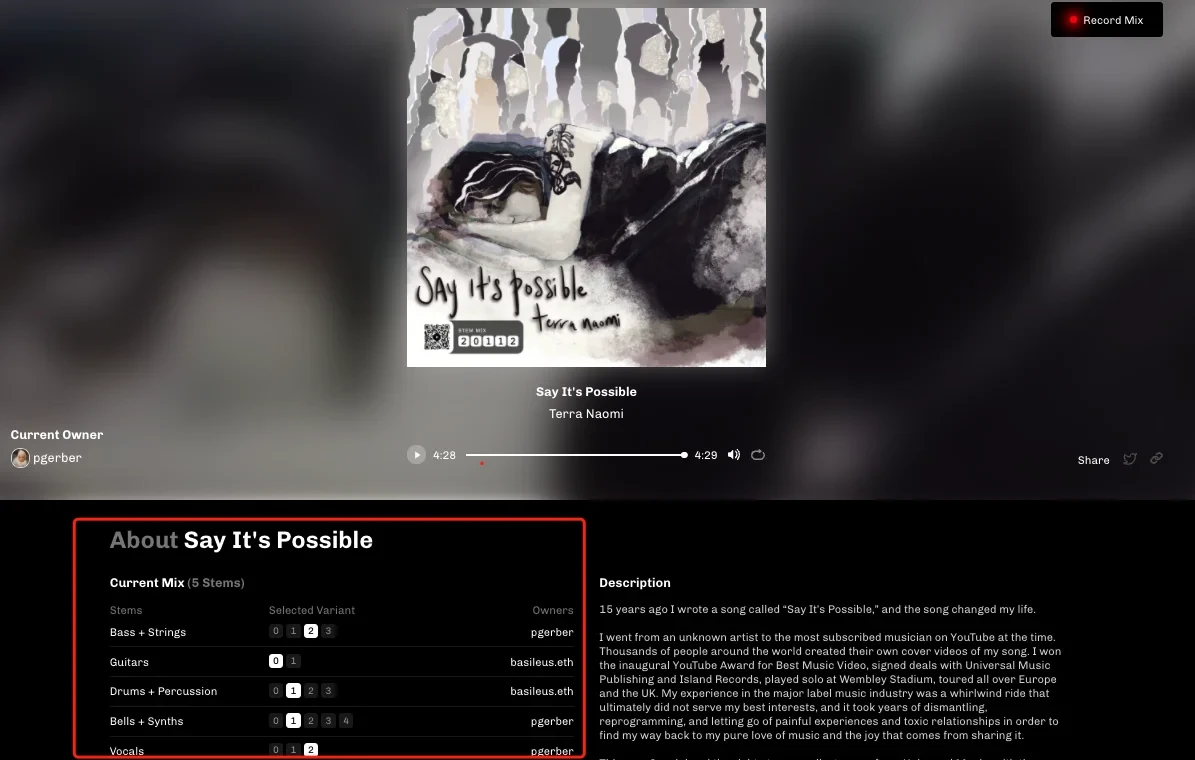
In her introduction to the music NFT release, Naomi wrote, "Fifteen years ago, I wrote a song called Say It's Possible, and it changed my life."
Regarding her determination to transform her music into NFT format, Naomi explained that she had grown from an unknown artist into the most-subscribed musician on YouTube, with hundreds of thousands of people worldwide creating cover videos of her song. However, the experience with Universal Music was a whirlwind journey — one that Naomi felt did not maximize her best interests or bring greater satisfaction and joy to the music career she loves.
Clearly, the path of music NFTs means far more to Naomi than the song from 15 years ago — it represents a rebirth for both the song and her music career, enabled by NFT technology.
Finally, someone has to pay for music NFTs, right?
2. Who Is Paying for Music NFTs?
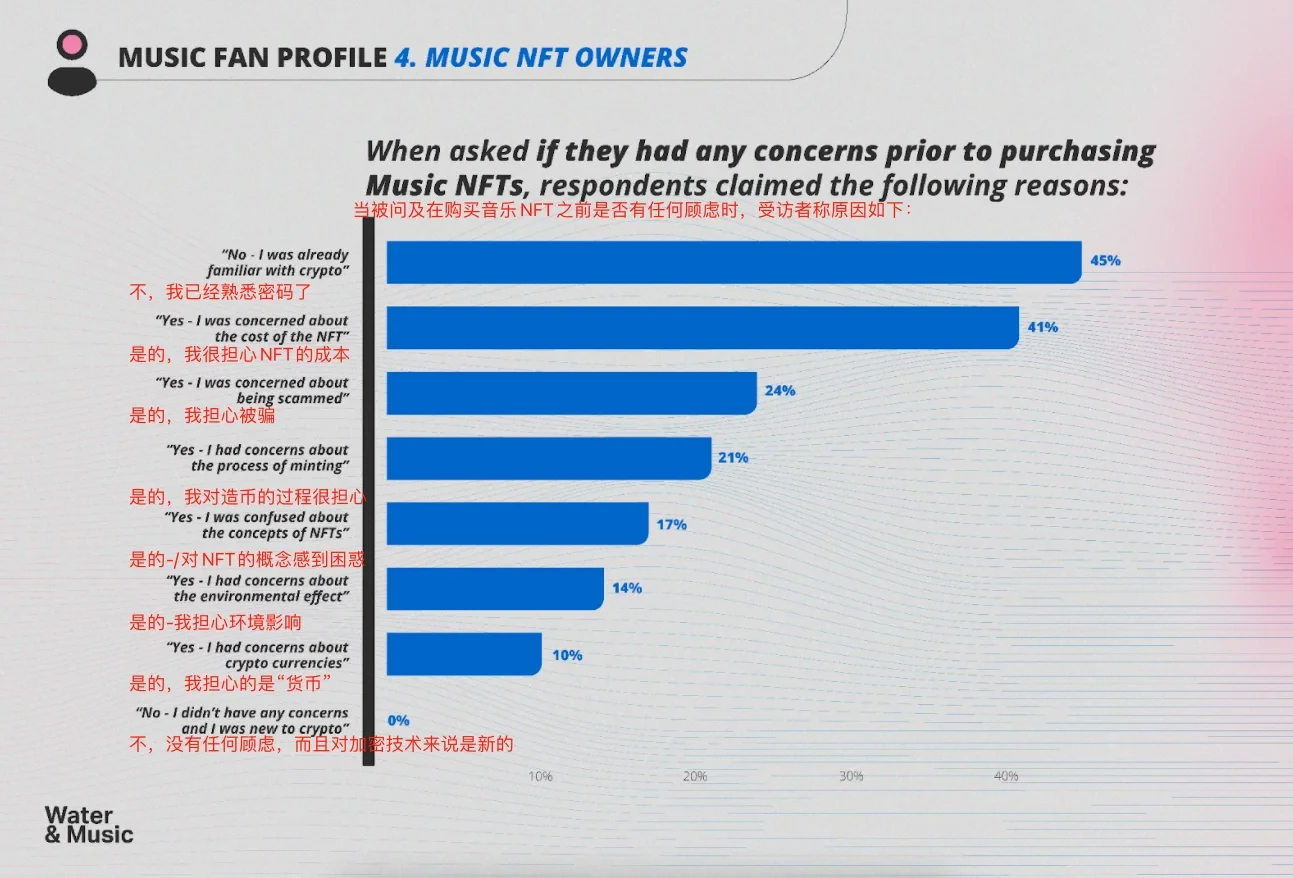
Mid-December, water&music — a professional music NFT research organization — conducted a survey among music NFT investors, categorizing the reasons for investing in music NFTs into four main groups: 1) supporting a specific artist; 2) FOMO; 3) curiosity; 4) other reasons.
Among all investors who purchased music NFTs, 45% were already deeply familiar with the crypto space. In other words, there are virtually no non-crypto investors buying music NFTs. The music NFT market remains confined to the crypto circle.
However, Audius may be poised to change this. Audius is a unique music streaming service. Launched in 2018, it is completely artist-controlled and community token-owned, with over 5 million monthly active users currently. In an agreement announced in mid-August, Audius revealed a partnership with TikTok to make songs from its 100,000+ artists available for TikTok videos.
Why is the music world embracing blockchain and NFTs? Grammy Award-winning British singer Imogen Heap believes that blockchain enables artists to take control of their music and the content they want to express on a much larger scale. Its many advantages include: 1) artist returns autonomy; 2) brand new revenue streams; 3) solving royalty challenges; 4) digital ownership.
Let's focus on the brand new revenue streams and digital ownership that Heap mentioned.
One key advantage of music NFT products is sustainable income. For fans, purchasing a music NFT achieves a similar purpose to buying a vinyl record, but the difference is that every buyer gains access to detailed sales information about that NFT, creating a stronger sense of participation. Additionally, when an NFT is resold on the secondary market, the creator receives a share of the resale revenue — an advantage that traditional music distribution methods lack.
On royalties: releasing a song requires collaboration from lyricists, singers, musicians, producers, recording engineers, and other contributors. When a song is played, all contributors associated with it should receive royalty payments. Under traditional streaming models, musicians frequently encounter issues of unpaid royalties and copyright infringement. Even when royalties are received, the lengthy settlement process means musicians must wait six months to a year before finally getting their returns — how many young musicians' dreams are shattered by this system!
By digitizing music distribution through NFT technology on the blockchain, and leveraging blockchain's transparent system and the automatic execution of smart contracts, artists will experience instant royalty payments.
It must be said that digital art/collectibles/music offer a more vivid illustration of what blockchain can do. Although the NFT art market remains niche, its flourishing development has already caused the global traditional art market value to drop by 5% in 2021, and has attracted hundreds of thousands of artists worldwide to the NFT space. The transformation of the music industry through music NFTs has only just begun.
Disclaimer
This article may contain product-related content not applicable to your region. This article is intended to provide general information only and does not accept responsibility for any factual errors or omissions. The views expressed herein are solely those of the author and do not represent OKX's views. This article is not intended to provide any advice, including but not limited to: (i) investment advice or investment recommendations; (ii) offers or solicitations to buy, sell, or hold digital assets; or (iii) financial, accounting, legal, or tax advice. Holding digital assets (including stablecoins) involves a high degree of risk, and prices may fluctuate significantly or even become worthless. You should carefully consider whether trading or holding digital assets is suitable for you based on your financial situation. For questions specific to your circumstances, please consult your legal/tax/investment professional. The information contained in this article (including market data and statistics, where applicable) is for general reference purposes only. Although we have taken all reasonable precautions in preparing such data and charts, we accept no responsibility for any factual errors or omissions expressed herein. © 2025 OKX. This article may be reproduced or distributed in its entirety, or excerpted in portions of 100 words or less, provided that such use is non-commercial in nature. Any reproduction or distribution of the full article must prominently state: "This article is copyrighted © 2025 OKX, used with permission." Permitted excerpts must cite the article name and include attribution, for example: "Article name, [author name (if applicable)], © 2025 OKX." Portions of this content may have been generated or assisted by artificial intelligence (AI) tools. Derivative works and other uses of this article are not permitted.
Show More
Recommended Reading
OKX Pay: Ushering in a New Era of Next-Gen Crypto Payments
The choice of tens of millions of users. Register on OKX and enjoy an exceptional trading experience and diverse wealth management products. A letter from OKX CEO Star: Today, we officially launch the first version of OKX Pay for over 100 million global users. As the industry's first payment app to truly achieve a fusion of non-custodial and compliant solutions, OKX Pay will be embedded within the OKX App, currently available in select markets with full global rollout expected within months.
2026年3月22日

A New Chapter: Building the Next Generation of Financial Infrastructure Together
The partnership between OKX and the Intercontinental Exchange (ICE) represents a significant milestone for OKX and holds equally profound meaning for the evolution of the entire digital assets market. ICE builds and operates the world's most critical financial infrastructure, including the New York Stock Exchange and global derivatives and clearing platforms. ICE's strategic investment in OKX and joining our board reflects our shared conviction — that digital assets technology will transform financial markets.
2026年3月10日
Celebrating Another Year of Resilience and Progress
As OKX's CEO and a builder who stays true to original aspirations, I take great pride in reflecting on the extraordinary growth and progress OKX achieved this year. Despite challenges, 2024 was a year defined by focus, innovation, and resilience. We not only expanded and optimized our products, but also made significant strides in launching transparent and regulation-compliant localized businesses, while further strengthening our global management team. Notably, after going through
2026年1月29日

2025: Steady Progress Toward Financial Freedom
— An End-of-Year Letter to Global Users from OKX Founder & CEO Star "Financial freedom" is often misunderstood. It doesn't mean the absence of rules, but rather having the freedom to choose — even with rules in place. And when the system is truly put to the test, it remains reliable and effective. This is precisely what we focused on throughout 2025. First and foremost, I would like to express my sincere gratitude to our global customers, partners, and regulators.
2026年1月16日
OKX Officially Launches in Germany and Poland
By Erald Ghoos, CEO of OKX Europe. Today is a significant day for OKX — and for crypto users across Europe. We have officially launched our fully compliant centralized cryptocurrency trading platform in Germany and Poland! For us, this is more than a geographic expansion — it is a commitment to building the future of cryptocurrency the right way: secure, transparent, and tailored to local needs. If you are in Germany
2025年10月21日
Partnership Upgrade! OKX Joins Forces with Standard Chartered to Expand Across Europe
On October 15, Erald Ghoos, CEO of OKX Europe, announced that OKX is expanding its strategic partnership with Standard Chartered to the European Economic Area (EEA). Earlier this year, OKX and Standard Chartered first joined forces in the UAE, launching the Collateral Mirroring program — a
2025年10月15日