Introduction to Unified Trading Account
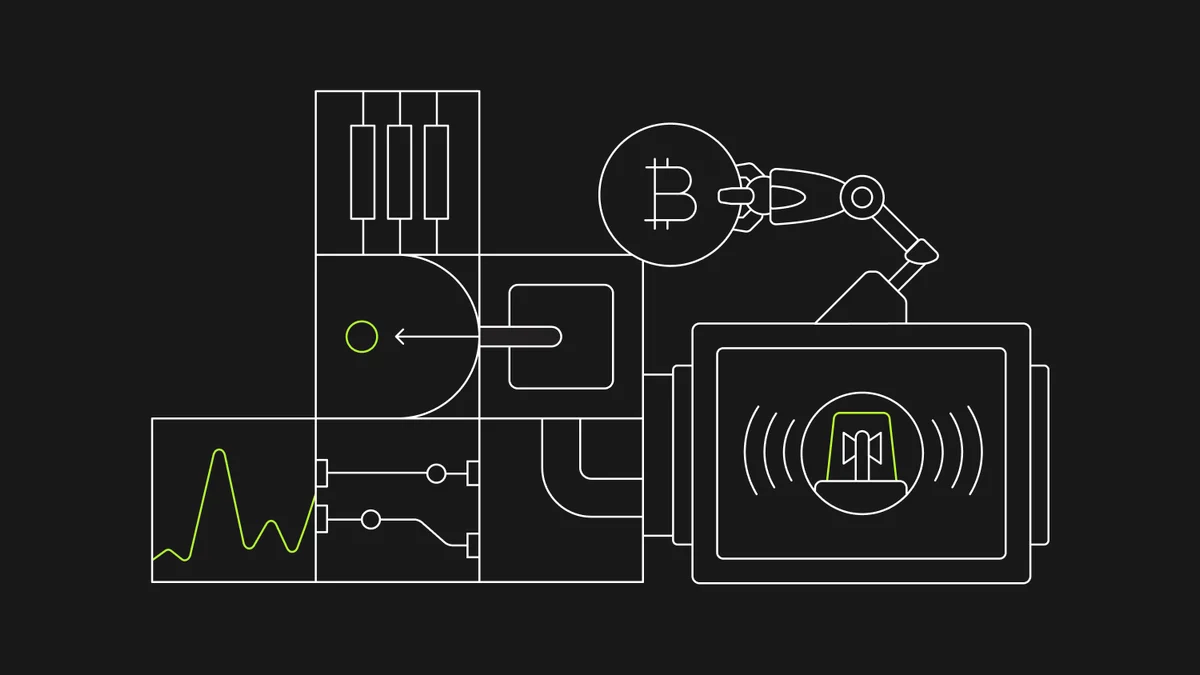
The Unified Trading Account (Unified Account) is OKX's next-generation trading system designed for all users. It supports trading spot and various derivatives using multi-currency assets in a single account, providing great convenience for users — no more need to transfer funds between multiple accounts. Additionally, profits and losses across different business lines can offset each other, effectively improving capital utilization efficiency. The Unified Trading Account offers four new account modes: Spot mode, Spot and Contracts mode, Cross-Margin mode, and Portfolio Margin mode, catering to users' different trading habits and needs.
Disclaimer
This article may contain product-related content not applicable to your region. This article is provided solely for general informational purposes and makes no representation as to any errors or omissions. The views expressed herein are those of the author and do not represent the views of OKX. This article is not intended to provide, and should not be relied upon as, any advice, including but not limited to: (i) investment advice or investment recommendations; (ii) offers or solicitations to buy, sell, or hold digital assets; or (iii) financial, accounting, legal, or tax advice. Holding digital assets (including stablecoins) involves a high degree of risk and may result in significant volatility or even a complete loss of value. You should carefully consider whether trading or holding digital assets is appropriate for you based on your financial situation. For questions specific to your circumstances, please consult your legal/tax/investment professional. The information contained in this article (including market data and statistical information, where applicable) is for general reference purposes only. While all reasonable precautions have been taken in the preparation of such data and charts, we assume no liability for any factual errors or omissions expressed herein. © 2025 OKX. This article may be reproduced or distributed in its entirety or in excerpts of 100 words or less, provided that such use is non-commercial in nature. Any reproduction or distribution of the full article must be accompanied by the following attribution: "© 2025 OKX, used under permission." Permitted excerpts must cite the article title and include attribution, e.g., "Article title, [author name if applicable], © 2025 OKX". Some content may be generated or assisted by artificial intelligence (AI) tools. Derivative works and other uses of this article are not permitted.
Show More
Recommended Reading

Maker/Taker
A maker order is one that provides liquidity to the market in an order book trading system. A taker order is one that takes liquidity from the market. Since maker and taker orders have opposite effects on market liquidity, most trading platforms charge different fee levels for maker and taker trades. Generally, maker fees are lower than taker fees. Click View
December 30, 2024
Trading Currency/Quote Currency
In spot trading, transactions are generally conducted between one digital asset and another. Using the ETH/BTC trading pair as an example, ETH is the "trading currency" while BTC is the "quote currency." OKX currently has three trading zones: the USDⓈ Trading Zone, the USDT Trading Zone, and the CRYPTO Trading Zone.
December 30, 2024

Margin Ratio
What is a margin ratio? The margin ratio is a key indicator used to assess an account's risk status, widely applied in leverage, options, perpetual contracts, and other trading activities. It helps determine whether an account can sustain its current positions and assists traders in reducing the risk of liquidation. If the margin ratio falls below the threshold set by the platform, a liquidation mechanism may be triggered to protect both the trader and the platform's assets. Margin ratio calculation Formula: Margin Ratio = (Currency's cross-margin balance + Cross-margin PnL
December 30, 2024

Funding Fee
To ensure that perpetual contract prices reflect changes in the underlying market, exchanges have established a funding fee mechanism. This mechanism facilitates regular cash exchanges between long and short position holders, causing perpetual contract prices to converge toward the index price. When the funding rate is positive, long position holders pay the funding fee to short position holders; conversely, when the funding rate is negative, short position holders pay the funding fee to long position holders. Note: the platform only facilitates the exchange between long and short positions
August 5, 2024
Slippage
Slippage generally refers to the deviation between the actual execution price and the anticipated price, typically moving in a direction unfavorable to the trader and resulting in additional losses. It primarily occurs during entry and stop-loss operations, and does not occur during profitable exits. When prices rise rapidly, investors want to enter the market promptly to go long in the direction of the trend, causing many orders to crowd into the long side. Meanwhile, the counterparty is reluctant to sell, and is unwilling to go short or
April 25, 2024

Options Contracts
Simple Select Trading/Pro Trading An option is a right that can be exercised at a future point in time. After purchasing an option, if exercising the right is beneficial to the buyer on the expiration date, the buyer will receive corresponding proceeds through exercise, and the seller must make corresponding payments to accommodate the buyer's exercise. If exercising the right is not beneficial to the buyer on the expiration date, the buyer may choose not to exercise, and the seller is not required to make corresponding payments. OKX offers options with Bitcoin (BTC) and Ethereum (ETH) as underlying assets.
April 25, 2024