Futures Trading Introduction
As the market scale of digital assets represented by Bitcoin continues to expand, various forms of derivative trading have gradually emerged beyond spot trading as a tool to hedge risk. Among them, futures trading has garnered the most attention. For example, on the OKX platform, nearly 100 perpetual or delivery contracts have been launched, basically meeting the trading needs of most investors.
However, for many beginner investors, the threshold for futures trading is still relatively high. Many people don't know what futures trading is, let alone how to operate it. This article will guide new users into the world of futures trading.
1. What is Futures Trading? How About Risk and Returns?
Digital asset futures trading refers to buyers and sellers agreeing to trade a certain asset at a specified price at a future time. Futures trading is specifically divided into delivery contract trading, perpetual contract trading, and options contract trading. Investors can obtain returns from digital asset price increases by "buying long" contracts, or obtain returns from digital asset declines by "selling short," or achieve risk avoidance through hedging methods, or use arbitrage models to stably earn profits.
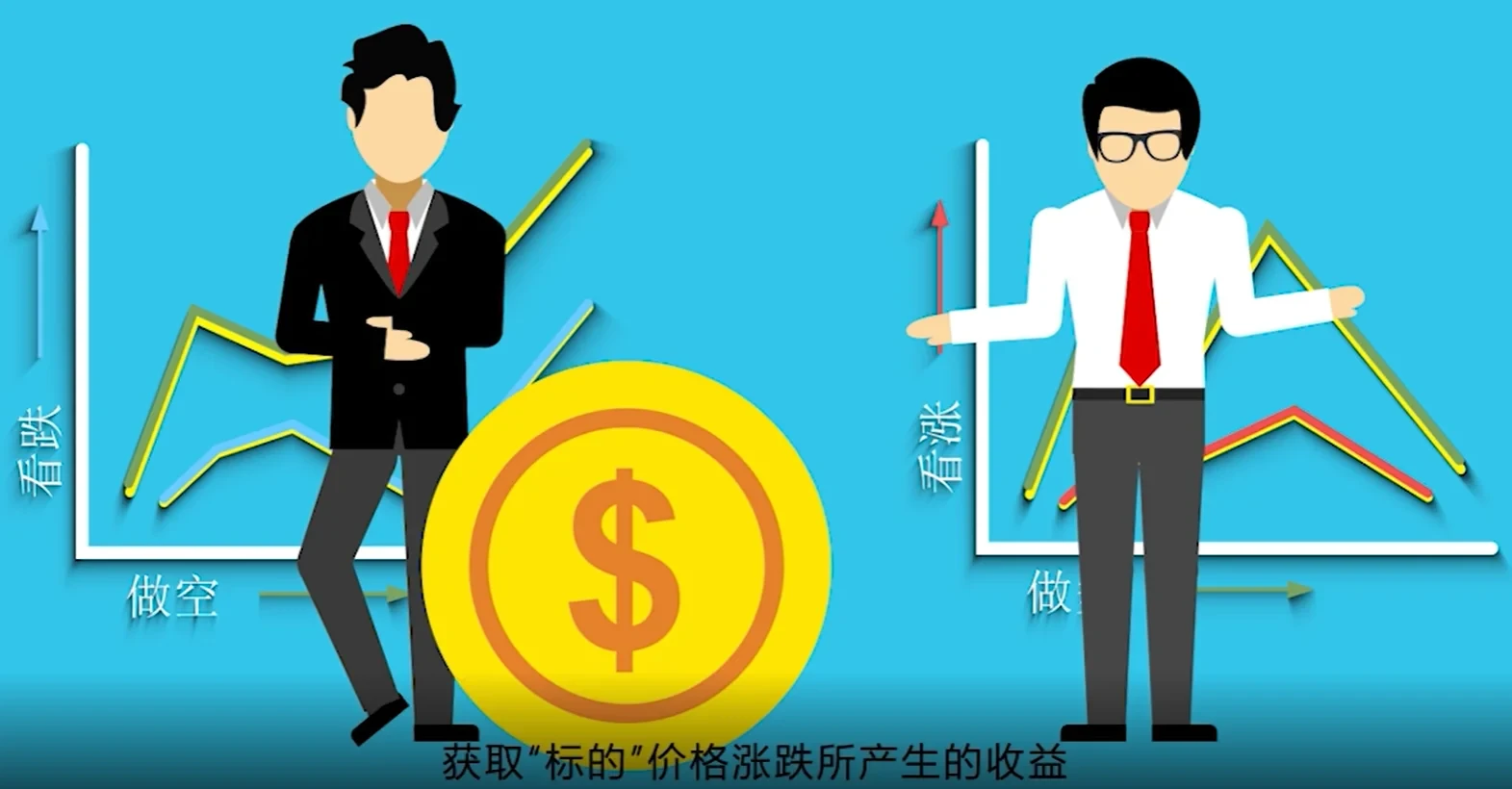
Futures trading in the digital asset market originated from futures trading in traditional financial markets. Taking soybean contracts in traditional financial markets as an example, during the futures trading process, both parties to the trade obtain their respective rights and obligations. For example, if the buyer and seller of a contract complete a transaction for 10 contracts with one ton of soybeans as the underlying at a price of 5,000 yuan, then the buyer of the contract obtains the right and obligation to buy 10 tons of soybeans at 5,000 yuan/ton on a certain date. Similarly, the seller also obtains the right and obligation to sell 10 tons of soybeans at 5,000 yuan/ton on a certain date. The contract representing the rights and obligations of both buyers and sellers is a virtual contract.
In most cases, investors do not actually fulfill the rights and obligations of the contract, but rather obtain returns by trading this contract before the contract takes effect, that is, before the delivery date.
The difference between futures trading and spot trading is not only that contracts obtain rights and obligations during the trading process, but also that there is a significant gap in terms of returns and risk. Futures trading can amplify principal through leverage. Whatever the leverage multiplier is, the principal is amplified by that many times. The existence of leverage amplifies both the returns and risk of digital assets on the basis of their already high investment risk. Compared to spot trading, futures trading is a higher-risk investment behavior. New users need to operate cautiously to control risk after understanding the basic situation of futures trading.
2. Types of Futures Trading
OKX contracts can be divided into delivery contracts and perpetual contracts based on whether there is an expiration delivery date. Within these two major modules, they can also be subdivided into USDT-margined contracts and coin-margined contracts based on margin type. USDT-margined contracts include USDT margin contracts and USDC margin contracts.
① Delivery Contracts
Delivery contracts refer to both parties to the trade agreeing to conduct contract delivery trading at a specified price at a specified time, which is the delivery date. Delivery contracts have fixed delivery periods (currently OKX provides four types of delivery cycles: this week, next week, this quarter, and next quarter). When the contract reaches its delivery date, the system will conduct delivery through a non-physical cash settlement mechanism at 16:00 (HKT) on Friday of the expiration week. At that time, users' positions will be closed out. Unrealized P&L generated after delivery closing is added to realized P&L, and then all realized P&L will be settled to the balance.
② Perpetual Contracts
Perpetual contracts are a new type of contract evolved from continuous contracts in traditional financial markets. Since there is no expiration delivery date, perpetual contracts use a "funding fee mechanism" to anchor the contract price to the spot price. Funding fees are settled every 8 hours, with settlement times at 08:00, 16:00, and 24:00 (HKT) each day. Users only need to pay or receive funding fees when holding positions at these three moments. If positions are closed before the funding fee settlement time, there is no payment or collection of funding fees.
Funding Fee = Position Value × Current Funding Rate. (The current funding rate is determined based on the price difference between the contract price and spot index price during the previous funding fee period)
If the current funding rate is positive, longs need to pay funding fees to shorts; if the current funding rate is negative, shorts need to pay funding fees to longs. (Funding fees are collected between users, and the platform does not charge this fee.)
③ Coin-Margined Contracts
Distinguished by margin type, coin-margined contracts are contracts that use the underlying asset as the delivery settlement unit. Their contract underlying is the US dollar index of that currency (for example, the underlying of BTC contracts is the BTC US dollar index). The contract face value rule: The face value of the contract is a certain US dollar value, with BTC being 100 USD; ETH, EOS, and other currency contracts are 10 USD.
It can be used as a hedging tool for held assets, and can also enjoy the value appreciation of the base asset and contract returns when holding long positions.
④ USDT-Margined Contracts
USDT-margined contracts are contract types that use USDT as the delivery settlement unit. Users need to use stablecoins USDT/USDC as collateral assets. As long as there is USDT/USDC in the account, users can conduct futures trading for multiple currencies, and P&L is settled in USDT/USDC. Their contract underlying is the USDT/USDC index of that currency (for example, the underlying of BTC contracts is the BTCUSDT/BTCUSDC index). The contract face value rule: The face value of the contract is a certain amount of crypto assets, for example BTC is 0.001 BTC, ETH is 0.001 ETH.
Because only USDT/USDC is used as margin, margin can be flexibly allocated between contracts, and there's no need to worry about the depreciation risk of holding the underlying currency. Moreover, the calculation formula is more concise, making it convenient for users to calculate P&L.
3. How Does Futures Trading Work?
1. Users decide on long or short direction based on their judgment of BTC price trends, and select the contract type based on time duration.
This week's contracts refer to contracts delivered on the Friday closest to the trading day; next week's contracts refer to contracts delivered on the second Friday closest to the trading day. Quarterly contracts refer to contracts with delivery dates on the last Friday of the month closest to the current date among March, June, September, and December, and not overlapping with this week/next week/monthly contract delivery dates.
2. Users select appropriate prices and quantities to complete the transaction.
When users purchase contracts, the required margin is the BTC quantity equivalent to the contract value at the time of transaction divided by the leverage multiplier. Users can only place orders when account equity is greater than or equal to the margin quantity after successful trading.
3. Margin
When establishing a futures trading account, users need to select a margin mode. Different margin modes have different trading margin calculation methods and risk control systems. When there are no positions and no open orders, that is, when margins for all contracts are 0, users can change the margin mode.
When using cross margin mode, the risk and returns of all positions in the account are calculated together. Under the unified account cross margin mode, the requirement for opening positions is that the margin rate after opening cannot be lower than 100%.
When using isolated margin mode, each contract's two-way positions will independently calculate their margin and returns. Users can only place orders when the available margin for opening positions is greater than or equal to the required margin quantity for opening positions. With isolated margin, the available margin for opening positions may vary for each contract.
4. Position Holding
After the transaction is completed, users hold positions in the corresponding long or short direction.
5. Adjust Positions
Users can also adjust positions at any time based on market conditions, locking in returns or stopping losses by closing positions, or continuing to open positions to increase returns.
6. Delivery
On the delivery date, undelivered contracts are closed for delivery at the delivery index at a price of one US dollar per point. All returns generated from closing will be aggregated to the "Realized P&L" item in users' contract accounts.
7. Settlement
After settlement is complete, all realized P&L will be aggregated to the account balance.
Disclaimer
This article may contain product-related content not applicable to your region. This article is intended only to provide general information and does not take responsibility for any factual errors or omissions therein. This article represents only the author's personal views and does not represent the views of OKX. This article is not intended to provide any of the following advice, including but not limited to: (i) investment advice or investment recommendations; (ii) offers or solicitations to buy, sell, or hold digital assets; or (iii) financial, accounting, legal, or tax advice. Holding digital assets (including stablecoins) involves high risk, may fluctuate significantly, and may even become worthless. You should carefully consider whether trading or holding digital assets is suitable for you based on your financial situation. For questions about your specific situation, please consult your legal/tax/investment professional. The information appearing in this article (including market data and statistical information, if any) is for general reference only. While we have taken all reasonable precautions in preparing these data and charts, we assume no responsibility for any factual errors or omissions expressed herein. © 2025 OKX. This article may be reproduced or distributed in full, or excerpts of 100 words or less of this article may be used, provided that such use is non-commercial. Any reproduction or distribution of the entire article must also prominently state: "Copyright © 2025 OKX. Used with permission." Permitted excerpts must cite the article name and include attribution, for example "Article Name, [Author Name (if applicable)], © 2025 OKX". Some content may be generated or assisted by artificial intelligence (AI) tools. Derivative works or other uses of this article are not permitted.
Show More
Recommended Reading
Can You Profit When Bitcoin Falls? How to Conduct Futures Trading
As the cryptocurrency market scale represented by Bitcoin continues to expand, various forms of derivative trading have gradually emerged beyond spot trading as a tool to hedge risk. Among them, futures trading has garnered the most attention. What is futures trading? Futures are the most common trading contract form in the cryptocurrency derivatives market. Digital asset futures trading refers to buyers and sellers agreeing to trade a certain asset at a specified price at a future time.
January 16, 2026
Simpler Than Copy Strategies? One-Click Copy Trading of the Best Strategy Traders on OKX, Let Traders Earn Money for You
Whether in traditional finance or the cryptocurrency market, strategy trading is a very important and crucial method in the trading system. When facing complex trading environments and extreme market conditions, even with solid theoretical technical knowledge and rich trading experience, it's easy to miss trading opportunities or make wrong judgments and operations due to emotional influence. Strategy trading is precisely an effective tool that can solve these problems. Now that you have trading tools, how to make
November 21, 2025

5. Strategy Trading Series Course - Savings
Preface: We often have such speculation: In bull markets, there are many digital assets with significant increases. If we can continuously capture coins with large increases, for example capturing a doubling digital asset every month, after one year your assets will become 2 to the power of 12, that is, 4096 times, which is very amazing. Of course, this is also almost an impossible thing to complete, because it's difficult for us to continuously catch surging coins. This is also a problem many users encounter: In bull markets, although
November 3, 2025

Which Countries/Regions Do Not Support Registration to Use OKX
OKX currently does not provide services to customers in the following regions: certain US territories, such as New York, Texas, Puerto Rico, American Samoa, Guam, Commonwealth of the Northern Mariana Islands, US Virgin Islands (St. Croix, St. John, and St. Thomas), Cuba, Iran, North Korea, Crimea, Malaysia, Syria, Bangladesh, and Bolivia. For details, please refer to the OKX Terms of Service.
April 25, 2024
Quickly Understand OKX Common Products and Features
OKX (www.okx.com) is one of the world's famous digital asset service platforms, mainly providing global users with Bitcoin, Ethereum, and other digital asset spot and derivative trading services, while also exploring the world of DeFi, dApps, NFTs, and GameFi together with users. On OKX, you can enjoy smooth spot, futures, and other trading experiences, stay updated on token information in hot areas/concepts for the first time, and also
April 25, 2024
Zero-Based Learn Candlestick Charts | 5 Importance of Candlestick Pattern Applications
Rises and falls have trends, read the price language; buying and selling have signals, say goodbye to feeling-based trading. 1. Bullish Candlestick Patterns at Key Positions In the first two sections of this chapter, we explained the applications of bullish candlestick patterns and bearish candlestick patterns, but these patterns are not effective when appearing at any position. In this section, we will explain the importance of where patterns appear. In which positions can bullish patterns better play their role? The first situation: In a clear upward trend, near the previous
April 25, 2024