Spread Express: Higher Efficiency and Lower Cost Spread Strategy Arbitrage Tool
About Spread Express
What is Spread Express?
Spread Express is a newly launched spread order book in the liquidity market. In this order book, you can trade any spread strategy combination with one click, executing both legs simultaneously.
The main strategies tradable with Spread Express are arbitrage strategies and spread strategies, with a total of three strategy combinations:
• Funding rate arbitrage (spot-perpetual swap)
• Basis trading (spot-delivery contract)
• Delivery spread (perpetual swap-delivery contract, delivery contracts with different maturities)
What are the benefits of trading on Spread Express?
- No leg risk
Typically, spread trading requires traders to manually go to two separate order books to open positions, which introduces single-leg risk where only one leg gets filled.
However, with Spread Express in the liquidity market, traders can now execute spread trades with one click. The platform's superior liquidity and low latency make trading smoother, with no leg risk!
- Lower price slippage risk
As mentioned above, in traditional trading, traders must use two different order books to open positions, which introduces trading delays. This means your two positions may experience unexpected price fluctuations. Additionally, opening positions with market orders also introduces unknown price slippage — traders won't know the full average fill price until the position is completely filled, so the spread between the two legs could be much larger than the trader anticipated.
By using the Spread Express tool, the spread between the two legs is explicit and guaranteed. Therefore, traders can maximize the reduction of potential risks from price slippage and other spread-related factors.
- Higher capital efficiency
Under OKX's unified account mode, when selecting the portfolio margin mode, traders executing spread trades on Spread Express can enjoy lower initial margin requirements (IMR). Additionally, compared to executing two separate trades in the central order book, traders need less margin to execute a single spread trade on Spread Express. Furthermore, since both legs execute automatically, the required IMR is much lower than what would be needed for normal spread strategy execution.
In short, traders can now enjoy higher capital efficiency, and the remaining funds can be deployed to other trades when executing spread trades.
- Lower trading costs
Within the Spread Express product, the market uses a spread order book. If you are an OKX VIP user, trading with Spread Express allows you to enjoy lower trading fee rates — a 50% reduction in trading fees compared to the central order book in regular markets. This significantly saves your trading costs, and for large fund trades/massive trades, the savings can be quite substantial.
What strategies can be traded on Spread Express?
There are two main strategies available for crypto trading on Spread Express — arbitrage strategies and spread strategies.
-
Arbitrage trading: One leg is spot trading, and the other leg is a perpetual swap with the same underlying asset.
-
Spread strategy 1 — Basis trading: One leg is spot trading, and the other leg is a delivery contract with the same underlying asset.
-
Spread strategy 2 — Delivery spread: One leg is a delivery contract, and the other leg is a perpetual swap with the same underlying asset, or delivery contracts with the same underlying asset but different maturities.
What are arbitrage strategies, and how do they generate profits?
Arbitrage strategies primarily combine risk hedging to capture funding fees. The profit and loss from price movements in the same underlying contract market is offset by gains and losses in the spot market, achieving risk hedging, and then capturing the funding fees. (Spot & Perpetual)
This strategy involves two legs — one in the spot market and the other in the perpetual swap market.
Funding rates cause the perpetual swap price and the underlying asset's spot price to converge. When the market is bullish, the funding rate is positive, and traders holding long perpetual positions pay funding fees to short traders; conversely, when the market is bearish, the funding rate is negative, and traders holding short perpetual positions pay funding fees to long traders. When the funding fee exceeds trading fees and other costs, a profit is made. Therefore, this strategy can be effectively executed when costs are controllable and the absolute value of the funding rate is high.
On OKX, perpetual swaps charge funding fees every 8 hours. Funding fee = position value × current funding rate.
When the funding rate is positive, longs pay shorts; when the funding rate is negative, shorts pay longs. For the latest OKX funding rates, refer to: Perpetual Funding Rate History
Assuming the current BTC perpetual swap funding rate is positive, and you believe this funding rate will persist for a period of time, then opening a short on the perpetual swap can capture the funding fee.
Leg 1: Buy spot leg
Leg 2: Open short on perpetual swap leg
Assuming the current BTC perpetual swap funding rate is negative, and you believe this funding rate will persist for a period of time, then opening a long on the perpetual swap can capture the funding fee.
Leg 1: Sell spot leg
Leg 2: Open long on perpetual swap leg
Practical case study:
Assuming the BTC funding rate is negative, the spread for the "sell instruments" on Spread Express is 22 USDT. The trader believes this is a fair price that would still be profitable even after trading fees and the spread between the two instruments. Therefore, they immediately sell, executing both legs and securing the 22 USDT spread, eliminating any uncertainty about price slippage between the two instruments, with no leg risk.
Spot entry price: 27,000 USDT
Perpetual swap entry price: 26,978 USDT
Assuming a position value of 10 BTC was purchased
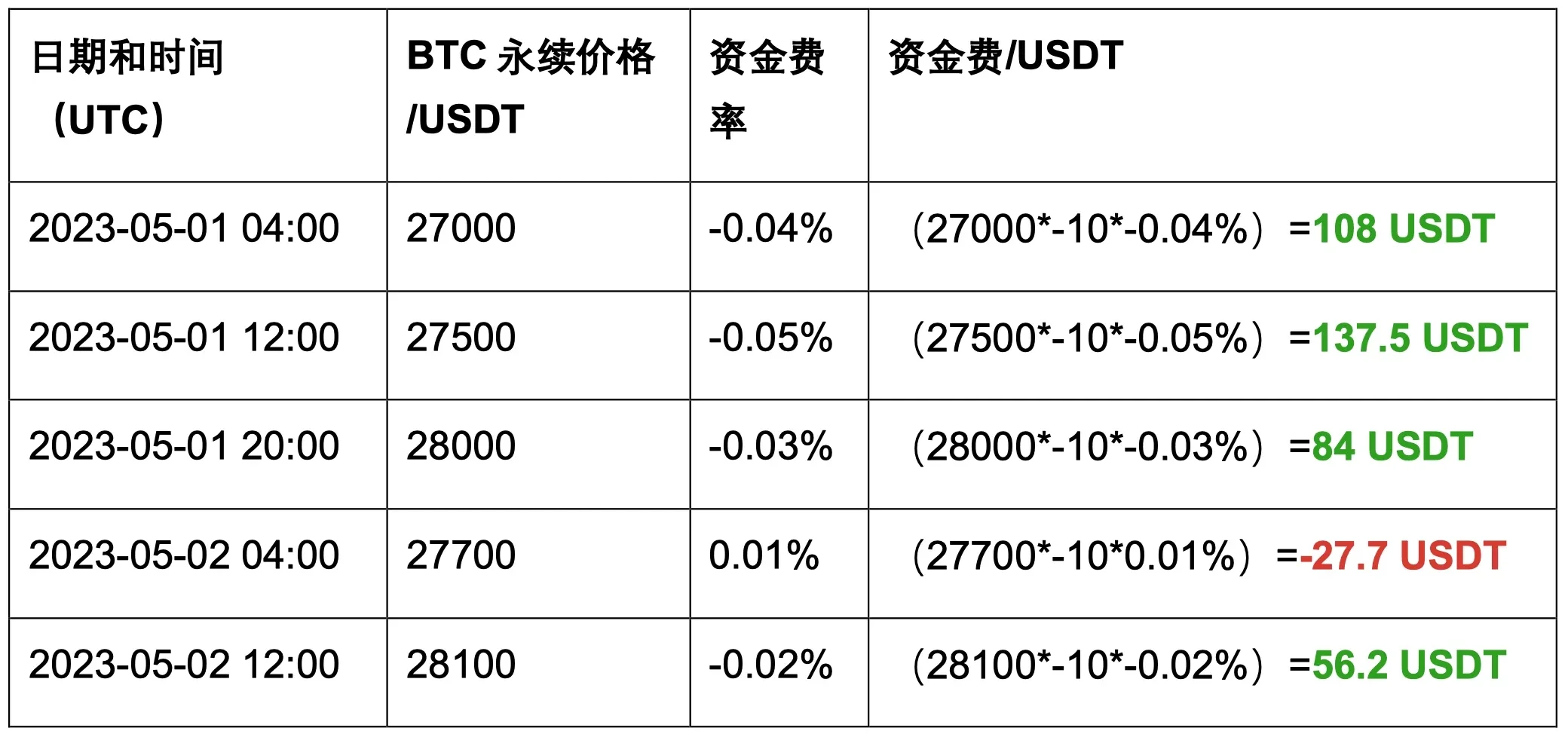
Net funding fee collected: 357.9 USDT. If the trader decides to close the position, they close at a spread of -10 USDT.
Spot exit price: 28,100 USDT
Perpetual swap exit price: 28,090 USDT
Profit and loss calculation
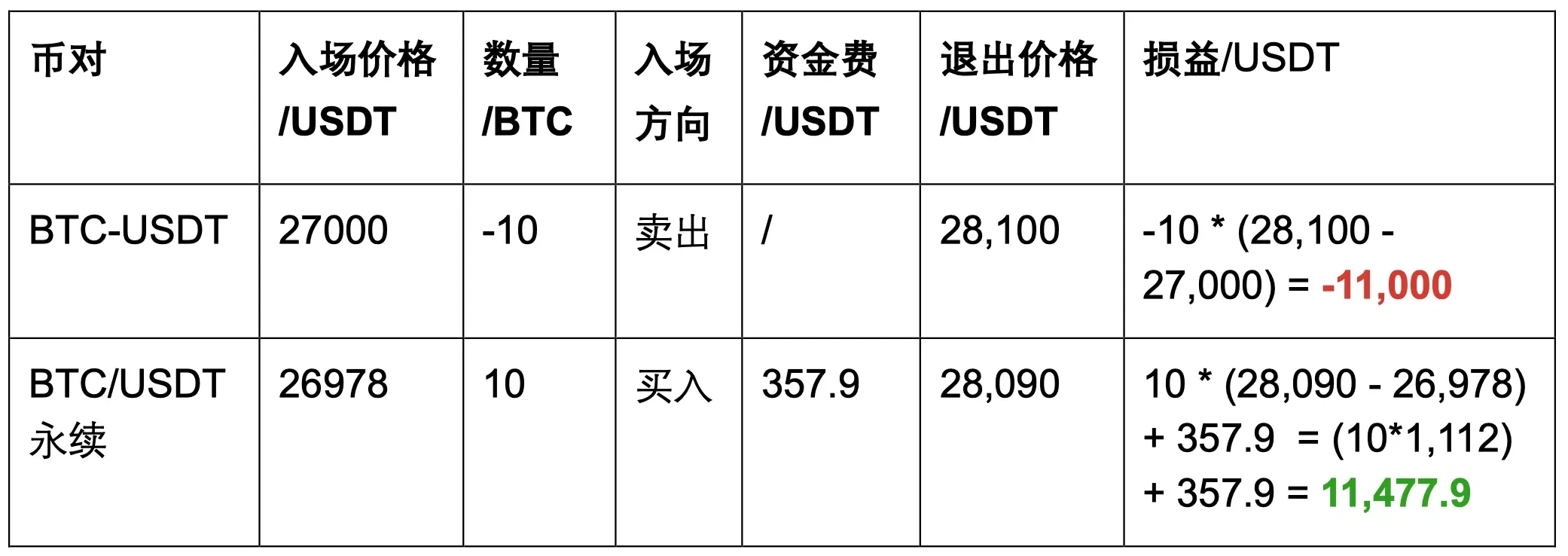
Total P&L = 11,477.9 + (-11,000) = 477.9 USDT - trading fees
How Spread Express helps arbitrage strategies:
Without Spread Express, traders cannot determine the spread between the two legs when opening and closing positions. The spread becomes a variable that may result in much worse P&L than expected.
On smaller positions, this spread uncertainty is minimal, but on larger positions, the price impact on the central order book is greater, and traders may experience significant price slippage on both legs when executing orders separately. This will have a greater impact on the trader's P&L.
In the example above, the trader's spread at close was only -10 USDT. But imagine if the spread was much larger, say -30 USDT — this would mean the trader's P&L would be: 277.9 USDT - trading fees
Returns would decrease significantly for the trader. Therefore, traders can maximize the assurance of their returns through guaranteed spreads.
What are spread strategies, and how to profit from spreads?
Spread strategies are also arbitrage strategies, comprising two types: basis trading and delivery spreads.
• Basis trading (spot-delivery contract): This is the act of arbitraging unreasonable price differences between the spot and contract markets for the same underlying asset.
• Delivery spread (perpetual-delivery contract, delivery contracts with different maturities): This is the act of arbitraging unreasonable price differences between different contract types and maturities for the same underlying asset.
1) Basis Trading
This strategy (the instruments on Spread Express) consists of two legs — one in the spot market and the other in the delivery contract market. This is a market-neutral strategy that exploits price differences between the spot and contract markets. The direction in the spot and contract markets largely depends on the contract price. If the current contract price is higher than the spot price, the trader will short the contract and go long the spot. On Spread Express, this means the trader will sell the spread.
The core logic of this strategy is that arbitrage opportunities exist when the spread between spot and contracts reverts to normal. There are two specific scenarios: On one hand, the spread may revert to normal levels during periods of decreasing market volatility; additionally, contract prices tend to converge toward spot prices as they approach expiration.
If the current contract price is lower than the spot, the contract will converge toward the spot price as expiration approaches, so going long the contract can capture the spread.
Leg 1: Sell spot leg
Leg 2: Buy delivery contract leg
If the current contract price is higher than the spot, the contract will converge toward the spot price as expiration approaches, so opening a short on the contract can capture the spread.
Leg 1: Buy spot leg
Leg 2: Sell delivery contract leg
Practical case study:
Currently, the BTC delivery contract expiring June 30, 2023, has a price higher than the BTC spot price. The trader wants to capture the spread between the spot and contract prices, so they need to sell the contract leg and buy the spot leg. On Spread Express, sell "Spot & June 30, 2023 BTC Contract" at a price of 250 USDT.
Actual entry prices for each leg:
BTC spot price: 28,000 USDT
BTC0630 delivery price: 28,250 USDT
The entry prices remain unchanged. Let's assume it's now June 30, 2023, and before expiration, the trader wants to close the strategy at a spread of 5 USDT on Spread Express.
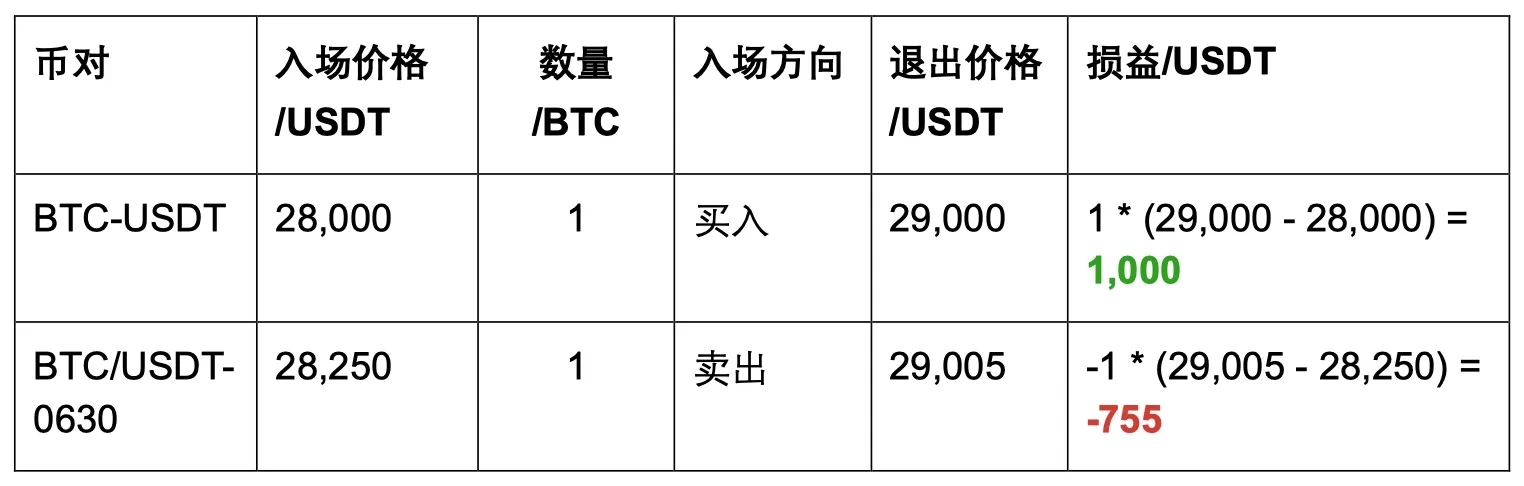
Trader's total P&L = 1,000 + (-755) = 245 USDT - trading fees
Traders don't need to wait until expiration to close and earn funding. Theoretically, the forward price of the delivery contract should converge and equal the spot price at expiration, allowing the trader to capture the entire locked-in spread. However, traders can close their positions earlier. How Spread Express helps basis trading:
In basis trading, the spread between the two instruments at opening and closing determines the entire P&L of the trade. The larger the spread you capture between the two legs, the more profit the trader can earn.
Therefore, by using Spread Express, traders can once again accurately know how much P&L they will get from a trade, because the spread is known and guaranteed before execution. In the central order book, by placing market orders, they will not know what the final spread will be, because you cannot perfectly predict the price impact and slippage they will receive.
On the other hand, if traders want to guarantee profits by placing limit orders, they face leg risk — one leg may be executed while the other is not. Therefore, by using Spread Express, traders can accurately know what they will get, with no leg risk.
2) Delivery Spread
Delivery spread is a "calendar spread" strategy involving traders taking positions in two different delivery (or delivery & perpetual) contracts with the same underlying asset. Traders execute this strategy by simultaneously buying and selling delivery contracts (or delivery & perpetual) with different maturities.
The purpose is to profit from the difference (spread) between the two contracts. The idea behind this is to capitalize on the expected increase or decrease in the spread between the two contracts.
When the spread is widening: meaning the forward contract rises more than the near-term contract, or the forward contract falls less than the near-term contract (typically a long-term bullish expectation), traders employ a long spread strategy — buying the higher-priced contract while selling the lower-priced contract;
When the spread is narrowing: meaning the forward contract rises less than the near-term contract, or the forward contract falls more than the near-term contract (typically a long-term bearish expectation), traders employ a short spread strategy — selling the higher-priced contract while buying the lower-priced contract.
Practical case study:
The trader wants to execute a contract spread strategy in Bitcoin contracts. The trader believes that the price of the June 30 BTC contract is undervalued compared to the September 29 BTC contract. In other words, the trader expects the spread between the two delivery contracts to be smaller than what the market currently reflects.
The trader could directly buy the June contract here, but they don't want to take on that much risk, so they want to hedge with the September contract. Therefore, in this scenario, the trader will buy the nearer-dated June contract and sell the longer-dated September contract. So the trader goes to Spread Express and buys the spread at a price of 500 USDT.
Entry prices:
BTC/USDT 0630 = 28,500 USDT
BTC/USDT 0929 = 29,000 USDT
Scenario 1:
Under bullish sentiment, prices of both instruments rise, but since the June contract price is lower than the September contract, the June contract rises much more than the September contract.
The trader profits and goes to Spread Express to sell the spread. The trader managed to sell the spread at a price of 200 USDT. Their P&L calculation is as follows:
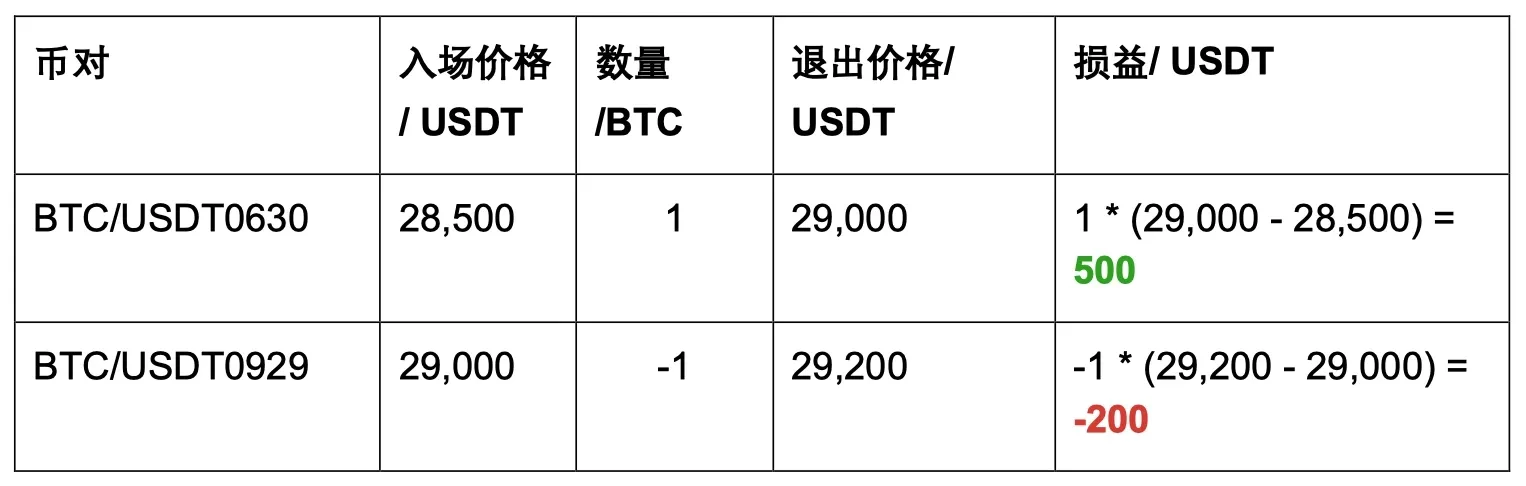
Total P&L = 500 + (-200) = 300 USDT - trading fees
Scenario 2:
If prices of both contracts fall, what is the trader's P&L? Assume the trader sold on Spread Express at a price of 800 USDT.
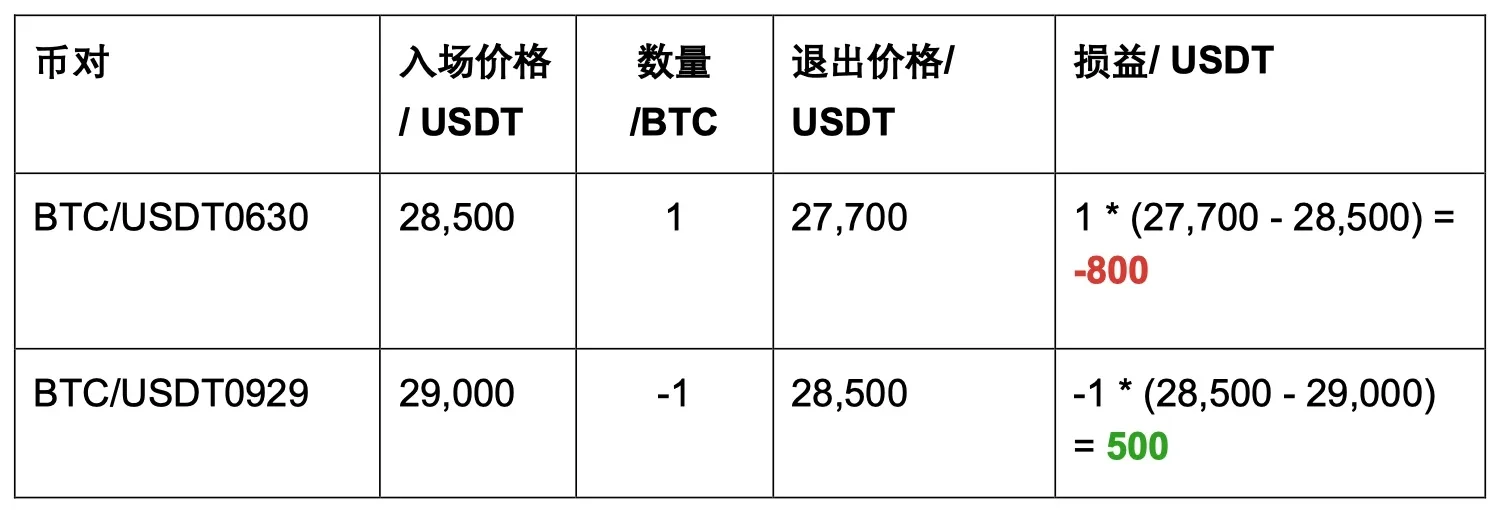
Total P&L = -800 + 500 = -300 USDT - trading fees
The trader lost a total of 300 USDT. However, this is only possible because they hedged themselves by executing the futures spread instead of directly buying the June contract. Had they only bought the June delivery contract, they would have lost 800 USDT.
Scenario 3:
What if market instability intensifies and the September contract falls even more than the June contract, to the point where the spread Express price the trader sold is 100 USDT?
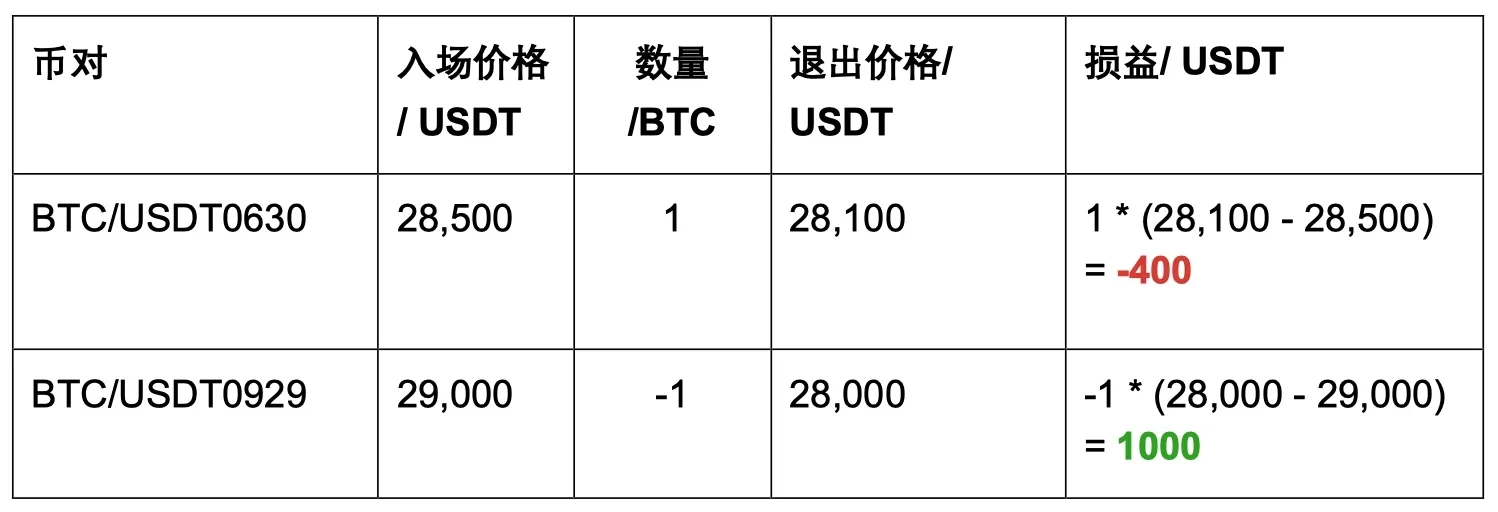
Total P&L = -400 + 1000 = 600 USDT - trading fees
The September contract fell more than the June contract, so the trader still profits.
Delivery spread arbitrage:
In the example above, if you noticed, regardless of market direction, the trader could profit as long as the June contract rises more than the September contract.
In Scenario 2, we saw that the contract spread can serve as a hedge, reducing losses compared to direct trading, thereby lowering risk. Because the deltas of the contracts are the same, the trader effectively hedges by gaining exposure to two contracts with the same underlying but in opposite directions.
Disclaimer
This article may contain product-related content not applicable to your region. This article is solely committed to providing general information and does not accept responsibility for any factual errors or omissions. This article represents only the author's personal views and does not constitute the views of OKX. This article is not intended to provide any advice, including but not limited to: (i) investment advice or investment recommendations; (ii) offers or solicitations to buy, sell, or hold digital assets; or (iii) financial, accounting, legal, or tax advice. Holdings in digital assets (including stablecoins) involve high risk and may fluctuate significantly, or even become worthless. You should carefully consider whether trading or holding digital assets is suitable for you based on your financial situation. For questions about your specific circumstances, please consult your legal/tax/investment professional. The information appearing in this article (including market data and statistics, if any) is provided for general reference only. Although we have taken all reasonable precautions in preparing this data and these charts, we do not accept any responsibility for factual errors or omissions expressed herein. © 2025 OKX. This article may be reproduced or distributed in its entirety, or excerpted in passages of 100 words or less, provided such use is non-commercial. Any reproduction or distribution of the full article must also prominently state: "This article is copyrighted © 2025 OKX, used with permission." Permitted excerpts must cite the article name and include the source, for example, "Article name, [author name (if applicable)], © 2025 OKX". Some content may be generated or assisted by artificial intelligence (AI) tools. Derivative works and other uses of this article are not permitted.
Show More
Recommended Reading
Can You Still Profit When Bitcoin Falls? How to Trade Contracts
As the cryptocurrency market represented by Bitcoin continues to expand, various forms of derivatives trading have gradually emerged beyond spot trading as a hedging tool, with contract trading receiving the most attention. What is contract trading? Contracts are the most common form of trading agreement in the cryptocurrency derivatives market. Digital asset contract trading refers to buyers and sellers agreeing to trade a certain asset at a specified price at a future time.
January 16, 2026
Simpler Than Copying Strategies? Copy Top Traders with One Click on OKX — Let Traders Make Money for You
Whether in traditional finance or the cryptocurrency market, copy trading is a very important and critical method in the trading system. When facing complex trading environments and extreme market conditions, even with solid theoretical knowledge and rich trading experience, it's easy to miss trading opportunities or make wrong judgments and operations due to emotions. Copy trading is an effective tool that can solve these problems. Now that you have the trading tools, how do you
November 21, 2025

Part 5: Strategic Trading Series — Recurring Buy (Dollar-Cost Averaging)
Preface: We often have such speculation: In a bull market, there are many digital assets that surge. If we could continuously capture coins that rise significantly, for example, catching one that doubles every month, after a year your assets would become 2 to the 12th power, which is 4,096 times — that's truly astonishing, though of course it's nearly impossible to achieve, because it's very difficult to continuously catch surging coins. This is also a common problem many users encounter: In a bull market, although
November 3, 2025

Which Countries/Regions Do Not Support Registration for OKX
OKX currently does not support providing services to customers in the following regions: certain U.S. territories such as New York, Texas, Puerto Rico, American Samoa, Guam, Commonwealth of the Northern Mariana Islands, U.S. Virgin Islands (St. Croix, St. John, and St. Thomas), Cuba, Iran, North Korea, Crimea, Malaysia, Syria, Bangladesh, and Bolivia. For details, please refer to the OKX Terms of Service.
April 25, 2024
Quick Guide to OKX Common Products and Features
OKX (www. okx. com) is one of the world's renowned digital asset service platforms, primarily serving global users with Bitcoin, Ethereum, and other digital asset spot and derivatives trading services, while also exploring the worlds of DeFi, dApps, NFTs, and GameFi with users. On OKX, you can enjoy smooth trading experiences in spot, contracts, and more, get第一时间关注热门领域/概念的代币信息, and there are
April 25, 2024

Learn Candlestick Charts from Zero | Part 5: The Importance of Candlestick Pattern Applications
Trends exist in price movements; understand the language of prices; Signals exist for buying and selling; goodbye to feeling-based trading. Part 1: Bullish candlestick combinations at key levels In the first two chapters of this section, we explained the applications of bullish and bearish candlestick combinations, but these combinations are not effective at every location. In this section, we will explain the importance of where combinations appear. At which positions can bullish combinations play a better role? First scenario: In an obvious uptrend, approaching the previous
April 25, 2024