7. Strategic Trading Series — Perpetual Grid
Introduction
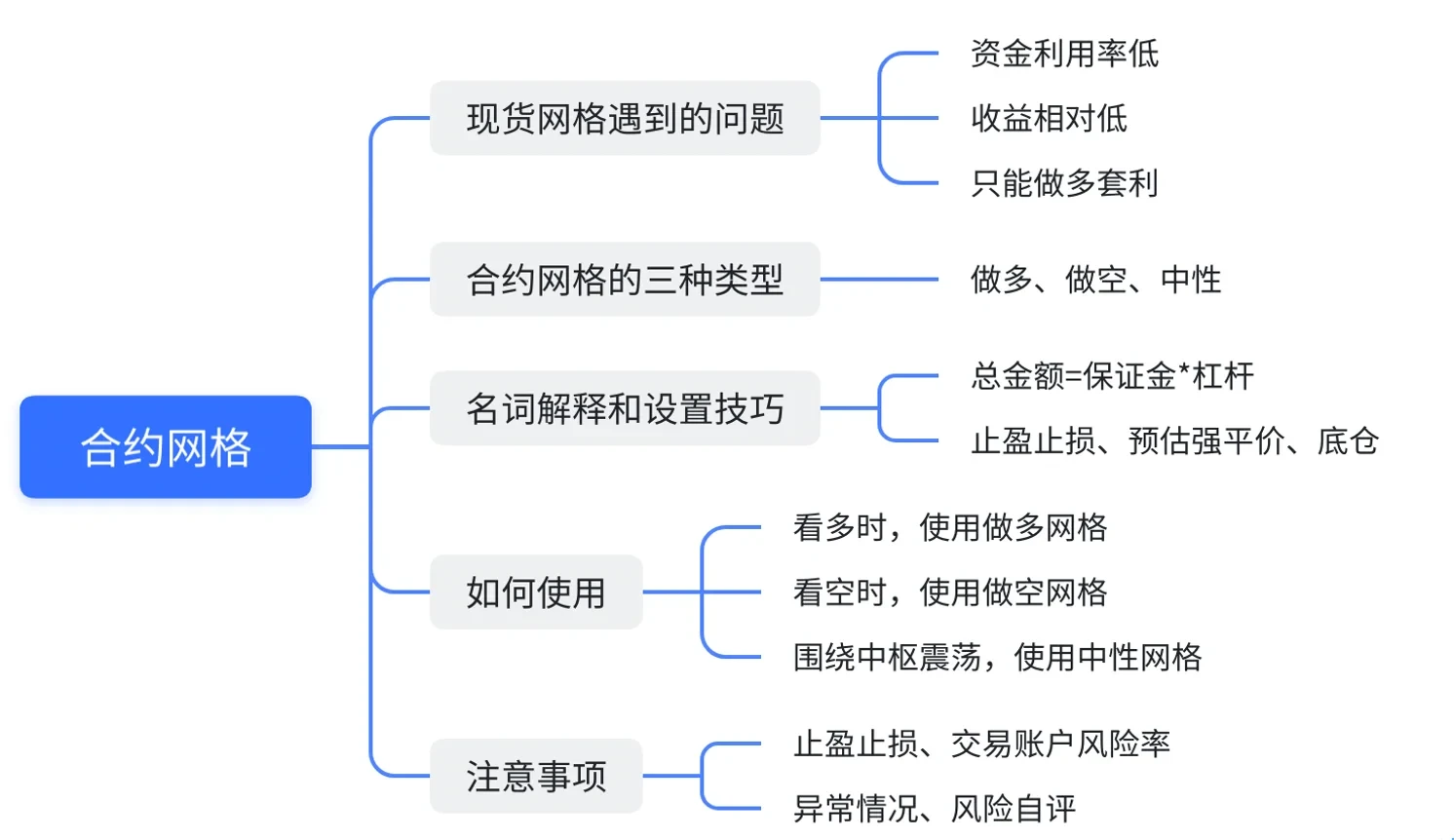
Many users employ spot grids to capture profits during oscillating markets, but they also encounter some challenges:
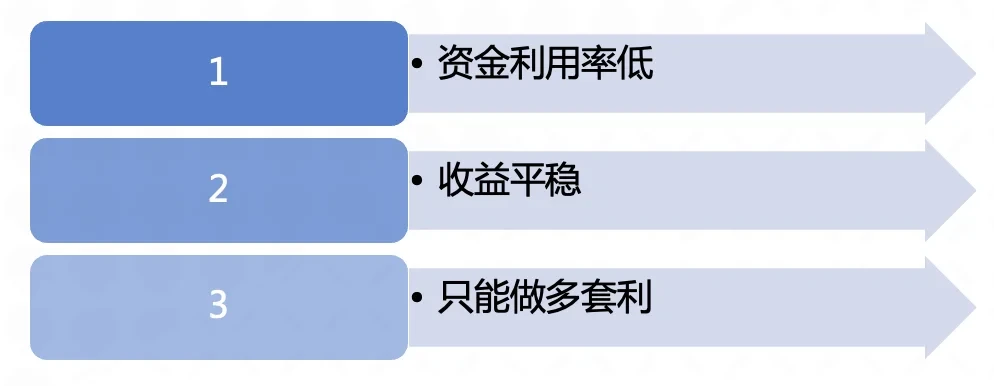
1. For instance, if the grid range is set too wide, the price may take a long time to reach certain grid levels, leaving a considerable portion of funds in pending orders continuously. This results in very low capital efficiency.
2. Funds are divided into many portions, so the profit per order is minimal. While this significantly reduces risk, overall returns are also quite limited. This creates a dilemma: not using grids wastes oscillating market opportunities, but using them doesn't generate particularly high returns either.
3. Spot grids are only suitable for oscillating markets — more precisely, for oscillating upward trends. There is a lack of strategies to handle clearly oscillating downward trends.
At this point, you can consider using perpetual grid strategies, which apply to a much broader range of market conditions and substantially increase potential returns. Today, let's learn about perpetual grids.
1. What Is a Perpetual Grid
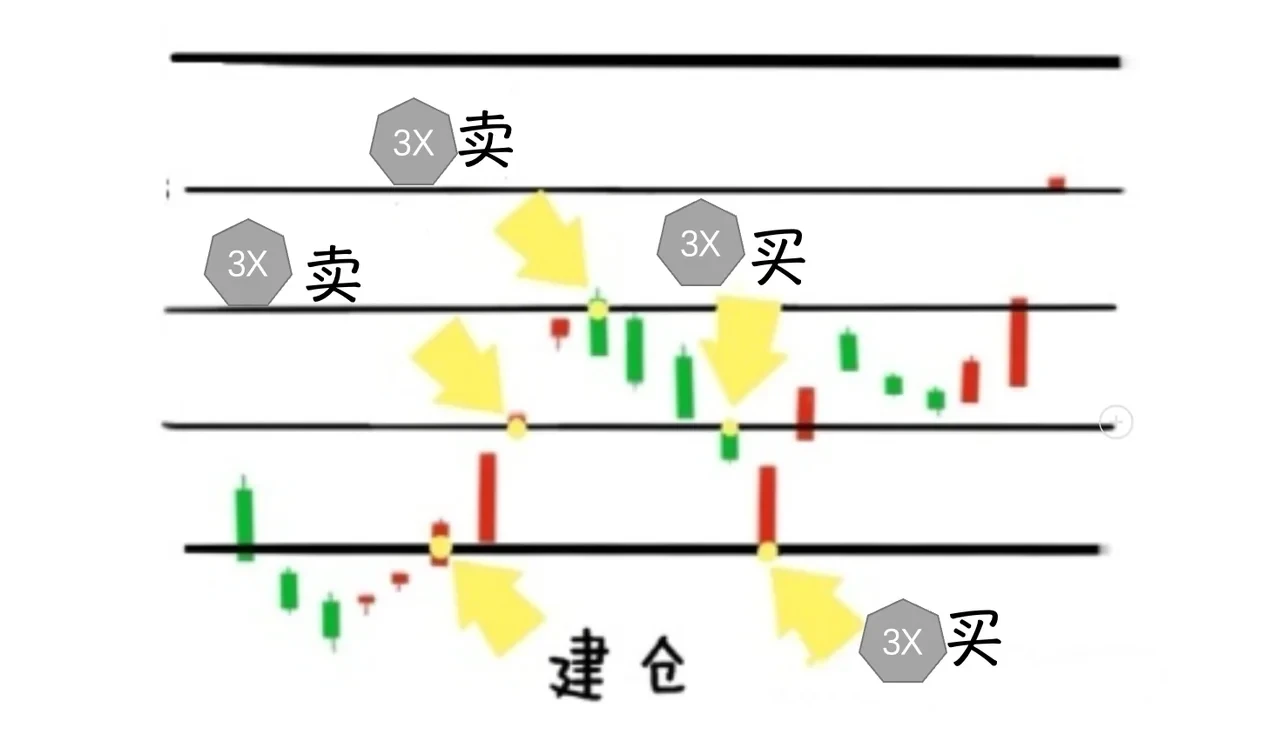
A perpetual grid strategy is an automated strategy that buys low and sells high within a specific price range to trade perpetual contracts. Users only need to set the highest and lowest prices of the range and determine the number of grids to subdivide, and the strategy can begin running. The strategy calculates the buy-low and sell-high prices for each small grid, places orders automatically, and earns returns from market volatility. Currently, USDT-margined perpetuals are supported for all trading pairs, with coin-margined perpetuals coming in future updates.
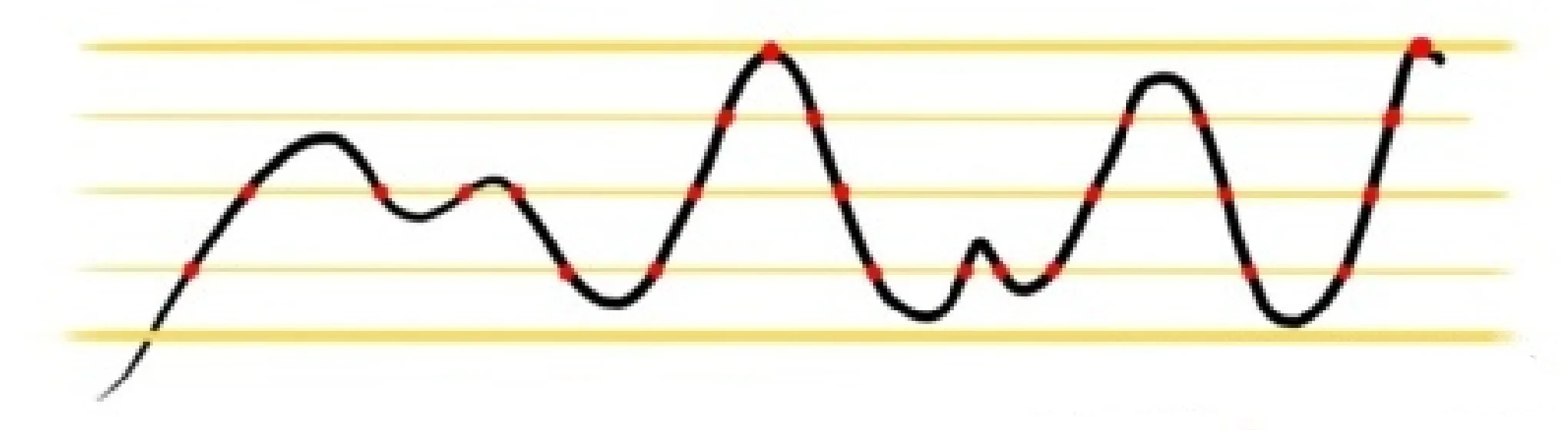
Compared to spot grids, perpetual grids have two important distinguishing features:
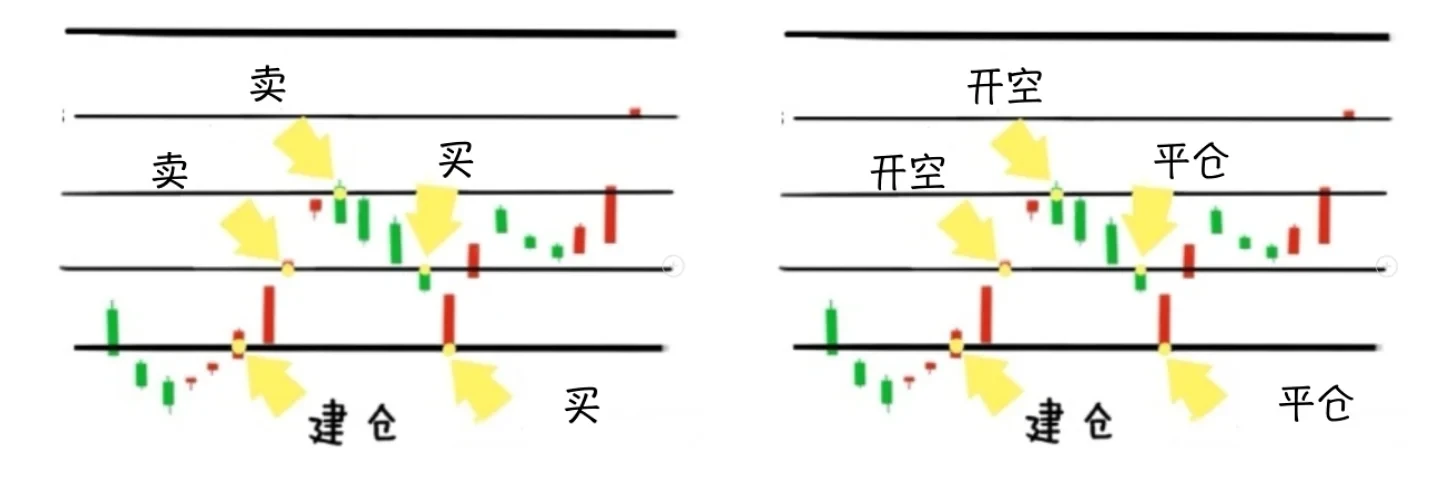
1. They have long/short bias, allowing you to go long only, short only, or both within a range. If you expect the market to oscillate upward in the future and want to profit from going long, you can use a long grid. If you expect the market to oscillate downward and want to continuously profit from shorting within the range, you can use a short grid. Of course, if the direction is unclear and the price may oscillate around a central level, you can use a neutral strategy.
2. Perpetual grid funds can also be multiplied by a certain leverage ratio, increasing capital efficiency. Although leverage is added, funds are divided into many small grid orders and the position is not full, so the account risk remains controllable.
2. Three Types of Perpetual Grids
The core of perpetual grids is also "oscillation arbitrage," similar in nature to spot grids. However, perpetual grids can also carry a certain long/short bias, allowing flexible and diverse strategies: going long for arbitrage, going short for arbitrage, or doing both within a range.
1. Long Grid
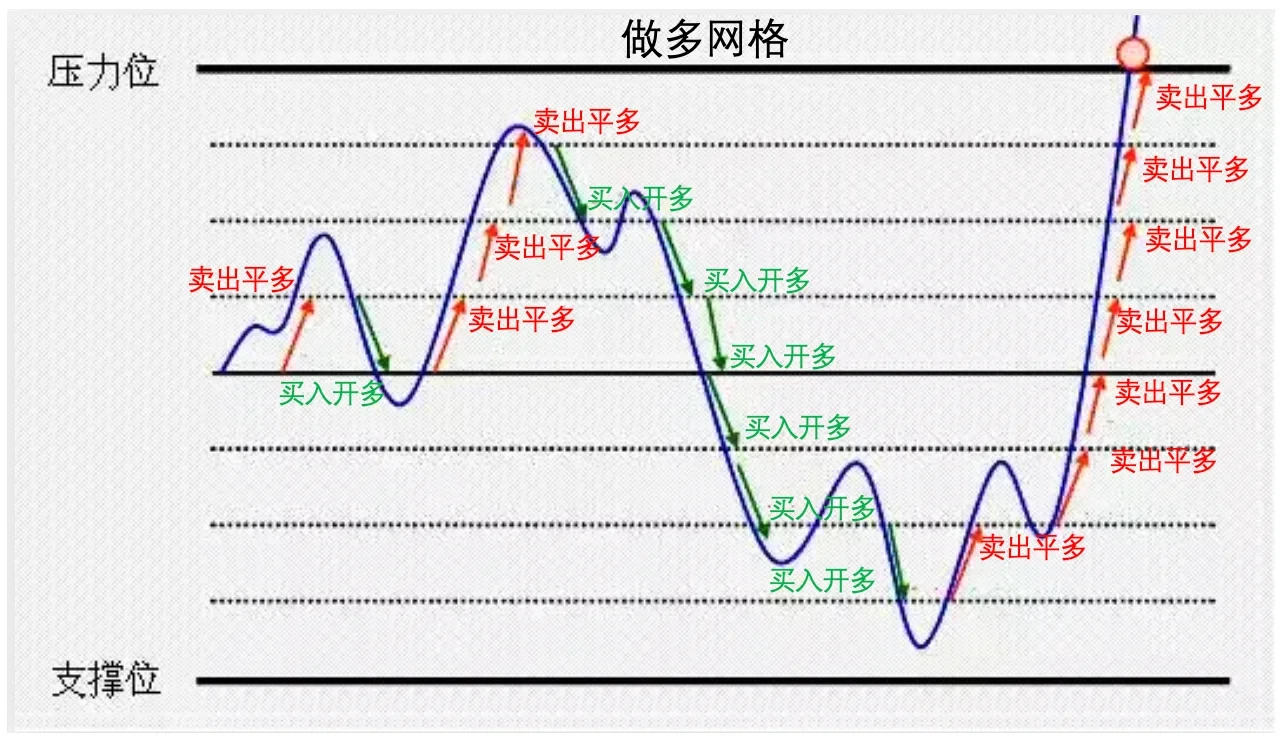
When you believe the price will oscillate upward within a range, you can use a long grid. When the price first crosses below a grid line, a buy-to-open long position is executed, while a sell-to-close long order is placed one grid level above. This continuously harvests profits in oscillating markets. The difference from spot grids is that perpetual grids have leverage, so the trading volume per grid is larger.
2. Short Grid
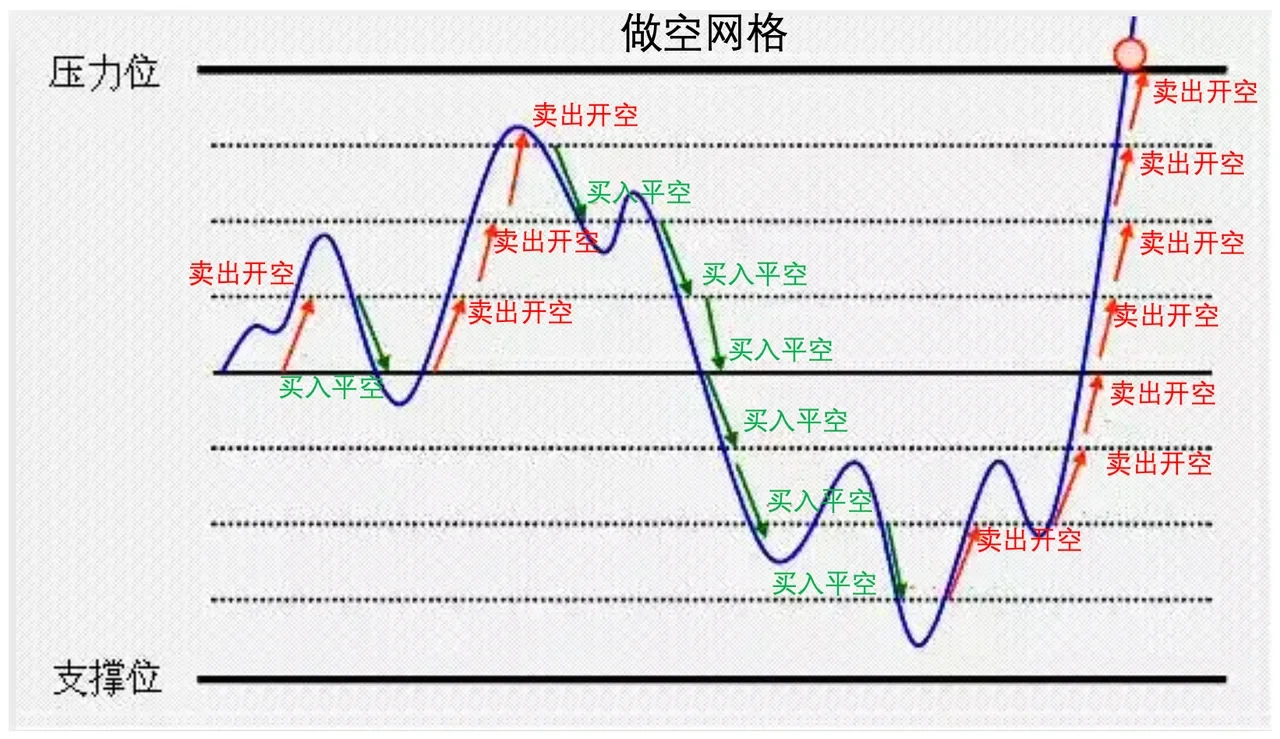
When you believe the market will trend toward oscillating downward and want to profit from the downward returns within the oscillating range, you can use a short grid. When executing the short grid strategy, when the price first crosses above a grid line, a sell-to-open short position is executed, while a buy-to-close short order is placed one grid level below. In a continuously oscillating downward market, profits are earned by closing short positions at lower levels from shorts opened at higher levels.
3. Neutral Grid
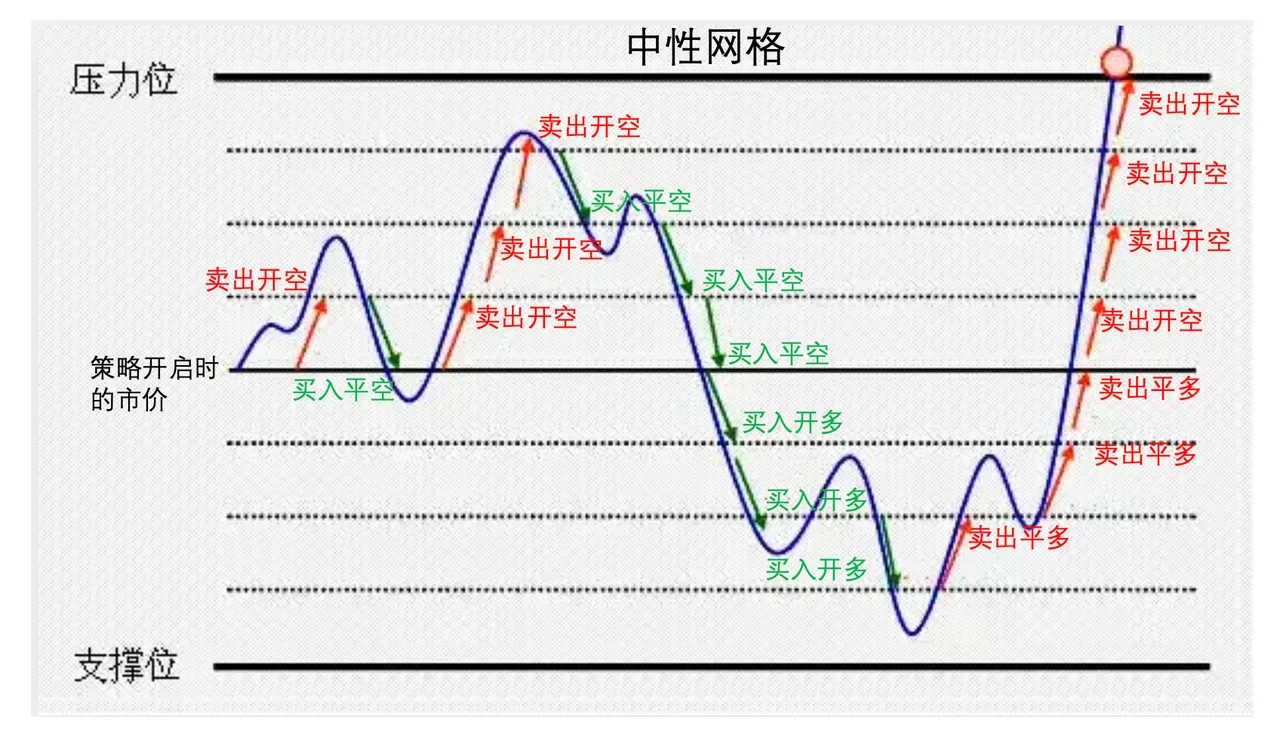
When you believe the price will oscillate up and down around a central level, you can use a neutral grid. The neutral grid opens shorts/closes shorts above the market price when the strategy is initiated, and opens longs/closes longs below.
3. Term Definitions and Setup Tips
1. Total Amount
Total amount refers to the available capital scale after leverage is applied. Formula: Initial margin × Leverage.
To control overall position risk, the maximum leverage for grid strategies is currently 5x.
2. Estimated Liquidation Price
The estimated liquidation price for a long grid assumes that all long orders in the grid are filled and calculates the estimated liquidation price when the maximum number of long positions is opened.
The estimated liquidation price for a short grid assumes that all short orders in the grid are filled and calculates the estimated liquidation price when the maximum number of short positions is opened.
The same applies to neutral grids.
When setting up grids, try to include recent highs and lows to reduce the probability of the price moving outside the grid range.
3. Whether to Open a Base Position When the Strategy Starts
When the strategy starts, you can choose whether to open a base position. For example: if opening a long grid with a base position, a position above the current market price will be opened in advance, so you can profit by closing longs when the price rises. The same applies to shorts. Currently, the system defaults to opening a base position when the strategy starts.
4. Take-Profit and Stop-Loss
When the latest price reaches the take-profit/stop-loss price, the grid strategy stops. The system closes all positions at market price and returns all assets to manual trading cross-margin funds.
The longer the price runs in one direction, the greater the chance it will move outside the grid range. Setting take-profit and stop-loss is recommended to control overall account risk.
4. How to Use Perpetual Grids
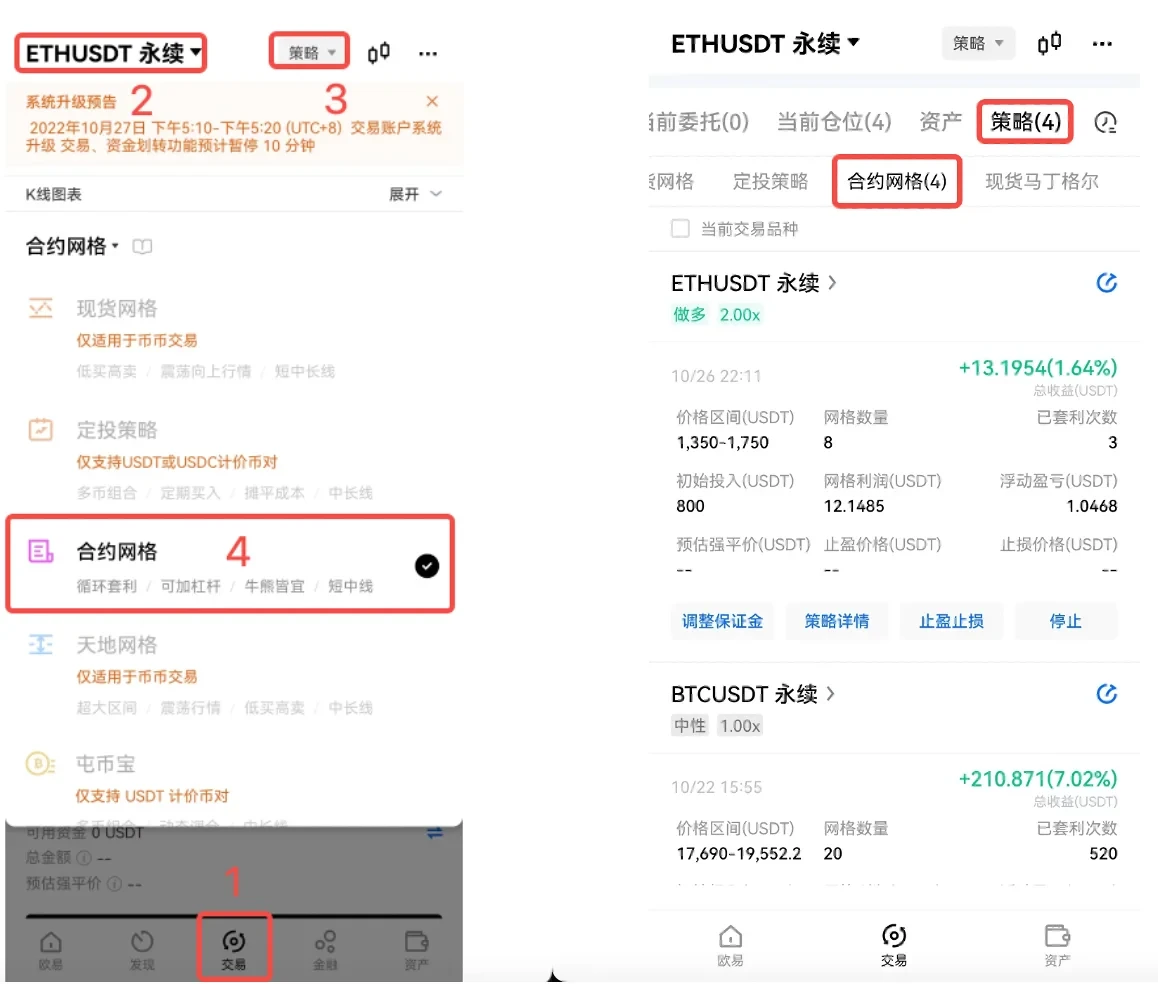
1. On the app, go to [Trading] — [Perpetual Contracts] — [Strategies]. In the strategy list, select [Perpetual Grid]. Configured perpetual grids can be viewed under [Strategies] — [Perpetual Grid].
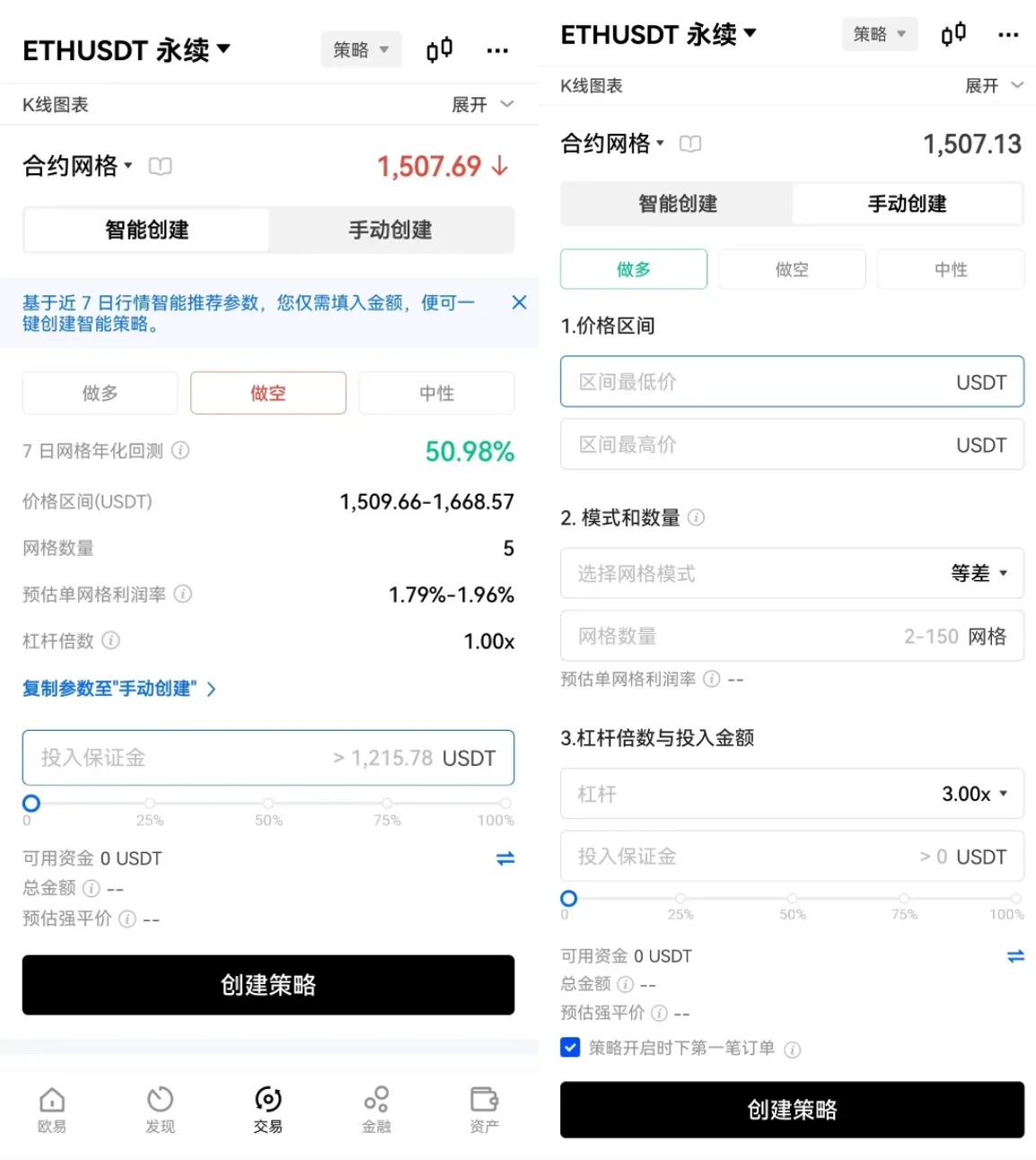
2. Example: Long grid using ETHUSDT perpetual contract:
Lowest/Highest price range: 1350 — 1750
Number of grids: 8
Grid mode: Arithmetic
Leverage: 2x
Investment amount: 8000 USDT
Open base position: Yes
Price at strategy creation: 1545 USDT
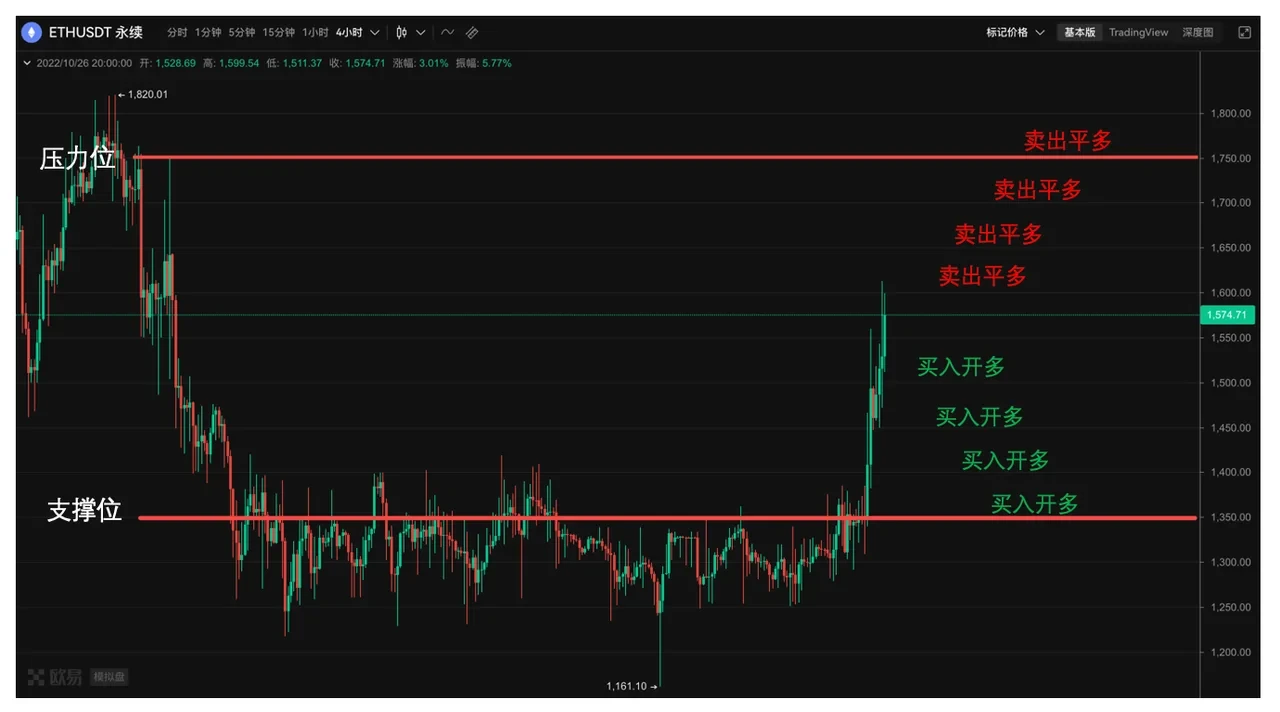
During the order placement phase, the system calculates each level's price: 1350, 1400, 1450, 1500, 1550, 1600, 1650, 1700, 1750, then places 2x leveraged buy-to-open long orders at these prices. Orders above the market price are filled immediately, and sell-to-close long orders are placed one level above. Therefore, after the strategy starts, grid levels below 1550 have buy-to-open long orders, and grid levels above have sell-to-close long orders.
If the price drops below 1500, the buy order at that level is filled, and the strategy simultaneously places a sell-to-close long order at the next grid level above (1550).
If the price breaks above 1600, the sell order at that level is filled, and the strategy places a buy order at the corresponding level below the filled sell order.
As orders are continuously placed and filled in response to market fluctuations, profits can be consistently earned from upward moves in oscillating markets.
3. Example: Short grid using ETHUSDT perpetual contract:
Lowest/Highest price range: 1350 — 1750
Number of grids: 8
Grid mode: Arithmetic
Leverage: 3x
Investment amount: 8000 USDT
Open base position: Yes
Price at strategy creation: 1545 USDT
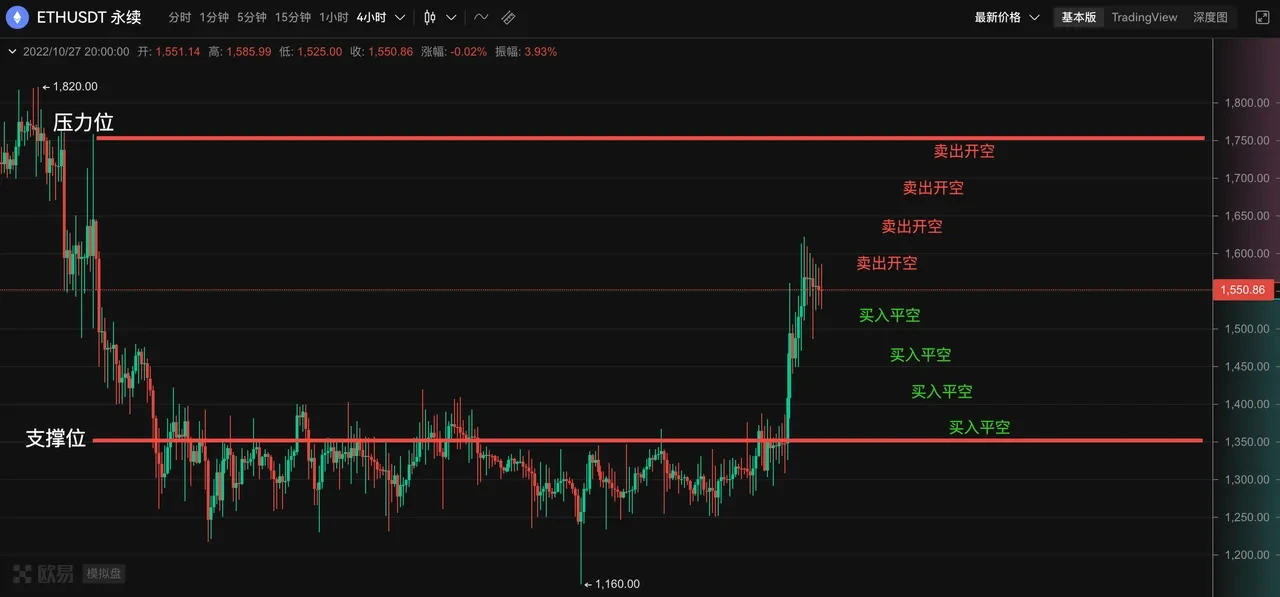
During the order placement phase, the system calculates each level's price: 1350, 1400, 1450, 1500, 1550, 1600, 1650, 1700, 1750, then places 3x leveraged sell-to-open short orders at these prices. Sell orders below the market price are filled, while grid levels above the market price place sell-to-open short orders, and one level below the entry price level places buy-to-close short orders. After the strategy starts, grid levels below 1550 have buy-to-close short orders, and grid levels above have sell-to-open short orders.
If the price breaks above 1600, the sell-to-open short order at that grid is filled, and the strategy simultaneously places a buy-to-close short order at the next grid level below (1550).
If the price drops below 1500, the buy-to-close short order at that grid is filled, and the strategy simultaneously places a sell-to-open short order at the next grid level above (1550).
As orders are continuously placed and filled in response to market fluctuations, profits can be consistently earned from downward moves in oscillating markets.
4. Neutral Grid
For neutral grids, above the market price when the strategy is initiated, the short grid order rules apply; below the market price, the long grid order rules apply.
5. Important Notes
1. It is best to set take-profit and stop-loss. If the market price exceeds the grid's maximum/minimum price range, the strategy will no longer continue operating. If the price runs in a single direction persistently, the held positions may incur floating losses or even face liquidation risk. It is recommended to set a stop-loss price at a reasonable level to exit positions promptly.
2. Trading account risk reminder: Funds invested after creating a perpetual grid will be isolated from the trading account. Please pay attention to the liquidation risk of positions caused by changes in the trading account balance.
3. Abnormal situation reminder: If the trading pair encounters trading halts, delistings, or other unforeseeable abnormal situations during the perpetual grid strategy operation, the perpetual grid strategy will automatically stop.
4. Risk disclaimer: It is recommended that you thoroughly read the OKX perpetual grid trading product description, carefully evaluate your own risk tolerance, and make rational decisions.
OKX Web has launched the Strategy Plaza, offering a variety of strategy types to meet all kinds of investment needs, with a one-click feature to copy top traders' strategy parameters. You can access the Strategy Plaza here to start your strategy trading journey.
Key Takeaways
Disclaimer
This article may contain product-related content that does not apply to your region. This article is intended solely to provide general information and makes no responsibility for any factual errors or omissions. This article represents the author's personal views only and does not constitute the views of OKX. This article is not intended to provide any advice, including but not limited to: (i) investment advice or investment recommendations; (ii) offers or solicitations to buy, sell, or hold digital assets; or (iii) financial, accounting, legal, or tax advice. Holding digital assets (including stablecoins) involves a high degree of risk and may fluctuate significantly, or even become worthless. You should carefully consider whether trading or holding digital assets is appropriate for you based on your financial situation. For questions specific to your circumstances, please consult your legal/tax/investment professional. The information in this article (including market data and statistical information, where applicable) is provided for general reference purposes only. While all reasonable precautions have been taken in preparing this data and these charts, we assume no responsibility for any factual errors or omissions expressed herein. © 2025 OKX. This article may be reproduced or distributed in its entirety, or excerpts of 100 words or less may be used, provided that such use is non-commercial in nature. Any reproduction or distribution of the full article must prominently state: "This article is © 2025 OKX, used under permission." Permitted excerpts must cite the article name and include attribution, e.g., "Article name, [Author name (if applicable)], © 2025 OKX." Some content may have been generated or assisted by artificial intelligence (AI) tools. Derivative works and other uses of this article are not permitted.
Show More
Recommended Reading

Profit from Bitcoin's Decline? How to Trade Perpetual Contracts
As the cryptocurrency market represented by Bitcoin continues to expand, diverse derivative trading products have emerged alongside spot trading, serving as hedging tools. Among them, perpetual contract trading has garnered the most attention. What is perpetual contract trading? Contracts are the most common trading instrument in the cryptocurrency derivatives market. Digital asset perpetual contract trading refers to buyers and sellers agreeing to trade a specific asset at a predetermined price at a future time.
January 16, 2026
Easier Than Copying Strategies? Copy Top Traders' Strategies with One Click on OKX and Let Them Earn for You
Whether in traditional finance or the cryptocurrency market, strategy trading is a crucial component of the trading system. When faced with complex trading environments and extreme market conditions, even with solid theoretical knowledge and extensive trading experience, it is easy to miss trading opportunities or make incorrect decisions influenced by emotions. Strategy trading is an effective tool to address these issues. You have the trading tools, but how do you
November 21, 2025

5. Strategic Trading Series — Recurring Purchase (DCA)
Introduction: We often have this speculation: During a bull market, there are many digital assets that surge dramatically. If you could continuously capture assets with significant gains — say, catching one that doubles every month — your assets would multiply by 2 to the 12th power, or 4096 times, over a year. That's staggering, though of course it's nearly impossible to achieve, since it's very difficult to consistently catch surging assets. This is a common problem many users face: In a bull market, although
November 3, 2025

Countries/Regions That Do Not Support OKX Registration
OKX currently does not provide services to customers from the following regions: certain U.S. territories such as New York, Texas, Puerto Rico, American Samoa, Guam, the Northern Mariana Islands, the U.S. Virgin Islands (St. Croix, St. John, and St. Thomas), Cuba, Iran, North Korea, Crimea, Malaysia, Syria, Bangladesh, and Bolivia. For details, please refer to the OKX Terms of Service.
April 25, 2024

Quick Guide to OKX's Core Products and Features
OKX (www. okx. com) is one of the world's leading digital asset service platforms, primarily serving global users with Bitcoin, Ethereum and other digital asset spot and derivatives trading services, while also exploring the worlds of DeFi, dApps, NFTs, and GameFi together with users. On OKX, you can enjoy seamless spot and perpetual trading experiences, stay updated on tokens in trending sectors/concepts first, and much more.
April 25, 2024

Learn Candlestick Analysis from Zero — Part 5 | Importance of Candlestick Pattern Application
Trends drive prices, learn the language of the market; Signals guide trades, goodbye to gut-feeling trading. Part 1: Bullish Candlestick Patterns at Key Levels In the previous two chapters of this series, we covered bullish and bearish candlestick pattern applications, but these patterns are not effective at every level. In this section, we explain why the placement of these patterns matters. Where do bullish patterns work best? First scenario: During a clear uptrend, the pattern appears near
April 25, 2024