
Does Bitcoin Still Have Safe-Haven Attributes Amid the Russia-Ukraine Conflict?
Recently, as the Russia-Ukraine conflict escalated, stock markets around the world plunged, and the crypto market was no exception to the sell-off. Bitcoin prices have been declining since February 16, falling below the $35,000 mark on the 24th. Meanwhile, gold prices climbed steadily. Given the recent market movements, Bitcoin — often referred to as "digital gold" — seems to be drifting further and further away from traditional safe-haven assets. So, what should we make of Bitcoin's safe-haven attributes? And with multiple factors at play, how is the crypto market likely to evolve?
1. Russia-Ukraine Conflict Breaks Out; Bitcoin Falls Alongside Global Stock Markets
According to OKX market data, Bitcoin prices have been on a downward trajectory since February 16. On February 24, Bitcoin dipped as low as $34,332, with intraday losses exceeding 9%. As Fed rate-hike expectations intensified and Russia launched its military operation in Ukraine, Bitcoin prices fell to their lowest level since July 2021.
On the same day, February 24, global stock markets broadly declined. Russia's RTS Index一度下跌50% — initially fell as much as 50%; India's NIFTY Index dropped 5%; U.S. Nasdaq futures tumbled 3%, S&P 500 futures fell 2.8%, and Dow Jones futures slipped 2.7%; European stocks opened sharply lower across the board, with Germany's DAX 30 down 4.72%, the UK's FTSE 100 down 3.13%, and the Euro Stoxx 50 down 4.62%.
As of February 25, Bitcoin prices rebounded to around $38,600, and the U.S. stock market also reversed to gains following remarks by the U.S. President at yesterday's market open.
In contrast, driven by news of the Russia-Ukraine conflict, market panic escalated yesterday. U.S. crude oil and Brent crude both surged as much as 6%, with Brent crude futures breaking above $100 per barrel for the first time in over seven years. Spot gold climbed to $1,945 per ounce at one point, rising 1.89% on the day — its highest level since January of the previous year.
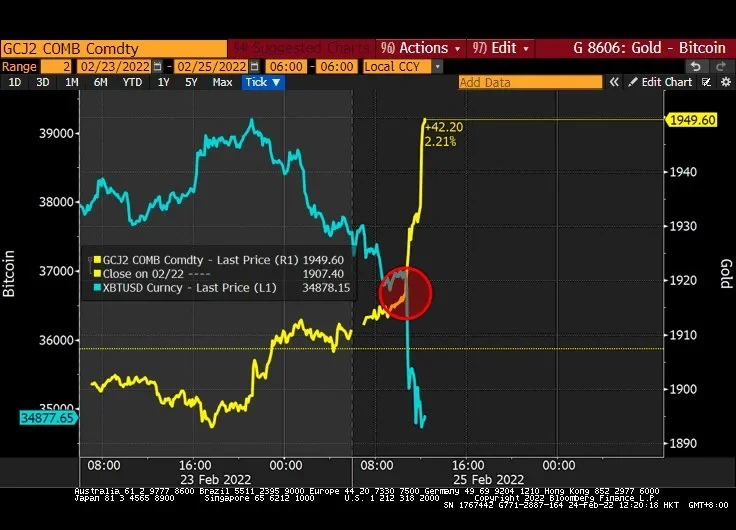
Bitcoin vs. Gold price action on the day
It appears that during this Ukraine crisis, Bitcoin prices and spot gold have diverged, with Bitcoin's trajectory aligning more closely with global equity markets. Bitcoin, long dubbed the "digital gold," does not seem to have demonstrated strong safe-haven characteristics — on the contrary, it continued to underperform. This has sparked widespread discussion and renewed attention on Bitcoin.
The reason Bitcoin's "safe-haven" status is being questioned is that on multiple occasions in the past, Bitcoin has demonstrated a degree of "safe-haven" role. The most notable examples are when national credit systems faced collapse, or when geopolitical tensions and outright conflicts drove fear to escalate — people turned to Bitcoin. For instance, when countries like Syria and Zimbabwe faced currency depreciation, conflict, and government credit crises, citizens converted large amounts of assets into Bitcoin to hedge against the decline of their domestic currencies. Additionally, tensions on the Korean Peninsula drove sustained demand for Bitcoin, resulting in a prolonged premium for Bitcoin in South Korea. So, could the worsening war situation cause Bitcoin to once again function as a safe-haven asset?
2. Does the "Digital Gold" Still Have Safe-Haven Attributes?
Bitcoin is called "digital gold" because its design closely mirrors that of gold in the digital age: gold has a limited total supply on Earth, and Bitcoin has a maximum supply cap of 21 million coins; gold boasts exceptional physical stability, and Bitcoin's ledger is distributed across computers worldwide, offering extraordinary fault tolerance; gold is easily divisible, and Bitcoin is equally divisible. As a result, Bitcoin was once compared to "digital gold" and was recognized as possessing certain "safe-haven" attributes.
However, Bitcoin's safe-haven attributes were never established凭空 — were never认定 arbitrarily — but rather emerged under specific conditions and at particular stages; they are not permanent characteristics. As an integral part of global financial markets, Bitcoin cannot be analyzed in isolation from the financial system, and its safe-haven attributes must be viewed dialectically and dynamically. As the Bitcoin market has evolved rapidly and market participants have shifted, Bitcoin now occupies a different "position" and faces different "circumstances." From the second half of 2020 through 2021, as numerous mainstream institutions and publicly traded companies entered the crypto market, Bitcoin's correlation with the Nasdaq Index steadily increased. This explains why before the first half of 2020, Bitcoin exhibited a negative correlation with U.S. equity markets and similar markets, while since then, the two have maintained a largely positive correlation.
Furthermore, relative to traditional safe-haven assets like gold, Bitcoin remains a comparatively higher-risk asset, meaning its safe-haven properties are not as strong as gold's. When facing extreme panic, for most people, it would not serve as a primary safe-haven choice. This is also reflected in the data. According to the latest Google Trends data, search interest in "Bitcoin" and "Gold" both surged around 10:00 on February 24. The search popularity for "Bitcoin" peaked at 48, while "Gold" reached 96.
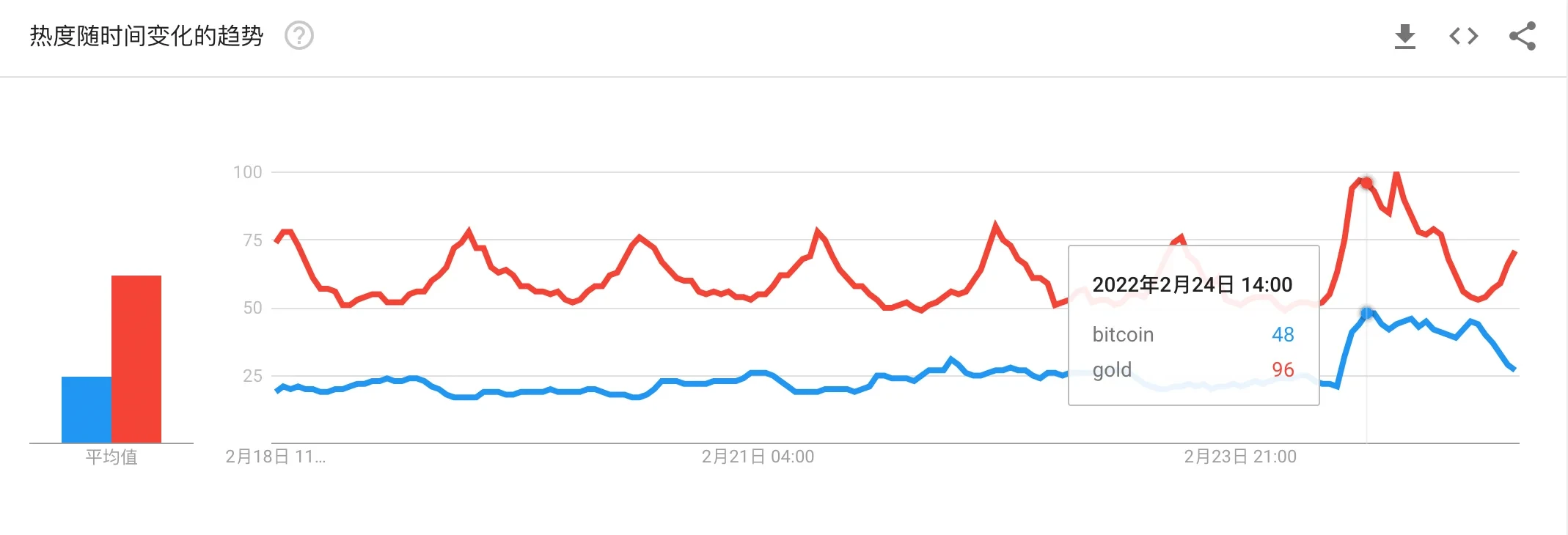
Source: Google Trends
One can see that as the Russia-Ukraine situation deteriorated, public interest in Bitcoin and gold both increased. However, compared to gold, public interest in Bitcoin appears relatively weaker, and Bitcoin's safe-haven demand may be correspondingly subdued.
On the question of whether Bitcoin possesses safe-haven attributes, a more nuanced discussion is needed. Whether Bitcoin qualifies as a safe-haven asset depends on the investor's holding size and net asset position. For high-net-worth individuals, Bitcoin represents a sound choice in terms of investment security, diversification, and return opportunities — and therefore may be considered by them a safe-haven asset. For ordinary investors whose fund size is relatively modest, however, Bitcoin is more appropriately characterized as a highly volatile risk asset.
3. How Will the Crypto Market Develop Going Forward?
Against the backdrop of Fed rate-hike expectations and heightened tensions triggered by international military conflict — a "black swan" event — the trajectory of the crypto market remains unclear. We may need to keep a close watch on the U.S. posture and actions toward Russia, subsequent negotiation outcomes, and whether the Fed's rate-hike pace will shift. All of these factors will affect capital flow dynamics across global financial markets. In 2018, Bitcoin's bull market was abruptly ended by the dual impact of its cycle and four consecutive intensive rate hikes. Therefore, once liquidity withdraws, the crypto market will struggle to remain unaffected. Currently, Fed officials have made clear statements regarding the Ukraine crisis, stating that it will not affect the March rate hike for now.
At the same time, it is worth noting that, as reported by CCTV News, U.S. President Biden delivered remarks at the White House on the Ukraine situation yesterday, stating that U.S. forces will not engage with Russia in Ukraine. This statement temporarily eased some concerns about further deterioration of the situation and may have been one of the reasons why U.S. stocks and the crypto market reversed their downward trend. Additionally, Biden stated that the United States will impose stricter sanctions and restrictions on Russia, working alongside allies to limit Russia's ability to conduct business using the dollar, euro, British pound, and Japanese yen. Could this measure, if implemented, prompt a shift in Russia toward Bitcoin and other crypto assets? This, too, would be a significant factor influencing the Bitcoin market.
Overall, how is the crypto market likely to evolve in the mid-to-long term? In this regard, drawing on the views of the OKX Research team, the outlook will primarily depend on several factors, which investors may wish to monitor.
The first is tightening global monetary policy. Since the start of 2022, key indicators across major economies have signaled that inflation has reached a pace that can no longer be ignored. The Federal Reserve has densely released hawkish signals, and expectations for substantial rate hikes continue to rise. All major financial markets have experienced varying degrees of pullback. During the preceding bull market, the correlation between the crypto market and the Nasdaq steadily increased, meaning that rate-hike expectations are exerting growing influence on crypto market trajectory. However, ultimately, the market will watch the Fed's March 16 FOMC rate decision statement closely.
The second is geopolitical developments. The escalation of this conflict has driven capital in financial markets toward risk-off positioning, with global financial markets bearing the impact. Some analysts suggest that Bitcoin selling could worsen further until tensions in Eastern Europe subside. Therefore, how this situation unfolds and whether it can be resolved satisfactorily under multiple powers' involvement will have a non-negligible bearing on crypto market direction.
The third is the progress of crypto ecosystem infrastructure development. As Vitalik Buterin has articulated, the crypto market may currently be in a cooling period of rational correction, but a market cooldown is beneficial for more sustainable projects, refocusing attention on the expansion of the Ethereum network. Breakthrough advances in industry infrastructure will provide stronger support for the broader market. For instance, on June 30 this year, Ethereum PoW will be removed as Ethereum 2.0 upgrades enter a new phase. The PoS mechanism and sharding chain technology will substantially enhance Ethereum's performance, thereby creating a better trading and development environment and laying a solid foundation for the long-term prosperity of the DApp ecosystem.
Finally, attention may be directed toward factors related to mainstream Bitcoin adoption. Following the approval of multiple Bitcoin futures ETFs last year, whether a Bitcoin spot ETF can be approved this year is worth watching — this event would serve as a key milestone for Bitcoin's formal entry into the mainstream. Additionally, El Salvador announced plans to build Bitcoin City last year, and in February, Tether announced a partnership with Lugano, a city in southern Switzerland, to launch the "Bitcoin Plan,"打造欧洲Bitcoin之都 — creating a European Bitcoin hub. All of these developments reflect shifting trends in mainstream acceptance of Bitcoin.
Disclaimer
This article may contain product-related content not applicable to your region. This article is intended to provide general information only and makes no representation as to any factual errors or omissions. The views expressed herein are those of the author and do not necessarily reflect the opinions of OKX. This article is not intended to provide any advice, including but not limited to: (i) investment advice or investment recommendations; (ii) offers or solicitations to buy, sell, or hold digital assets; or (iii) financial, accounting, legal, or tax advice. Holding digital assets (including stablecoins) involves a high degree of risk, may fluctuate significantly, and may even become worthless. You should carefully consider whether trading or holding digital assets is appropriate for you based on your financial situation. For questions specific to your circumstances, please consult your legal/tax/investment professional. The information in this article (including market data and statistics, if applicable) is provided for general reference purposes only. While we have taken all reasonable precautions in preparing such data and charts, we assume no responsibility for any factual errors or omissions expressed herein. © 2025 OKX. This article may be reproduced or distributed in its entirety or in excerpts of 100 words or less, provided that such use is non-commercial in nature. Any reproduction or distribution of the full article must prominently state: "This article is copyrighted © 2025 OKX, used under permission." Permitted excerpts must cite the article title and include attribution, for example, "Article title, [author name (if applicable)], © 2025 OKX." Some content may have been generated or assisted by artificial intelligence (AI) tools. Derivative works and other uses of this article are not permitted.
Show More
Recommended Reading

2025 KOL Most-Used OKX Products: A Comprehensive Roundup
In the cryptocurrency industry, professional players' choices are always direct and clear-cut. Throughout 2025, KOLs invested their funds and time to cast the most authentic votes for industry tools and ecosystem development. We centered around four core questions — "What was your biggest achievement this year?", "Given your achievements, what OKX products did you use most frequently and love the most this year?", "Why do you love it?", and "Does this
January 5, 2026

2026 Investment Outlook: Asset On-Chain Migration, Intelligence & Privacy | OKX Year in Review
The three major trends shaping crypto's future: asset transformation, subject transformation, and rule transformation. As we stand on the threshold of 2026, stepping away from four years of focused "road-building" infrastructure development, the crypto industry is welcoming a profound paradigm shift. OKX Ventures defines this as the dawn of the "Kinetic Finance" era, where the core is no longer how fast the network is, but the liquidity and earning
December 31, 2025

Vote with Your Data: A Deep Dive into 2025's Most Popular Trading Products | OKX Year in Review
Based on price action alone, it's difficult to explain the return differentials among trading users in 2025. What truly drives returns also depends on account-level trading methods, not just market volatility itself. OKX's annual report shows that mainstream coins remain the core of capital turnover and return generation, underpinning trading and strategy execution; emerging tokens are more used to amplify volatility and provide staged opportunities, but they are not a stable,
December 30, 2025
Fusaka in Practice: What Ethereum's Latest Upgrade Means for L2, Nodes, and Users
Ethereum mainnet has completed the Fusaka fork. At the protocol level, this upgrade consists of four main components. Full-text按 Q&A Show MoreThree guest speakers' core viewpoints and front-line experience: Ahmad (@smartprogrammer) – Nethermind Execution Client / Ethereum Core Dev Manu (@manunalepa) – Prysm / Of
December 16, 2025

OKX Research | Why RWA Became a Key Narrative in 2025
RWA (Real World Assets) is becoming the "new favorite" of global capital. Simply put, RWA involves taking valuable, ownership-bearing assets from the real world — such as real estate, bonds, stocks, and other traditional financial assets, as well as art, private lending, carbon credits, and other assets that are not normally easy to trade directly — and moving them onto the blockchain, making them tradable and programmable crypto assets. This
November 20, 2025
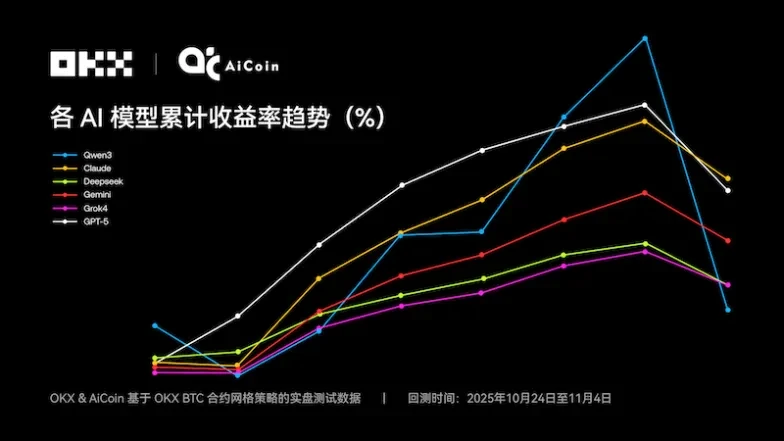
Claude Takes the Crown — The Truth Behind 6 Major AI Grid Strategies | OKX & Ai Coin Live Test
Short-term trading champion — is it also the king of grid strategies? The first season of NOF1's "AI Trading Live Arena" concluded on November 4, 2025 at 6:00 AM, whetting the appetite of the crypto, tech, and finance communities. But the outcome of this "AI IQ public test" turned out to be somewhat unexpected. The combined $60,000 in starting capital across six models ended with only $4.3
November 6, 2025