![[Educational] OKX Will Publish Proof of Reserves, Its Significance Concerns the Security of Your Funds](/images/articles/科普欧易okx将发布准备金证明其背后意义关系到你的资金安全-1774352837779.webp)
[Educational] OKX Will Publish Proof of Reserves, Its Significance Concerns the Security of Your Funds
This article was originally written by Nic Carter, translated by Katie Gu from Odaily Planet Daily, with minor edits by the editor.
A year ago, when SBF accepted an interview with the Financial Times, he said that if FTX became the largest exchange, buying Goldman Sachs and the Chicago Mercantile Exchange would not be a problem. A year later today, we have witnessed the most dramatic event in the crypto space this year.
This morning, OKX tweeted: "For all major cryptocurrency exchanges, it is crucial to publicly share their auditable merkle tree proof of reserves or POF. We plan to publish this proof in the coming weeks (within 30 days). This is an important step in establishing basic trust in the industry." Earlier, Binance also tweeted that it would soon start conducting proof of reserves to maintain full transparency.
Will proof of reserves be the solution to prevent another "earthquake" in the crypto space? We will take you to explore the significance of reserves for the crypto industry.
What is Proof of Reserves?
If there's one thing that can improve this industry, it's persuading every custodial service provider in the crypto space to adopt proof of reserves procedures.
Proof of reserves refers to custodial businesses holding cryptocurrency that should create public proof of their reserves, which should match the proof of user balances (liabilities). Theoretically:
Proof of Reserves + Proof of Liabilities = Proof of Solvency
The idea is to prove to the public (especially your depositors) that the cryptocurrency you hold on-chain matches user balances. Of course, in practice this is not so simple. Proving that you control some funds on-chain is of limited significance, as you can always borrow these funds on a short-term basis. Therefore, point-in-time verification has relatively limited significance.
In addition, exchanges may have hidden liabilities, or creditors may require depositors to have priority, especially if they illegally "discriminate" against customer assets on the platform. This is why Wyoming's SPDI legislation is so important, as it clarifies the legal status of depositors relative to custodians.
Proving liabilities is tricky and usually requires auditors to conduct a comprehensive assessment. For example, exchanges can omit certain liabilities to "deceive" PoR (Proof of Reserves) verification. This is why I recommend both user-facing PoR protocols, which allow users to verify their individual balances collectively to achieve "herd immunity," and auditor-facing PoR protocols to prove that the claimed liabilities are real.
Another issue is that exchanges may have undisclosed liabilities, which simple cash flow analysis may not capture. For example, given that many exchanges operate in chaotic regulatory and legal environments, in the event of bankruptcy, there is no guarantee that depositors have priority over creditors. This means that in the worst case, large debts may include hidden liabilities that weaken depositors' claims on reserves. This is why I recommend involving an auditor in the PoR process, so that these more complex liabilities (and assessment of depositor priority) can be understood. Simply put, exchanges should adopt a legal policy that grants absolute privilege, prioritizing over all creditors.
Therefore, proof of reserves programs are not entirely incredible. They are still worth trying for the following reasons:
It is excellent "custody service." Regular PoR verification shows your end users that you are in good condition and that you remain vigilant about solvency;
It is a powerful self-regulatory measure. If exchanges collectively adopt PoR, regulators may be more inclined to adopt a lenient regulatory approach. It is far better to operate through voluntary self-regulatory measures in a relatively free environment than to later bear heavy regulatory mandates;
It makes fractional reserve systems nowhere to hide, thereby helping to prevent "toxic" operators. The failure of these exchanges has had serious impacts on the entire industry, so avoiding them is in everyone's interest.
In my view, "Proof of Reserves" (PoR) refers to a specific procedure in which a custodian transparently demonstrates the existence of on-chain reserves, and then provides an equivalent proof (usually with the assistance of an auditor) that outstanding liabilities do not exceed these reserves. This term usually refers to related procedures. For example, stablecoin verification is sometimes referred to as PoR. But in this case, it is liabilities on-chain and reserves in the banking system. In my view, proof of reserves specifically refers to the procedure by which an entity proves the existence of crypto reserves matching certain notes they have issued.
Frequently Asked Questions
If you mean "Proof of Solvency," why say "Proof of Reserves"?
Proof of Reserves sounds better, solvency is a higher standard. Ideally, PoR should be combined with a comprehensive accounting of known and hidden debts, thereby obtaining stronger solvency assurance.
Will exchange/user privacy issues be leaked?
As long as exchanges can let people know the total value of deposit assets, they do not need to leak any additional information. In practice, it does not matter how many tokens an exchange has, as many third-party providers actively publish this data. Therefore, regardless of how, attempting to hide the number of deposited tokens is doomed to fail. Through proof of liability tools, user information is anonymized and decentralized. This only allows users who know their account ID and balance to verify whether they are included in the merkle proof, without monitoring other users.
What about DEX privacy issues?
The growth of DEX is exciting and significant for the industry. However, cryptocurrency users have a clear preference for custodial ownership, at least for some of their tokens. Self-custody is difficult and not everyone can do it. Approximately 20-25% of BTC and ETH are held in custodial environments. By encouraging custodial exchanges to adopt PoR, I hope to improve user assurance for custodial exchanges.
Do you need an auditor?
In the case of BitMEX, I believe users were adequately assured without a third-party auditor. In practice, by running the process, users can determine that BitMEX controls a specific amount of BTC, and their account balances are included in the final merkle balance tree. In this way, if enough users run the analysis, you can obtain reliable assurance that BitMEX will not selectively exclude any liabilities, thereby exaggerating their solvency.
In this case, only BTC is proven in a relatively simple full-reserve setup. However, in more complex setups, it may be a fractional reserve model or a more bank-like environment, or have multiple assets, or even non-blockchain assets and potential fiat assets, in which case you will need to engage an auditor. Armanino LLP has been conducting PoR programs for many years and is an expert in this field.
I want to adopt PoR, do you have any recommendations?
I suggest updating your legal terms to clarify:
a) Separation of customer deposits and working capital;
b) Priority status of customer deposits in liquidation;
c) Your responsibilities to depositors under your regulatory regime (if any).
As for adopting a PoR strategy, I recommend using the merkle method for continuous, auditor-assisted, user-verifiable proof of solvency. Point-in-time verification is not enough. I recommend using auditors to assist with and certify the liability aspect. Currently, Armanino, Mazars, and KPMG are well-known audit/accounting firms providing these services. I strongly recommend allowing depositors to use the Maxwell/Todd merkle method to verify whether their balances are included in the proof of liabilities.
Why do I need an auditor or external third-party assistance?
In order for users to have confidence in account conditions, it is necessary to engage a trustworthy auditor who is willing to stake their professional reputation to assess the liability situation.
Disclaimer
This article may contain product-related content not applicable to your region. This article is intended to provide general information only and does not take responsibility for any factual errors or omissions therein. This article represents only the author's personal views and does not represent the views of OKX. This article is not intended to provide any of the following advice, including but not limited to: (i) investment advice or investment recommendations; (ii) offers or solicitations to buy, sell, or hold digital assets; or (iii) financial, accounting, legal, or tax advice. Holding digital assets (including stablecoins) involves high risk, may fluctuate significantly, and even become worthless. You should carefully consider whether trading or holding digital assets is suitable for you based on your financial situation. For questions regarding your specific situation, please consult your legal/tax/investment professional. The information appearing in this article (including market data and statistics, if any) is for general reference only. Although we have taken all reasonable precautions in preparing these data and charts, we assume no responsibility for any factual errors or omissions expressed herein. © 2025 OKX. This article may be reproduced or distributed in full, or excerpts of 100 words or less of this article may be used, provided that such use is non-commercial. Any reproduction or distribution of the entire article must also prominently state: "This article is copyrighted © 2025 OKX, used with permission." Permitted excerpts must cite the article title and include the source, for example "Article Title, [Author Name (if applicable)], © 2025 OKX". Some content may be generated or assisted by artificial intelligence (AI) tools. Derivative works or other uses of this article are not permitted.
Show More
Recommended Reading

2025 KOL Most Used OKX Products Ranking: A Comprehensive Review
In the cryptocurrency industry, professional players' choices are always direct and pure. In 2025, KOLs voted with a full year of capital investment and time accumulation for the most genuine vote on industry tools and ecosystem development. We focus on four core questions—"What is the biggest achievement this year?", "Given the achievements, what is your most used and favorite OKX product in 2025?", "Why do you like it?", "This
January 5, 2026

2026 Investment Outlook: Asset On-Chain, Intelligence and Privacy | OKX Annual Review
Three major trends for the future of crypto: asset transformation, entity transformation, and rule transformation. As we are about to enter 2026, bidding farewell to the past four years of infrastructure focused on "road building," the crypto industry is welcoming a profound paradigm shift. OKX Ventures defines this as the beginning of the "Kinetic Finance" era, where the core is no longer how fast the network is, but the flow of on-chain assets and earning
December 31, 2025

Voting with Data:透视 2025 Popular Trading Products | OKX Annual Review
If you only look at market conditions, it's difficult to explain the difference in returns among exchange users in 2025. What truly determines returns also depends on account-level operational methods, not just market volatility itself. OKX's annual statement shows that mainstream coins are still the core of capital turnover and returns, supporting trading and strategy execution; emerging coins are more used to amplify volatility and provide phased opportunities, but are not a stable, long-term source of returns. What truly continuously contributes returns is,
December 30, 2025
Fusaka in Practice: What Does Ethereum's Latest Upgrade Mean for L2, Nodes, and Users?
Ethereum mainnet has completed the Fusaka fork. From the protocol level, this upgrade mainly includes four parts. Full text follows Q&A Show More for the core views and first-hand experience of three guests: Ahmad (@smartprogrammer) – Nethermind execution client / Ethereum core developer Manu (@manunalepa) – Prysm / Of
December 16, 2025

OKX Research | Why Did RWA Become a Key Narrative in 2025?
RWA (Real World Assets) is becoming the "new favorite" of global capital. Simply put, RWA involves moving valuable, ownership-bearing items from the real world—such as houses, bonds, stocks and other traditional financial assets, or even art, private lending, carbon credits and other assets that are usually not easily tradable—onto the blockchain to become tradable, programmable crypto assets. This way, not
November 20, 2025
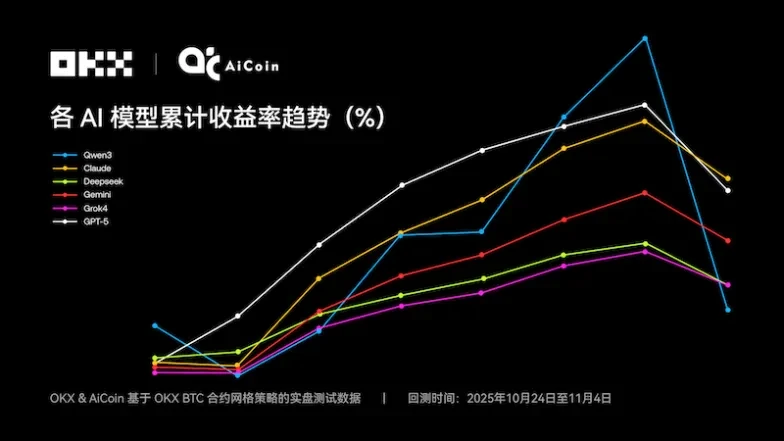
Claude Takes the Championship, Truth About 6 Major AI Grid Strategy Showdowns | OKX & Ai Coin Live Review
Short-term trading champion Qwen3, is it also king in grid strategies? The first season of the "AI Trading Live Arena" launched by NOF1 finally concluded at 6 AM on November 4, 2025, whetting the appetite of the crypto, tech, and financial circles. But the ending of this "AI IQ public test" was somewhat unexpected. The six models' total principal of $60,000 was only $43,000 at the conclusion.
November 6, 2025