Why Are Game Guilds Attracting Frequent Funding? Here Are the Reasons Behind It
Undoubtedly, the sector that took over from DeFi to become the hottest in the crypto space in the second half of 2021 was GameFi. According to Dapp Radar statistics, in mid-July 2021, the number of interactions between blockchain games and wallets reached 3.31 million, surpassing DeFi for the first time.
However, beyond the attractive P2E concept, what truly brought blockchain games into mainstream view was Axie Infinity, which leveraged Ronin sidechain upgrades and Complete performance optimization in late April. After becoming popular throughout Southeast Asia, its token AXS surged nearly 100x at its peak within the year, and its daily revenue once exceeded that of Honor of Kings. Also gaining prominence was the behind-the-scenes driver YGG Guild.
The explosion of Axie Infinity was inseparable from YGG Guild's full-process incubation. In the early stages, YGG eliminated all barriers between ordinary people and Crypto through a one-stop service of lending, training, and promotion, and rapidly achieved Complete viral growth through attractive revenue-sharing models. With the reinforcement loop of both revenue volume and player scale exploding simultaneously, YGG Guild also streamlined a complete business line from player recruitment, training, tournaments to lending, covering every aspect of blockchain game gold farming in all directions.
After rapidly gaining prominence, YGG completed a $4 million funding round led by a16z in August, having previously completed a total of over $5.3 million in funding. Following Axie Infinity's benchmark effect, YGG single-handedly spawned a more segmented sector: blockchain game guilds.
I. More Crypto than Traditional Game Guilds, Attracting Capital Favor
The relationship between blockchain games and guilds is more like that between startups and venture capital firms, with the latter playing the role of value discoverer and incubator.
According to incomplete statistics, as of now, the number of blockchain game projects listed on Dapp Radar has exceeded 1,200. With swarms of players, how to choose projects that best suit them in terms of gameplay and returns has become a difficult problem, spawning numerous blockchain game guilds.
In fact, similar guilds became popular as early as when online games became widespread, with small-scale "gold farming studios" being the most typical form. However, the Crypto DNA and DAO attributes of blockchain game guilds make them distinctly different from traditional game guilds.
First, traditional game guilds have absolute话语权 and a monopoly on returns before players, essentially an employment relationship. Employment inevitably leads to exploitation, causing uneven distribution of returns. However, blockchain game guilds, born from the crypto world, adopt DAO's community governance method and allow players to participate in return distribution and community governance through token issuance, which is the fundamental difference between the two. For example, blockchain game guild Avocado Guild recently revealed that its upcoming native token AVG will be used for DAO governance, rewards, staking, liquidity mining, and platform ecosystem construction.
Second, traditional game guilds only empower players at the hardware level, simply providing venues and props for gold farming, with limited services restricted to players with some gaming foundation. Blockchain game guilds, through various forms such as referral incentives, dedicated training, low-interest lending, revenue sharing, scholarship support, hosting game tournaments, and developing Sub DAOs, empower players of all levels in multiple dimensions and comprehensively. In this process, community consensus driven by the P2E model is strengthened, triggering significant viral effects. The most typical example is emerging blockchain game guild Uni X Gaming, whose community participants already exceed 190,000, surpassing YGG's over 80,000. Therefore, the user growth rate of blockchain game guilds far exceeds that of their predecessors, which is also a core indicator for capital project valuation.
Finally, in the traditional game world, game guilds + gold farmers exist in serious opposition to game developers. Because this large-scale, assembly-line operation causes massive outflow of game assets, triggering inflation within the ecosystem and disrupting game order. In response, game developers' default practice is to cancel player accounts, with losses borne by themselves.
However, under the follow-on investment + incubation model, blockchain game guilds and blockchain game projects have their interests aligned. For example, Trung Nguyen, the behind-the-scenes developer of Axie Infinity, is YGG's primary angel investor. Therefore, all operations of players under blockchain game guild guidance are directed toward expanding game scale and returns. Thus, under specific token incentives and economic model design, projects, guilds, and players form a stable community of interests. In addition, blockchain games use blockchain as their technical foundation, NFTs as the form of game assets, and tokens as the value medium, making the security, stability, and liquidity of player returns stronger, meeting the Crypto world's expectations for value.
Of course, blockchain game guilds not only possess the Crypto气质 that Gen Z prefers more, but the blockchain game sector they back also holds immense imaginative space.
According to Dapp Radar statistics, as of October 2021, the blockchain game sector's trading volume reached as high as $48.07 billion, and online users grew more than 290-fold compared to the beginning of the year. With the dual positive factors叠加, capital successively poured in. Around December, the blockchain game circle frequently reported large funding news:
Brazilian blockchain game guild BAYZ completed $4 million in funding, led by Yield Guild Games;
AAG Guild's backing entity AAG Ventures completed $12.5 million in private financing, with Hash Key Capital participating;
Rainmaker Games announced completion of $6.5 million in seed round funding, with Animoca Brands participating;
Uni X Gaming recently announced completion of $28 million in funding, including $8 million from private financing and $20 million from Copper public offering, with investors including LD Capital, etc.
II. Following YGG's Lead, New Players Show More Diversified Exploration
While YGG pioneered this segmented sector, it also provided a template for latercomers through its successful experience. Currently, most blockchain game guilds' model designs are based on YGG as a blueprint, but adjustments are made considering regional characteristics, project attributes, and player types. Below is a rough overview of YGG and other leading blockchain game guilds:
1. YGG Guild
YGG is the leading project in this sector, with its economic model being investors responsible for initial investment, players responsible for participating in game gold farming, and guild surplus reinvested to purchase in-game virtual assets and land. After Axie Infinity gained popularity, YGG Guild launched a scholarship program aimed at providing lending services to players wanting to enter the game.
In governance, YGG deeply practices DAO concepts, where members can form sub-guilds (Sub DAOs) based on different game projects. Sub DAOs and the main guild have roughly similar governance functions but are limited to specific projects or domains. YGG, deeply understanding player psychology, allows Sub DAOs to各自 issue Tokens, injecting liquidity into different blockchain game projects.
YGG also holds various types of assets including SAND,AXS, Zedrun, etc., totaling over $850 million. YGG's current investment portfolio includes over 18 games, including the recently popular MOBOX and Thetan Arena, the latter even viewed by investors as an Axie Infinity alternative. According to official data, since its launch in late November, Thetan Arena's active player count has exceeded 6 million, and it has received investment from professional institutions such as Animoca Brands.
2. Rainmaker Games
Rainmaker Games focuses on the free-to-play concept, where players can try games and access training for free. In games, players can choose to use the NFTs provided by the platform or use their own NFTs, with relatively low cost barriers.
Additionally, Rainmaker Games has a relatively rich game library, suitable for players with higher requirements for game experience. On the Rainmaker Games platform, games are divided into three levels: entry-level, intermediate, and advanced. Entry-level players can start with non-NFT games, and upon reaching intermediate level, players can participate in NFT games, while advanced players can also apply for guild certification, which will help players获得 rankings and reserve points from leading guilds.
Rainmaker Games hopes to leverage this to master more granular user data to recommend games to players more precisely, maximizing user retention. Through this, Rainmaker Games also plans to build the most comprehensive blockchain game database, providing player data to game project parties and building data profiles for guild game teams.
Notably, Rainmaker Games will also personalize each player's game UI interface to match their preferences, game skill levels, and training content, and players can directly find game reviews,测评 videos, and learn gameplay following top coaches on the platform.
Rainmaker Games platform token $RAIN has a fixed total supply of 100 million tokens with no additional issuance, and will also be widely used in community governance.
Currently, Rainmaker Games has 1,200 players, its Discord community has 21,000 members, and monthly platform revenue exceeds $700,000.
3. AAG Guild
AAG Guild's initial form is similar to YGG's, mainly leasing NFTs to users to earn returns. What's exciting for players is that the player revenue share ratio is 60%, significantly higher than YGG's 30%.
On this basis, AAG Guild places greater emphasis on the user education module, encouraging users to接受 game training or learn advanced programming languages to earn guild tokens, but this function is not yet open to the public and is expected to be tested in early next year.
Notably, AAG Guild's operating entity AAG Ventures is the first project to receive Harmony's support. AAG Ventures can cross-chain to ETH and other mainstream public chains through Harmony's trustless Horizon bridge, and AAG's assets can be bridged to multiple chains and their users, reducing game asset trading costs.
As of December this year, AAG Guild has over 2,000 members, covering seven countries: the Philippines, Indonesia, Brazil, India, Colombia, Nigeria, and Argentina.
4. Uni X Gaming Community
Uni X Gaming's basic model is consistent with the industry, establishing a fund pool to lease NFT prop assets to players, who share revenue proportionally after earning returns. Interestingly, Uni X Gaming plans to invest大量 in-game NFTs so more players can lease them, generating more sub-leasing premium. Additionally, Uni X Gaming is actively seeking deep cooperation with other games to achieve community traffic diversion.
According to official website content, Uni X Gaming community participants already exceed 190,000, with a total of 1,200 awards granted, generating over $280,000 in monthly profit, over 10,000 hours of free education, making it one of the fastest-growing game guilds. According to official plans, Uni X Gaming plans to grant 10,000 awards by the end of 2021, expecting to generate $70 million in annual revenue in the future.
5. Merit Circle (MC)
Merit Circle is a metaverse decentralized autonomous organization (DAO) launched by the founder of the Axie 420 scholarship program, incubated by FlowVentures, primarily investing in metaverse, including scholarship programs, purchasing metaverse land, etc., and providing education services to its community. Merit Circle's slogan is: enabling users in low-income countries to afford playing Axie Infinity, clearly intending to ride YGG's coattails, but this also gained it a following in Southeast Asia.
Additionally, Merit Circle also established a sub DAO structure following YGG's example. Specifically, Merit Circle DAO consists of a main DAO (main guild) that manages numerous sub DAOs (sub-guilds), which act as tentacles throughout the blockchain game industry. However, unlike YGG, Merit Circle does not allow sub DAOs to issue Tokens, with all guilds sharing the MC token. MC token holders can vote on amendments to game strategies.
Notably, Merit Circle focuses on connecting with capital parties to secure massive fund support for incubating more high-quality blockchain game projects. Based on this, Merit Circle has established cooperative relationships with well-known blockchain games such as Star Atlas and Illuvium.
III. The Reasons Behind Blockchain Game Guilds' Popularity Also Explain the Heat of DAOs, Metaverse, and Web3.0
Kain, founder of Synthetix, once stated on social media: DeFi belongs to the financial sector, and finance has a great impact on the world, but games and art NFTs will win people's attention more than finance, which well explains why GameFi could承接 DeFi's traffic and heat.
The play-to-earn model, deeply understanding底层 human desires, after being ignited by the explosion point of Axie Infinity, rapidly stimulated the demand of crypto circle players. As key配套设施 of GameFi, YGG and other blockchain game guilds have had their business models and profitability validated by the market, thus under capital's boost and player fanaticism, naturally entering a positive cycle of business operations.
Of course, the reasons behind blockchain game guilds' popularity also apply to recently hot new concepts like DAOs, metaverse, and Web3.0.
The底层 narrative logic of DAOs, metaverse, and Web3.0 is all about using decentralized blockchain technology to put ordinary users on equal footing with internet giants, equally participating in the distribution of ecosystem dividends, and fully controlling personal data in the digital age rather than having it used for other purposes.
Although blockchain game guilds' current business is still limited to GameFi, and this sector's sustainability cannot yet be determined, they also bundle the interests of players, platforms, and communities through token economic models, and through DAO operation methods allow players to participate in formulating game strategies, and all assets in the game ecosystem exist in NFT form, making users' ownership unassailable.
Additionally, in this process, more Crypto-native blockchain game guilds are also more actively embracing metaverse. Just last month, YGG partnered with Genopets, a leading blockchain game on Solana chain, to promote this metaverse game globally. To this end, YGG also purchased $25,000 worth of Genopets governance token GENE to help launch the game's scholarship program.
According to reports, Genopets game can extract data from users' phones or wearable fitness devices, converting users' life status into in-game pet status, and can earn token rewards. This game is most closely connected to the metaverse concept, and although it may be drowned out by the noisy gold farming trend due to its own design, we can see YGG's determination and desire to embrace the metaverse.
More importantly, blockchain game guilds can feature player revenue share ratios adjusted to 30%-40%, which compared to the Web2.0 game world, is already a huge improvement. According to a World Bank report published in 2011, the average monthly income of each game gold farmer was less than 1,600 RMB, but their daily work duration exceeded 10 hours. By comparison, blockchain game guilds' revenue-sharing model appropriately embodies the core spirit of Web3.0: passing as much platform revenue as possible to contributing players.
Disclaimer
This article may contain product-related content not applicable to your region. This article is intended to provide general information only and does not take responsibility for any factual errors or omissions therein. This article represents only the author's personal views and does not represent OKX's views. This article is not intended to provide any advice, including but not limited to: (i) investment advice or investment recommendations; (ii) offers or solicitations to buy, sell or hold digital assets; or (iii) financial, accounting, legal or tax advice. Holding digital assets (including stablecoins) involves high risk, may fluctuate significantly, and even become worthless. You should carefully consider whether trading or holding digital assets is suitable for you based on your financial situation. For questions regarding your specific situation, please consult your legal/tax/investment professional. The information appearing in this article (including market data and statistics, if any) is for general reference only. Although we have taken all reasonable precautions in preparing these data and charts, we assume no responsibility for any factual errors or omissions expressed herein. © 2025 OKX. This article may be reproduced or distributed in its entirety, or excerpts of 100 words or less from this article may be used, provided such use is non-commercial. Any reproduction or distribution of the entire article must also prominently state: "Copyright © 2025 OKX. Used with permission." Permitted excerpts must cite the article name and include attribution, such as "Article Name, [Author Name (if applicable)], © 2025 OKX". Some content may be generated or assisted by artificial intelligence (AI) tools. Derivative works or other uses of this article are not permitted.
Show More
Recommended Reading

2025 KOL Most-Used OKX Products Ranking Roundup
In the cryptocurrency industry, professional players' choices are always direct and pure. In 2025, KOLs used a full year of capital investment and time沉淀 to cast the most genuine vote for industry tools and ecosystem development.围绕 four core questions—"What was the biggest achievement this year?", "Under the premise of achieving results, what OKX products did you use most and like most in 2025?", "Why do you like it?", "This
January 5, 2026

2026 Investment Outlook: Asset On-Chain, Intelligence & Privacy | OKX Annual Record
Three major trends for Crypto's future: asset transformation, entity transformation, and rule transformation. As we are about to enter 2026, saying goodbye to the past four years of infrastructure focused on "road building," the加密 industry is welcoming a profound paradigm shift. OKX Ventures defines this as the opening of the "Kinetic Finance" era, where the core is no longer how fast the network is, but the flow and earnings of on-chain assets
December 31, 2025

Voting with Data, Insights into 2025 Hot Trading Products | OKX Annual Record
If you only look at market trends, it's hard to explain the return differences between 2025 trading users. What truly determines returns also depends on account-level operation methods, not just market volatility itself. OKX's annual statement shows that mainstream coins are still the core of fund turnover and return承载, supporting trading and strategy execution; emerging coins are more used to amplify volatility, providing phased opportunities, but are not stable, long-term sources of returns. What truly continuously contributes returns,
December 30, 2025
Fusaka in Practice: What Ethereum's Latest Upgrade Means for L2, Nodes, and Users
Ethereum mainnet has completed the Fusaka fork. From a protocol level, this upgrade mainly includes four components. The full text presents the core viewpoints and frontline experience of three guests in Q&A format: Ahmad (@smartprogrammer) – Nethermind execution client / Ethereum core developer Manu (@manunalepa) – Prysm / Of
December 16, 2025
OKX Research | Why Is RWA a Key Narrative in 2025?
RWA (Real World Assets) is becoming a global capital "new favorite." Simply put, RWA means moving valuable, ownership-bearing things from the real world—such as houses, bonds, stocks and other traditional financial assets, even art, private lending, carbon credits and other assets that are usually not easily traded—onto the blockchain, turning them into tradeable, programmable crypto assets. This way, not
November 20, 2025
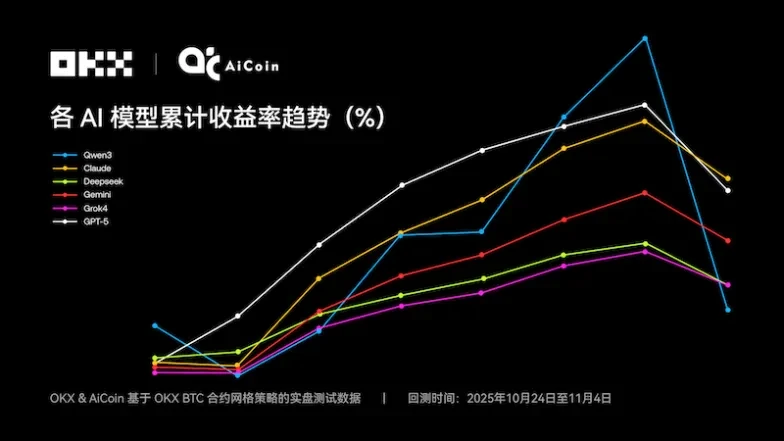
Claude Takes the Championship, Truth Behind 6 Major AI Grid Strategy Showdown | OKX & Ai Coin Live Trading Review
Short-term trading champion Qwen3, is it also a king in grid strategies? The first season of the "AI Trading Live Arena" launched by NOF1 finally concluded at 6 AM on November 4, 2025, keeping the crypto, tech, and financial circles in suspense. But the outcome of this "AI IQ public test" was somewhat unexpected. The six models' total principal of $60,000 was left with only 4.3
November 6, 2025