Federal Reserve Rate Hikes (Part 2): What is the Essence of Rate Hikes?
If all goes according to plan, Federal Reserve rate hikes will hang over all investors like the Sword of Damocles throughout 2022 and even 2023. In 2022 alone, the Federal Reserve has 7 more FOMC meetings ahead, each with the possibility of rate hikes. This is like the story of "The Boy Who Cried Wolf," except that everyone knows this "wolf" of rate hikes will eventually come, and it won't just "eat sheep" - it may "eat people" too.
In our previous article "Federal Reserve Rate Hikes (Part 1): Will Rate Hikes End the Bull Market?", we analyzed the relationship between Federal Reserve rate hikes, rate cuts, and the rise and fall of Bitcoin and crypto markets. As the second article in this series, this piece will return to Federal Reserve rate hikes themselves to explain: What is the essence of Federal Reserve rate hikes?
In Simple Terms, What are Federal Reserve Rate Hikes?
To understand Federal Reserve rate hikes, we need to first understand the Fed's basic structure and functions.
The Federal Reserve consists of three main parts: the Board of Governors (FRB), the Federal Open Market Committee (FOMC), and 12 regional Federal Reserve Banks located in major cities across the country. Under these 12 reserve banks are approximately 2,000 member banks.
The Board of Governors has 7 members, consisting of the Chair, Vice Chair, and 5 other governors. These 7 members must all be nominated by the President and confirmed by Congress before taking office. Governors serve 14-year terms, while the Chair and Vice Chair serve 4-year terms. The FOMC has 12 members, composed of the 7 Board members and 5 of the 12 regional Federal Reserve Bank presidents, with the President of the New York Fed always having a vote, and the other 11 presidents taking turns serving as voting members. See the diagram below for details:
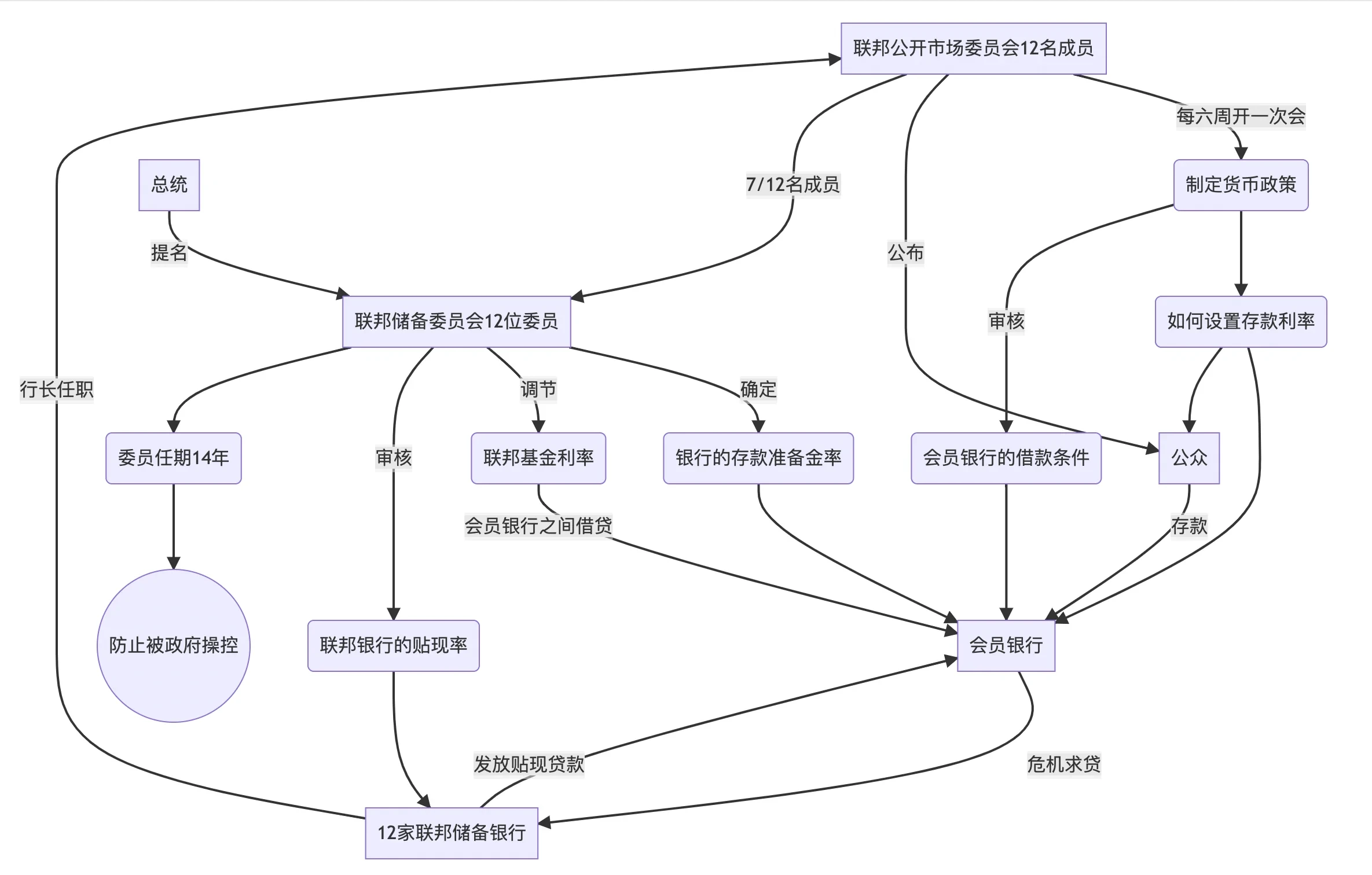
Federal Reserve System Structure Diagram (Author: Tulu)
In terms of responsibilities, the Board of Governors is the governing body. The central Board has the authority to approve regional Fed president appointments and holds dominant power in monetary policy decision-making and execution. It can set bank reserve requirements and interest on reserves, and review the discount rate. The FOMC is the implementing body, meeting every six weeks - what we commonly call FOMC meetings. These meetings determine open market operations policy, i.e., the direction of monetary policy adjustments, usually referred to as the benchmark interest rate. There are three possible adjustment directions: raise rates (rate hike), lower rates (rate cut), or keep current rates unchanged. The 12 regional reserve banks participate as important stakeholders in Fed policy implementation and provide feedback on economic market conditions.
Fed governors mainly fall into two camps: doves and hawks. Traditional doves are mostly economists from America's east and west coasts, such as PhD graduates from MIT or UC Berkeley's economics departments. They prefer extensive use of academic models and represent traditional financial industry interests. Traditional hawks mainly come from the Midwest and southern states, representing American manufacturing, energy, agriculture, and other industries. Philosophically, they believe in market-determined outcomes, favor rate hikes, oppose quantitative easing, and dislike real estate speculation.
The struggle between these two camps causes Fed policy to swing back and forth. Before each FOMC meeting, some hawkish or dovish members may give speeches about rate hikes or cuts that briefly affect market movements, but the meeting results may be exactly opposite to these members' speeches.
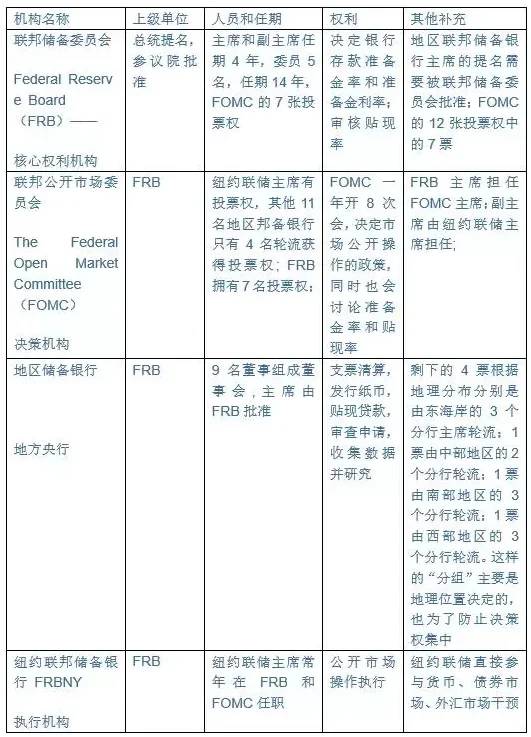
Summary of Functions and Operating Rules of Federal Reserve Agencies (Source: Yueniu Finance)
Unlike other countries, the Federal Reserve is a private central bank whose main functions are to maintain and stimulate U.S. economic growth and ensure market stability and employment. It doesn't pay much attention to issues like asset price bubbles or inflation.
Understanding the Fed's basic structure and functions helps us better understand the path and essence of Federal Reserve rate hikes.
Federal Reserve rate hikes essentially mean raising the borrowing rate between the Fed and commercial banks, leading to higher borrowing costs between banks (the federal funds rate, America's benchmark rate), then raising borrowing rates between commercial banks and businesses/residents, and finally affecting investment, consumption, and other behaviors throughout society through interest rate adjustments.
Specifically, all U.S. financial institutions that accept customer deposits have a reserve account at the Fed. The balance of each institution's reserve account cannot fall below a certain percentage of the short-term deposits it accepts. This percentage is called the reserve ratio or reserve requirement ratio. Normally, banks with insufficient reserves can borrow short-term from banks with excess reserves to meet their reserve requirements. The interest rate on these short-term loans between financial institutions to meet reserve requirements is called the federal funds rate.
The Fed influences the federal funds rate through open market operations. Open market operations refer to the Fed's actions of injecting or withdrawing money from the market by buying or selling bonds. After the FOMC sets a target for the federal funds rate, the Fed uses open market operations to change the money supply in the market to achieve the predetermined target rate.
Fed rate hikes and cuts essentially achieve the target rate announced at FOMC meetings through the above process. During economic recessions, the Fed lowers rates to support economic growth; conversely, when the economy overheats or inflation is too high, the Fed raises rates to curb investment and consumption.
You could say a rate hike is a result that requires a series of operations to achieve. So after each FOMC meeting announces a rate hike, the market doesn't immediately crash - it may even continue rising out of inertia until the rate target is fully reached, after which the market finally declines and collapses. It's like turning off a water faucet - the "landlord" first tells tenants she'll restrict water supply and turns down the faucet, but she needs to go downstairs and manually turn the valve gate and perform a series of actions to actually limit water. During this process, the water decreases gradually, giving tenants time to react.
Since the U.S. dollar is the world currency and dominates the global financial and monetary system as well as the trade settlement system, this means Fed rate hikes not only affect the U.S. economy and other global economies, but also all investment markets including the crypto market.
Let's Translate - What is the Essence of Rate Hikes?
The essence of Federal Reserve rate hikes can be understood from two perspectives: one for the United States itself, and one for other countries/regions or specific industries.
For the United States itself, simply put, the essence of Fed rate hikes is developing the U.S. economy through monetary policy adjustments. Whatever the Fed does, its ultimate purpose is to protect and serve U.S. economic development. If it benefits U.S. economic development, it will do it; if it doesn't benefit U.S. economic development, it generally won't do it, unless forced by more critical circumstances.
When formulating specific policies, the Fed mainly considers three things: GDP growth and fiscal deficit, inflation rate and unemployment rate, and the economic cycle. By analyzing these three aspects, we can basically infer the Fed's motives for rate hikes. However, it's worth noting that these three aspects are given different weights at different times, as using monetary policy to achieve a certain goal often involves trade-offs where you can't have both. It should be specifically noted that while the Fed mainly focuses on these three aspects, the most critical ones to defend at all costs are GDP and fiscal deficit. Failing to defend these isn't simply a matter of economic recession - it would mean the collapse of the United States.
For other countries/regions or specific industries, the essence of Fed rate hikes is much more complex. Or to put it bluntly, judging from the history of previous Fed rate hikes, they often evolve into financial harvesting by the United States of other countries/regions or specific industries. Whether this "harvesting" is intentional or not, objectively speaking, every round of Fed rate hikes in history has caused catastrophic consequences globally, with some regions or industries even facing annihilation.
The 2008 global financial crisis, the tech internet bubble at the beginning of this century, as well as the Southeast Asian financial crisis, Japanese economic crisis, and Latin American debt crisis of the last century can all be said to have been largely triggered by Fed rate hikes at the time, which detonated internal contradictions and led to collapse, followed by harvesting.
The background of this round of Fed rate hikes is: The global economic recession caused by the pandemic, including in the United States, led to infinite quantitative easing "money printing" and flooding. Although this temporarily stabilized the economy, it also created serious hidden dangers.
Looking only at the scale of U.S. federal government debt, this year it has already surpassed the $30 trillion mark, just $1.4 trillion away from the current federal debt ceiling of $31.4 trillion, with the average American背负ing over $90,000 in federal government debt. This figure is $7 trillion higher than U.S. GDP in 2021 (approximately $23 trillion), and the debt scale has grown by exactly $7 trillion in the two years since the COVID outbreak.
The main reason for this situation is that since the pandemic outbreak, the Fed has printed trillions of dollars to maintain economic development. In 2020 alone, 21% of the total dollar supply flooded into the market, creating the largest "money printing" record in human history. By the time the Fed finally announced accelerated tapering of asset purchases (i.e., slowing "money printing"), its balance sheet had approached $9 trillion.
Of course, the Fed's massive money printing did indeed promote U.S. economic development. Data released last month by the U.S. Department of Commerce shows: U.S. economic growth was 5.7% in 2021, the highest since 1984, and nominal growth was as high as 10.05%. The difference between this nominal growth and actual growth is mainly inflation. According to the latest data from the U.S. Department of Labor, the U.S. CPI rose 7.5% year-on-year in January 2022, the highest increase since February 1982.
As a developed country, the United States long ago entered an era of low growth - this is globally recognized common knowledge. Suddenly achieving 10% nominal growth like this is essentially like an elderly person taking strong supplements - the risk is obvious.
It is precisely because of facing such a severe situation that the Fed is urgently accelerating tapering and constantly signaling it will start rate hikes as soon as possible. But also because the situation is unprecedentedly severe, all countries and investors worldwide fear this Fed rate hike, worried that the storm brought by this rate hike will bring them annihilation.
To use an analogy, each round of Fed rate hikes is like the United States blowing the horn for hungry wolves to feed, releasing hungry wolves to roam the world. When they see weak prey or an opportunity, they pounce, bite the prey to death, and temporarily cure their own hunger and sickness.
From the crises caused by previous Fed rate hikes, we can see that the United States uses the dollar's status as an international currency to blow up bubbles again and again, fatten up "prey," and then raise rates and release hungry wolves. The world is like raising poison - it requires more and more nutrients to feed this poison. Each Fed rate hike is like a witch's horn, signaling the start of a new round of "hunting."
Of course, from current perspectives, or looking at this year, there's no need to worry too much yet, because the first half of Fed rate hikes is often not the most dangerous time, but rather a period for positioning at various levels. The real risks won't be exposed until various preparations are complete. As mentioned above, rate hikes are the final result. To ensure this result is favorable, the United States must make preparations in other areas before and during the early stages of rate hikes that meet expectations. Otherwise, either it won't be effective or it will easily get out of control.
And this preparation time is also an extremely precious buffer period for the crypto market and investors. Although we believe the current crypto market is still in an early high-speed development stage and has inherently global characteristics, giving it better risk resistance than most investment markets in a Fed rate hike environment, when the nest is overturned, no egg remains intact. If this round of Fed rate hikes really triggers a more terrible global storm than before, then right now, before the lid is lifted, we need to prepare our responses and formulate our counter-strategies.
Disclaimer
This article may contain content about products that are not available in your region. This article is intended to provide general information only and does not take responsibility for any factual errors or omissions herein. This article represents only the author's personal views and does not represent the views of OKX. This article is not intended to provide any advice, including but not limited to: (i) investment advice or investment recommendations; (ii) offers or solicitations to buy, sell, or hold digital assets; or (iii) financial, accounting, legal, or tax advice. Holding digital assets (including stablecoins) involves high risk, may fluctuate significantly, and may even become worthless. You should carefully consider whether trading or holding digital assets is suitable for you based on your financial situation. For questions about your specific situation, please consult your legal/tax/investment professional. The information appearing in this article (including market data and statistics, if any) is for general reference only. While we have taken all reasonable precautions in preparing these data and charts, we accept no responsibility for any factual errors or omissions expressed herein. © 2025 OKX. This article may be reproduced or distributed in full, or excerpts of 100 words or less from this article may be used, provided such use is non-commercial. Any reproduction or distribution of the entire article must also prominently state: "Copyright © 2025 OKX. Used with permission." Permitted excerpts must cite the article name and include attribution, for example "Article Name, [Author Name (if applicable)], © 2025 OKX". Some content may be generated or assisted by artificial intelligence (AI) tools. Derivative works or other uses of this article are not permitted.
Show More
Recommended Reading

2025 KOL Most Used OKX Products Ranking
In the cryptocurrency industry, professional players' choices are always direct and pure. In 2025, KOLs voted with a full year of capital investment and time accumulation for the most genuine tools and ecosystem development in the industry. Focusing on four core questions—"What was the biggest achievement this year?", "Given the achievements, what OKX products did you use most and like best in 2025?", "Why do you like it?", "What about this
January 5, 2026

2026 Investment Outlook: Assets On-Chain, Intelligence & Privacy | OKX Annual Review
Three major trends for the future of crypto: asset transformation, entity transformation, and rule transformation. As we approach 2026, saying goodbye to the past four years of infrastructure-focused "road building," the crypto industry is welcoming a profound paradigm shift. OKX Ventures defines this as the opening of the "Kinetic Finance" era, where the core is no longer how fast the network is, but the flow and earnings of on-chain assets
December 31, 2025

Voting with Data:透视 2025 Hot Trading Products | OKX Annual Review
If you only look at market conditions, it's hard to explain the difference in returns between trading users in 2025. What truly determines returns also depends on account-level operational methods, not just market volatility itself. The OKX annual statement shows that mainstream coins are still the core of capital turnover and returns, supporting trading and strategy execution; emerging coins are more used to amplify volatility and provide phased opportunities, but are not a stable, long-term source of returns. What truly continuously contributes returns,
December 30, 2025

Fusaka in Practice: What Does Ethereum's Latest Upgrade Mean for L2, Nodes, and Users?
The Ethereum mainnet has completed the Fusaka fork. At the protocol level, this upgrade mainly includes four parts. The full text follows Q&A with three guests' core views and frontline experience: Ahmad (@smartprogrammer) – Nethermind execution client / Ethereum core developer Manu (@manunalepa) – Prysm / Of
December 16, 2025
OKX Research | Why Did RWA Become a Key Narrative in 2025?
RWA (Real World Assets) is becoming the global capital's "new favorite." Simply put, RWA means moving valuable, ownership-bearing things from the real world - such as houses, bonds, stocks and other traditional financial assets, even art, private lending, carbon credits and other assets not normally easily traded - onto the blockchain to become tradeable, programmable crypto assets. This way, no
November 20, 2025
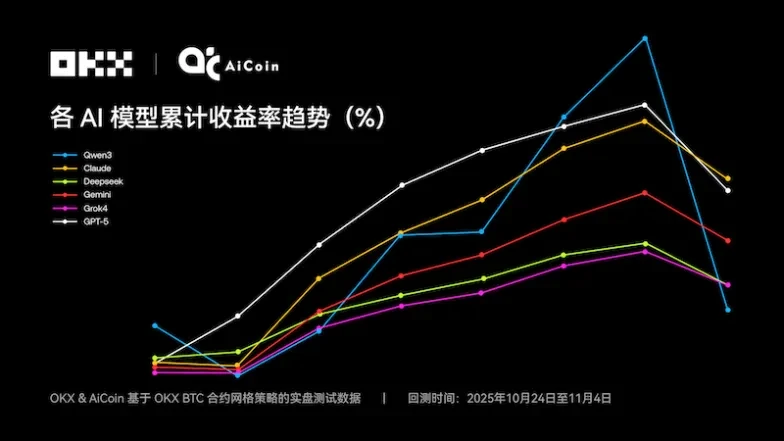
Claude Takes Championship, 6 Major AI Grid Strategy Showdown Truth | OKX & Ai Coin Live Trading Review
Short-term trading champion , is it also king in grid strategies? The first season of the "AI Trading Live Arena" launched by NOF1 finally concluded at 6 AM on November 4, 2025, whetting the appetites of the crypto, tech, and financial worlds. But the outcome of this "AI IQ public test" was somewhat unexpected - the six models' total principal of $60,000 was only $4.3 left at conclusion
November 6, 2025