Why Are NFT Avatars So Expensive? Let's "Shard" Them
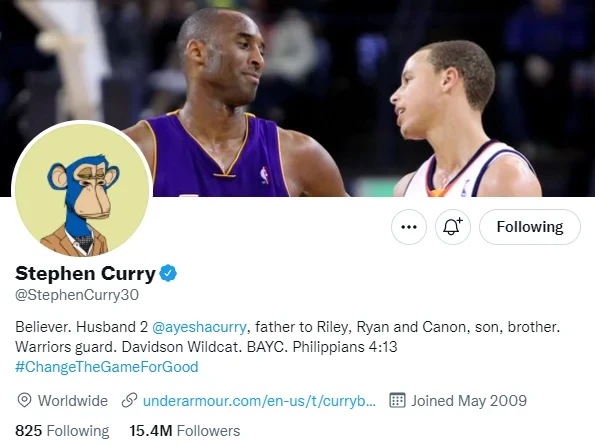
Last Saturday, news swept through the crypto community: renowned NBA star Stephen Curry purchased an NFT ape (BoredApe Yacht Club, BAYC) for 55 ETH (approximately $180,000). He subsequently changed his Twitter avatar to this NFT artwork and marked the project's abbreviation "BAYC" in his bio.
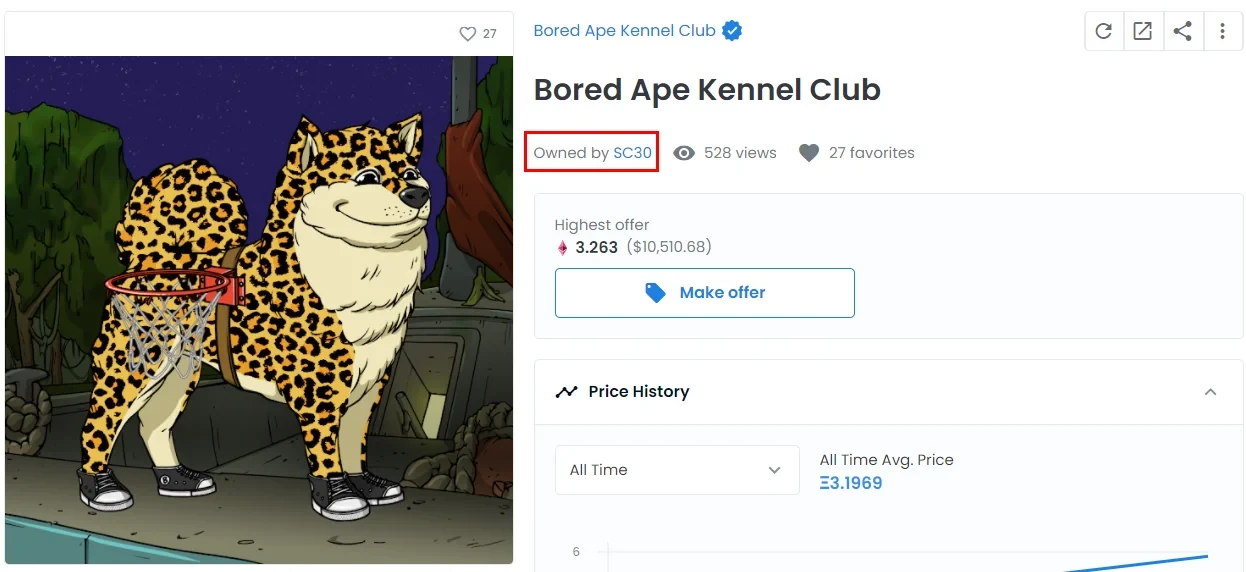
In addition to buying a BAYC ape, he also purchased a BoredApe Kennel Club NFT (BAKC) — a leopard-print dog with a basketball hoop around its neck — for 5.7 ETH (approximately $18,000).
Reportedly, Bored Ape Yacht Club (BAYC) is an NFT collectibles project launched in late April this year. The series consists of 10,000 unique apes, featuring 170 attributes of varying rarity including hats, eyes, expressions, clothing, and backgrounds. Curry's ape boasts blue skin, zombie eyes, a plaid tweed suit, and a gentleman's silk scarf — indeed a relatively rare combination of attributes.
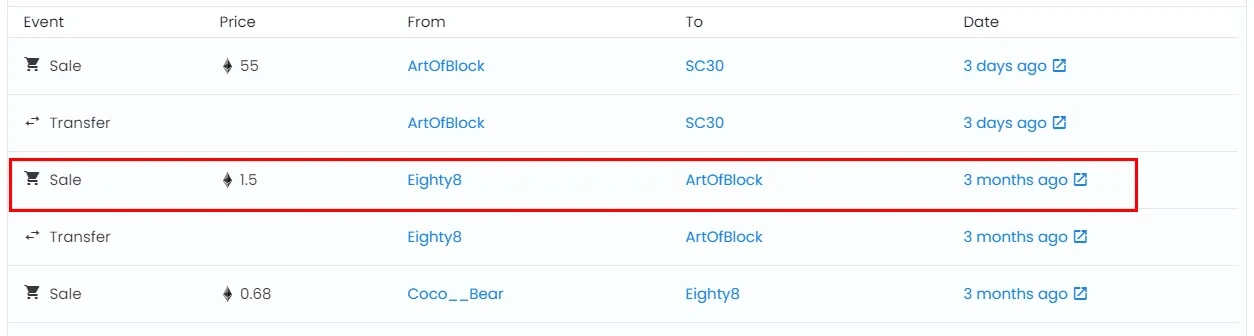
According to OpenSea data, before Curry's purchase, the previous trading record for BAYC #7990 was three months prior, when it sold for 1.5 ETH. In just three months, the price of this ape increased nearly 36-fold.
Owning an ape means gaining membership to the Bored Ape Yacht Club, with exclusive member benefits such as access to the collaborative graffiti board "The Bathroom," where members can paint or create freely. As the project develops, more benefits will be unlocked in the future. Bored Ape Kennel Club (BAKC) is a companion dog collection that BAYC offered to club members for free adoption, also totaling 10,000 unique dogs.
On the day Curry purchased his BAYC ape and BAKC dog, both projects reached record highs in trading volume. Crypto Slam data shows that on August 28, BAYC ape trading volume reached $55.6951 million, up 403% from the previous day, while BAKC dog trading volume also reached $8.7827 million, up 413% from the previous day.
According to Messari data, on August 10, the floor price for BAYC apes was 16 ETH. After Curry's purchase, the floor price rose to 24.99 ETH — a 56% increase in 21 days. The floor price for BAKC dogs also rose to 3.5 ETH.
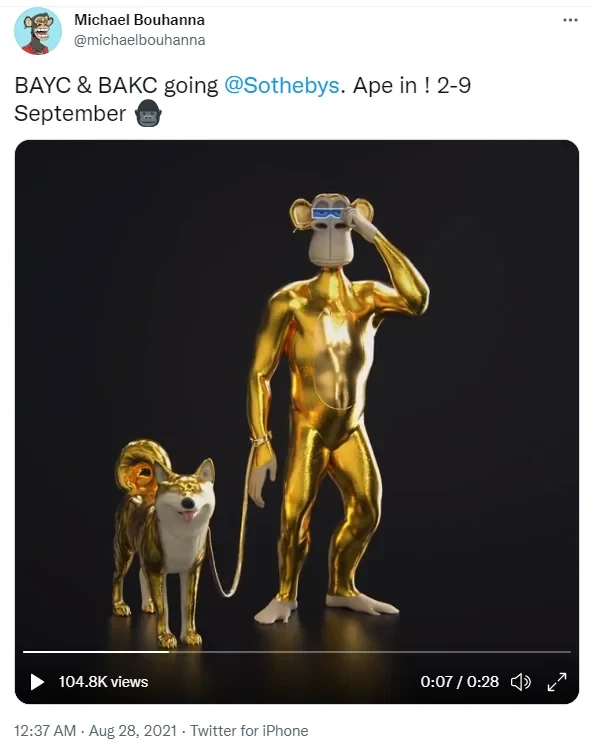
Reports indicate that Michael Bouhanna, Sotheby's Vice President, Contemporary Art Expert and Co-Head of Digital Art, tweeted on August 28 that BAYC and BAKC would be featured at Sotheby's from September 2-9.
Beyond BAYC, Crypto Punks, a blue-chip project in the avatar sector, has developed over four years into the most expensive project in the NFT ecosystem and is currently experiencing the frenzy seen during last year's DeFi boom.
Payment giant Visa announced on August 23 that it purchased Crypto Punk 7610 for approximately $150,000. Shortly after the announcement, Crypto Punks Bot data showed that in just over 20 minutes, approximately 30 Crypto Punk NFT trades occurred, with total transaction volume exceeding 2,800 ETH, worth nearly $9.4 million.
Subsequently, NFT art fund Vulcan DAO, physical gallery Start Art Gallery, Mask Network, and others successively announced purchases of Crypto Punks within a week. Amid this buying frenzy, Crypto Punks' all-time sales reached $1.18 billion, with single-week sales reaching $323 million and a floor price reaching an astonishing 118.5 ETH (approximately $385,500). Crypto Slam data shows that total sales over the past 30 days reached $673 million, a 409% increase.

Christie's, also ranked among the world's top ten auction houses alongside Sotheby's, plans to auction a rare NFT collection from Crypto Punks, Bored Apes, and Meebits in September. In the short term, this avatar (profile picture) craze appears likely to continue, with an increasing number of similar projects springing up like mushrooms.
Amid this fervor, popular NFT collectibles with price tags ranging from hundreds of thousands to millions of dollars are naturally daunting. As investment barriers rise, this also creates liquidity issues for NFTs. In response, NFT fractionalization has emerged.
The Rise of NFT Fractionalization
On August 23, a photo of a Shiba Inu dog named "FeistyDoge" began appearing frequently across various communities.
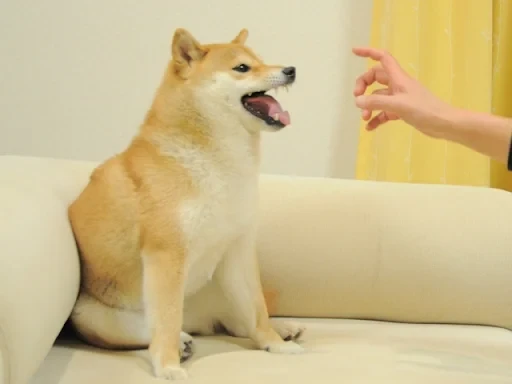
The Feisty Doge photo was taken as part of a photoshoot featuring a Japanese Shiba Inu named Kabosu, who rose to internet fame as the dog behind the Doge meme. The photo was sold as an NFT in June, won by Twitter user path.eth (@Cryptopathic) with a bid of 13 ETH on the decentralized auction platform Zora. On August 19, this user fractionalized ownership of the Feisty Doge NFT (the original Dogecoin avatar) and created the NFD token with a total supply of 100 billion. He then created an ETH-NFD pool on SushiSwap, providing 25 ETH and 5 billion NFD as initial liquidity, implying an initial valuation of 500 ETH for Feisty Doge (worth approximately $1.555 million at the time).
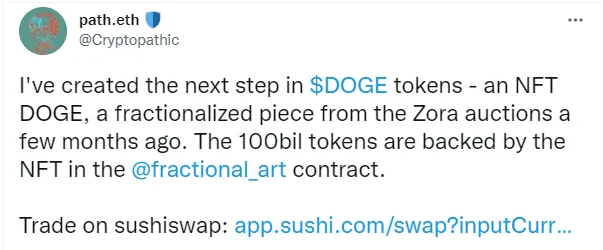
The frenzy surrounding animal coins like DOGE and SHIB, combined with Feisty Doge's "authentic lineage," meant that after path.eth (@Cryptopathic) announced this news, the extremely low price fueled speculators' interest in NFD, which spread like wildfire. From an initial price of $0.00001547, NFD surged 80-fold in just three days to a high of $0.00125862 on August 22. As NFD soared to its peak, it also drove the Feisty Doge photo to become the most expensive NFT in the industry at a price of $126 million. The previous most expensive NFT work was created by Beeple, whose piece "Everydays: The First 5000 Days" sold for a staggering $69 million this past March.
It's worth noting that an early landmark case of NFT fractionalization was actually "Everydays: The First 5000 Days." Reportedly, in late 2020, an NFT fund called Metapurse acquired 20 pieces from "Everydays: The 2020 Collection" for over $2.2 million. The fund subsequently announced it would issue ERC20 tokens B.20 (Beeple 20 Collection) on the Ethereum blockchain, backed by these 20 NFT crypto artworks, virtual real estate in Cryptovoxels, Decentraland, and Somnium Space, and custom-designed VR galleries in each virtual space to house the artwork. The tokens were sold in two tranches, through which the fund's NFT assets were fractionalized.
The total supply of B.20 tokens was 10 million, with 59% owned by Metapurse and 41% distributed among artists, partners, and investors. Under this distribution, B20 was criticized as highly centralized with inherent drawbacks. However, the official stance is that B.20 represents ownership of representative high-value artworks and aims to advance a renaissance in virtual space — a great experiment in fractionalizing ownership.
Returning to NFD, after August 22, the NFD frenzy began to wane, with prices falling consecutively. In just 7 days, the price once dropped to $0.00026175, a nearly 80% retracement from its high. A user named Shual (@0xShual) published a thread describing how path.eth (@Cryptopathic) allegedly deployed and cashed out, with language suggesting Feisty Doge might be a cash grab. Community members compiled path.eth's (@Cryptopathic) main operations, clearly showing he invested approximately 100 ETH and ultimately obtained about 3,300 ETH, of which 1,200 were transferred through Ethereum mixing protocol Tornado.Cash. As of this writing on August 31, NFD was trading at $0.00058522, implying Feisty Doge still holds a value of $58.522 million.
Clearly, NFD became the engine driving NFT fractionalization, gradually permeating the crypto community. We know that while a book, a car, or a house is indivisible, when bound to tokens, those tokens can be infinitely subdivided — for example, 1 Bitcoin can be divided into 1,000 units of 0.001 Bitcoin. Therefore, when you hold tokens bound to an asset, you possess ownership of that corresponding asset. In this scenario, whether real-world assets or virtual world creations can be viewed as equity, and fractionalization is similar to a "stock split" — splitting a high-face-value stock into multiple lower-face-value shares. On one hand, this can lower entry barriers, allowing people to acquire desirable assets at lower cost and increasing the potential to profit; on the other hand, it also reduces the difficulty of trading these NFTs.
Currently, the mainstream NFT fractionalization protocols on the market are Fractional, Unic.ly, and NFTX. Fractional is an NFT fractionalization protocol built on Ethereum where NFT holders can lock one or more NFTs into a smart contract and create fractionalized fungible ERC20 tokens. The token supply and symbol are set by the creator, who also sets a reserve price and buyout price for the locked NFTs for other NFT collectors to bid on. Of course, creators must provide liquidity by pairing the fractionalized ERC20 tokens with ETH on third-party AMM platforms for other buyers to trade. Token Insight notes that on Fractional, fractionalization primarily involves single NFTs, with most showing high TVL and trading volume initially, but becoming neglected after the hype fades.
Unic.ly introduces AMM (Automated Market Making) and liquidity mining on top of fractionalization. NFT holders can lock their ERC721 or ERC1155 standard NFTs in a smart contract to create uTokens (a type of ERC20 token), with supply set by the creator.
Buyers can purchase uTokens to gain ownership of the NFT collection, while collectors can also bid on individual NFTs within the collection. uToken holders vote on whether to accept the highest bid; when the approval ratio reaches a certain threshold, the NFT is unlocked and transferred to the highest bidder, with uToken holders receiving proceeds from the NFT sale proportionally. Unic.ly allows NFT collection creators to add new NFTs to the collection at any time, facilitating DAOs with profit motives in promptly purchasing and adding new NFT collectibles after sales.
Although NFTX differs from Fractional and Unic.ly, it also aims to solve NFT liquidity issues. Token Insight notes that NFTs are divided into different collection pools based on collection type. Anyone can lock NFTs belonging to that collection category into a smart contract and receive corresponding vTokens on a 1:1 basis. vToken holders can pay 1 vToken to redeem a random NFT from the corresponding collection pool, or pay 1.05 vTokens to purchase a specified NFT from the pool. Because division is by project, vTokens from established projects like Crypto Punks naturally perform best in the market.
Cobo co-founder and CEO and F2Pool co-founder Shenyu recently analyzed the current state of NFT DeFi evolution using Crypto Punks as an example. He believes that while Crypto Punks' floor price is already quite expensive for most people, holders can use NFT fractionalization platforms to package one or more NFTs, generate ERC20 tokens, and provide liquidity on AMM trading platforms. Through this method, retail investors can participate in the secondary market with smaller amounts. On the other hand, for Crypto Punks whales or rare NFT holders, this provides a new form of liquidity, enabling them to monetize expensive NFTs in their possession. Simultaneously, if the token price diverges from the NFT market price, users holding a certain percentage of tokens can vote to auction and liquidate the NFTs in the vault, with tokens automatically converting to ETH. Shenyu summarizes that the current basic model involves a game between retail investors, issuers, and the NFT market that may exhibit positive or negative feedback amplification.
In the NFT space, we see a very obvious head effect — people currently mostly chase popular or rare NFT works. Floor price can serve as a bullish signal, reflecting which projects are becoming more popular. Relatively speaking, mid-tier NFTs face an awkward situation; unless truly passionate NFT enthusiasts enter, original holders have little hope of cashing out.
Interestingly, niche culture seems to have found suitable fertile ground in the NFT fractionalization space. For example, a group of like-minded individuals might, under a leader's guidance, initiate crowdfunding through a DAO organization to collectively purchase a certain NFT, then based on contribution amount, participate in governance using the tokens obtained from fractionalization. In this context, NFT fragments seem to have become a ticket for entering the circle or a stepping stone.
Disclaimer
This article may contain content related to products that are not available in your region. This article is intended to provide general information only and does not take responsibility for any factual errors or omissions contained herein. This article represents only the author's personal views and does not represent the views of OKX. This article is not intended to provide any advice, including but not limited to: (i) investment advice or investment recommendations; (ii) offers or solicitations to buy, sell, or hold digital assets; or (iii) financial, accounting, legal, or tax advice. Holding digital assets (including stablecoins) involves high risk, may fluctuate significantly, and may even become worthless. You should carefully consider whether trading or holding digital assets is suitable for you based on your financial situation. For questions regarding your specific situation, please consult your legal/tax/investment professional. The information appearing in this article (including market data and statistics, if any) is for general reference only. While we have taken all reasonable precautions in preparing these data and charts, we accept no responsibility for any factual errors or omissions expressed herein. © 2025 OKX. This article may be reproduced or distributed in its entirety, or excerpts of 100 words or less from this article may be used, provided such use is non-commercial. Any reproduction or distribution of the entire article must prominently state: "Copyright © 2025 OKX. Used with permission." Permitted excerpts must cite the article title and include attribution, such as "Article Title, [Author Name (if applicable)], © 2025 OKX". Some content may be generated or assisted by artificial intelligence (AI) tools. Derivative works or other uses of this article are not permitted.
Show More
Recommended Reading

2025 KOL Most Used OKX Products Ranking Roundup
In the cryptocurrency industry, professional players' choices are always direct and pure. In 2025, KOLs voted with a full year of capital investment and time commitment, casting the most authentic vote for industry tools and ecosystem development. Centered around four core questions — "What was the biggest achievement this year?", "Given that achievement, what OKX product did you use most and like best in 2025?", "Why do you like it?", and "This
January 5, 2026

2026 Investment Outlook: Asset On-Chain, Intelligence and Privacy | OKX Annual Review
Three major trends for Crypto's future: asset transformation, entity transformation, and rule transformation. As we approach 2026, moving beyond four years of infrastructure-focused "road building," the crypto industry is welcoming a profound paradigm shift. OKX Ventures defines this as the dawn of the "Kinetic Finance" era — where the core is no longer how fast the network is, but rather the flow and earnings of on-chain assets
December 31, 2025

Voting with Data: Insights into 2025 Popular Trading Products | OKX Annual Review
If you only look at market conditions, it's hard to explain the return differences among trading users in 2025. What truly determines returns also depends on account-level operational methods, not merely market volatility itself. OKX's annual statement shows that mainstream coins remain the core of capital turnover and return generation, supporting trading and strategy execution; emerging coins are more used to amplify volatility and provide phased opportunities, but are not stable, long-term sources of returns. What truly continuously contributes returns,
December 30, 2025
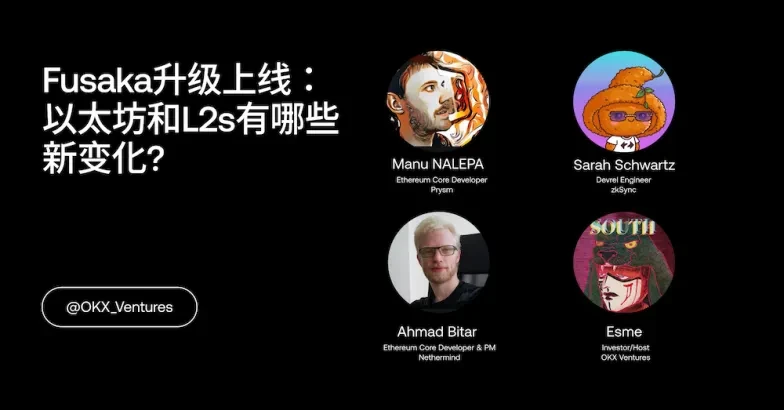
Fusaka in Practice: What Does Ethereum's Latest Upgrade Mean for L2, Nodes, and Users?
Ethereum mainnet has completed the Fusaka fork. At the protocol level, this upgrade primarily consists of four parts. The full text presents the core views and frontline experience of three guests in Q&A format: Ahmad (@smartprogrammer) – Nethermind execution client / Ethereum core developer Manu (@manunalepa) – Prysm / Of
December 16, 2025
OKX Research | Why Did RWA Become a Key Narrative in 2025?
RWA (Real World Assets) is becoming a global capital "favorite." Simply put, RWA involves bringing valuable, ownership-bearing items from the real world — such as houses, bonds, stocks and other traditional financial assets, as well as art, private lending, carbon credits and other assets not easily traded directly — onto the blockchain to become tradable, programmable crypto assets. This way, not
November 20, 2025
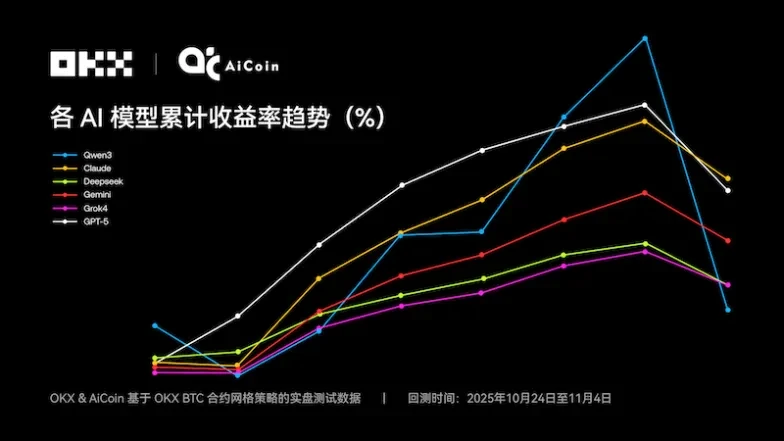
Claude Takes the Crown: Truth Behind 6 Major AI Grid Strategy Showdown | OKX & Ai Coin Live Trading Review
Short-term trading champion Qwen3 — is it also king in grid strategies? The first season of NOF1's "AI Trading Live Arena" concluded at 6 AM on November 4, 2025, whetting the appetites of the crypto, tech, and finance worlds. But the outcome of this "AI IQ public test" was somewhat unexpected: the six models' total principal of $60,000 was reduced to only 4.3
November 6, 2025