
Why Will Ethereum Layer2 Explode in the Second Half of the Bull Market?
After Bitcoin hit another all-time high this week, the continuation of the bull market has basically become a consensus. In last weekend's article "What Stage Is the Bull Market In Now?", we analyzed that the bull market is gradually entering its third phase: the bubble frenzy period. This means the entire crypto market is officially entering the second half. In the second half, due to the rapid expansion and growth of the market, numerous projects and concepts will emerge.
In the second half of the bull market, among the many projects and concepts set to explode, Ethereum Layer2 will occupy a prominent position, with both the quantity and quality of projects achieving a qualitative leap.
During the DeFi and NFT boom in the first half of this year, Ethereum was the absolute protagonist. Currently leading DeFi projects, such as AAVE, COMP, UNI, SUSHI, CRV, DYDX, and others, are all developed based on Ethereum, and the top ten NFT projects are also all developed on Ethereum. In terms of TVL (Total Value Locked), which best reflects the strength of a public chain, Ethereum stands at $159 billion, while the entire network is $235.5 billion (data from defillama website on October 23), with Ethereum accounting for 67.5%.
If you only look at the ecosystem, currently no public chain has the scale and vitality of Ethereum, and public chains are the infrastructure of the entire industry. It can be said that Ethereum's development direction is also the direction of the entire crypto market; it represents the future and trends. In this sense, the development of the Ethereum ecosystem and Ethereum itself almost defines the development of digital assets.
However, the two major challenges of network congestion and excessively high gas fees currently greatly constrain Ethereum's continued rapid development. The better the market conditions, the more severe this situation becomes, which has even caused some users to leave Ethereum for other public chains. At this time, Layer2 technology is naturally expected by the market.
Layer 2 is a scalability solution created to alleviate Layer 1's dilemma. While keeping Layer 1's functionality sufficiently simple, powerful, and stable, it moves some computations and operations originally on Layer 1 off-chain, achieving the purpose of scaling outside the Ethereum blockchain, thereby providing instant, inexpensive trading to meet more users' needs.
For example, Ethereum can currently process about 15 transactions (TPS) per second on its base layer. With Layer2's help, it can greatly increase this number, from 15 TPS to several thousand TPS. This not only reduces transaction processing time but also lowers the gas fee required for each transaction, thereby greatly improving the economic viability of the Ethereum network.
Here we need to clarify a concept: Does Layer2 refer specifically to Ethereum's Layer2? The answer is "No." Many public chains can do Layer2; it's not only Ethereum that has Layer2. It's just that some public chains' Layer1 is inadequate - if the foundation isn't solid, how can you build a house? Simply put, Layer1 is the main road; because there are many people and vehicles, facilities like elevated highways, underground passages, and overpasses are needed - these facilities are Layer2.
Through this analogy, you can simply understand why the better the market conditions, the more the market needs Layer2: the more people and denser the traffic, the more congested the main road becomes, the higher the cost of passing through, and the greater the need for elevated highways, auxiliary lines, and other facilities.
Looking at the previous two Bitcoin halving cycles, the second half of the bull market will explode more violently than the first half. By then, not only will current popular projects and concepts explode, but there's also a high probability of new popular concepts and projects emerging, which will only make Ethereum more congested and gas fees higher. The chart below shows that Ethereum's daily transaction count is directly proportional to the quality of market conditions.
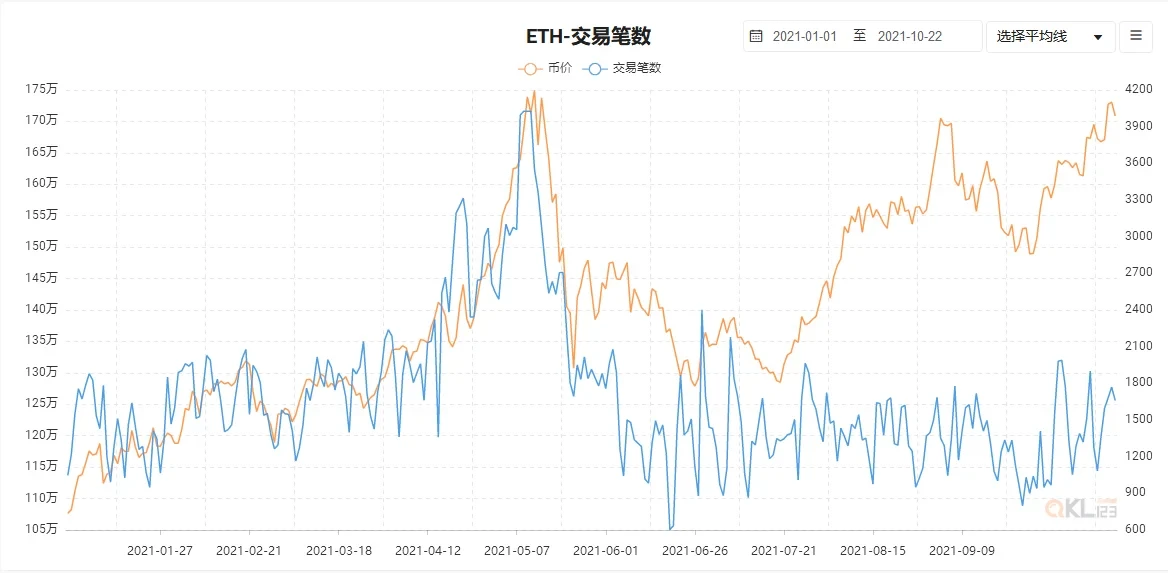
ETH-Transaction count (Source: qkl123)
Addressing Ethereum Layer1's problems, Layer2 has proposed various solutions, but the core remains the scaling issue. Currently, mainstream solutions include sidechains, state channels, Plasma, and Rollups. Although essentially these four solutions are similar, they differ in security, performance, usability, and other aspects. These differences also mean they may be suitable for different use cases and scenarios in the future - akin to establishing a more diverse commercial banking system.
Now projects are under development in every Layer2 sector, presenting a scene of intense competition. If subsequent Layer2 projects can better achieve technological breakthroughs, solve the isolation dilemma, and match Layer1 in composability and security, then they can leverage their advantages of high transaction throughput and low transaction fees to migrate more projects, especially DeFi projects, to Layer2. This will not only propel the DeFi industry to break through to deeper and broader levels but also cause the value of Layer2 projects themselves to rise explosively, forming a positive cycle.
Regarding Layer2's future development, there's another issue that cannot be bypassed: Ethereum 2.0. If Ethereum 2.0 is successfully developed later, will Layer2 still be needed? The answer is "No" - this is because although Ethereum 2.0 will greatly improve the base layer's transaction speed and transaction throughput capacity, the number of blockchain users is also increasing. Ethereum will still be unable to meet the demand for thousands or even millions of TPS that will ultimately arise from increased adoption. Performance expansion remains a hard requirement, and Layer1 mainnet performance expansion is slow. No matter how well Layer1 develops, it cannot meet the growing user demands at that time, so Layer2 scaling will exist for a long time.
Conclusion
If you agree with the view that the bull market will continue in the coming period, then Ethereum Layer2 projects should be the objects you focus on, just as you focused on DeFi and NFT projects in the first half of the bull market.
There are many Ethereum Layer2 projects in the market now, and many projects are still under development. Which project will ultimately leap the dragon gate and stand out? Let's wait and see.
Disclaimer
This article may contain content related to products that are not available in your region. This article is intended only to provide general information and does not take responsibility for any factual errors or omissions therein. This article represents only the author's personal views and does not represent the views of OKX. This article is not intended to provide any of the following advice, including but not limited to: (i) investment advice or investment recommendations; (ii) offers or solicitations to buy, sell, or hold digital assets; or (iii) financial, accounting, legal, or tax advice. Holding digital assets (including stablecoins) involves high risk, may fluctuate significantly, and even become worthless. You should carefully consider whether trading or holding digital assets is suitable for you based on your financial situation. For questions about your specific situation, please consult your legal/tax/investment professional. The information appearing in this article (including market data and statistics, if any) is for general reference only. Although we have taken all reasonable precautions in preparing these data and charts, we assume no responsibility for any factual errors or omissions expressed herein. © 2025 OKX. This article may be reproduced or distributed in full, or excerpts of 100 words or less from this article may be used, provided such use is non-commercial. Any reproduction or distribution of the entire article must also prominently state: "Copyright © 2025 OKX. Used with permission." Permitted excerpts must cite the article name and include the source, such as "Article Name, [Author Name (if applicable)], © 2025 OKX". Some content may be generated or assisted by artificial intelligence (AI) tools. Derivative works or other uses of this article are not permitted.
Show More
Recommended Reading

2025 KOLs' Most Used OKX Products Ranking
In the cryptocurrency industry, professional players' choices are always direct and pure. In 2025, KOLs used a full year of capital investment and time accumulation to cast the most genuine vote for industry tools and ecosystem development. We focused on four core questions—"What was the biggest achievement this year?", "Given the achievements, what OKX product did you use most and like best in 2025?", "Why do you like it?", "How this
January 5, 2026

2026 Investment Outlook: Asset On-Chain, Intelligence and Privacy | OKX Annual Review
Three major trends for the future of Crypto: asset transformation, entity transformation, and rule transformation. As we approach 2026, bidding farewell to the past four years of infrastructure focused on "building roads," the crypto industry is welcoming a profound paradigm shift. OKX Ventures defines this as the opening of the "Kinetic Finance" era, where the core is no longer how fast the network is, but the flow of on-chain assets and earnings
December 31, 2025

Voting with Data: Insights into 2025's Hot Trading Products | OKX Annual Review
If you only look at market conditions, it's difficult to explain the difference in returns among trading users in 2025. What truly determines returns also depends on account-level operational methods, not just market volatility itself. The OKX annual statement shows that mainstream coins remain the core of capital turnover and returns, supporting trading and strategy execution; emerging coins are more used to amplify volatility and provide phased opportunities, but are not a stable, long-term source of returns. What truly continuously contributes returns,
December 30, 2025
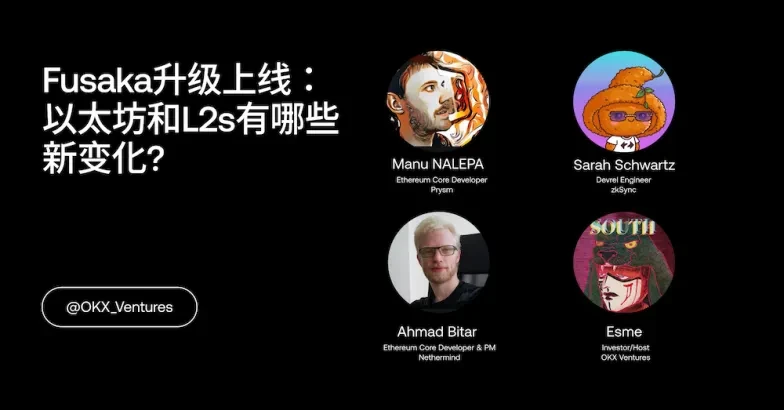
Fusaka in Practice: What Does Ethereum's Latest Upgrade Mean for L2, Nodes, and Users?
The Ethereum mainnet has completed the Fusaka fork. At the protocol level, this upgrade mainly includes four parts. The full text presents the core views and frontline experience of three guests in Q&A format: Ahmad (@smartprogrammer) – Nethermind execution client / Ethereum core developer Manu (@manunalepa) – Prysm / Of
December 16, 2025

OKX Research | Why Did RWA Become a Key Narrative in 2025?
RWA (Real World Assets) is becoming a global capital "favorite." Simply put, RWA means taking valuable, ownership-bearing things from the real world—such as houses, bonds, stocks, and other traditional financial assets, or even assets that are usually difficult to trade directly like artwork, private lending, carbon credits—and moving them onto the blockchain to become tradable, programmable crypto assets. This way, not
November 20, 2025
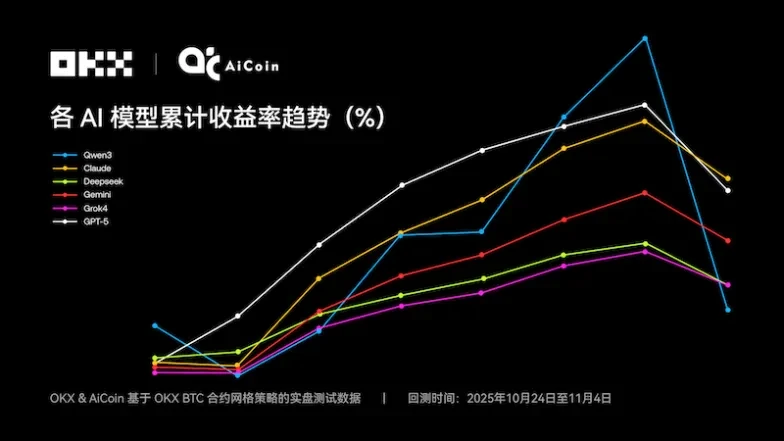
Claude Takes the Championship, Truth About 6 Major AI Grid Strategy Showdown | OKX & Ai Coin Live Trading Review
Short-term trading champion Qwen3, is it also king in grid strategies? The first season of the "AI Trading Live Arena" launched by NOF1 finally concluded at 6 AM on November 4, 2025, whetting the appetite of the crypto, tech, and financial circles. But the ending of this "AI IQ public test" was somewhat unexpected - the six models' total principal of $60,000 was only $43
November 6, 2025