Exploring the Metaverse: Let Your Imagination Run Wild with Blockchain Technology
Imagine a scenario where you can interact face-to-face with your favorite singer without having to be there in person. They make a stunning entrance in a spaceship, and in an instant, they land right by your side. As the music rhythm changes, you follow their pace. The scenery around you shifts — you might find yourself in outer space, strolling along the romantic seabed, or running across a scorched landscape of embers. When the song reaches its climax, the singer stretches out both hands and plucks two stars from the sky, slams them together, and the stars explode in a dazzling display as the sky transforms into a blood-red hue.
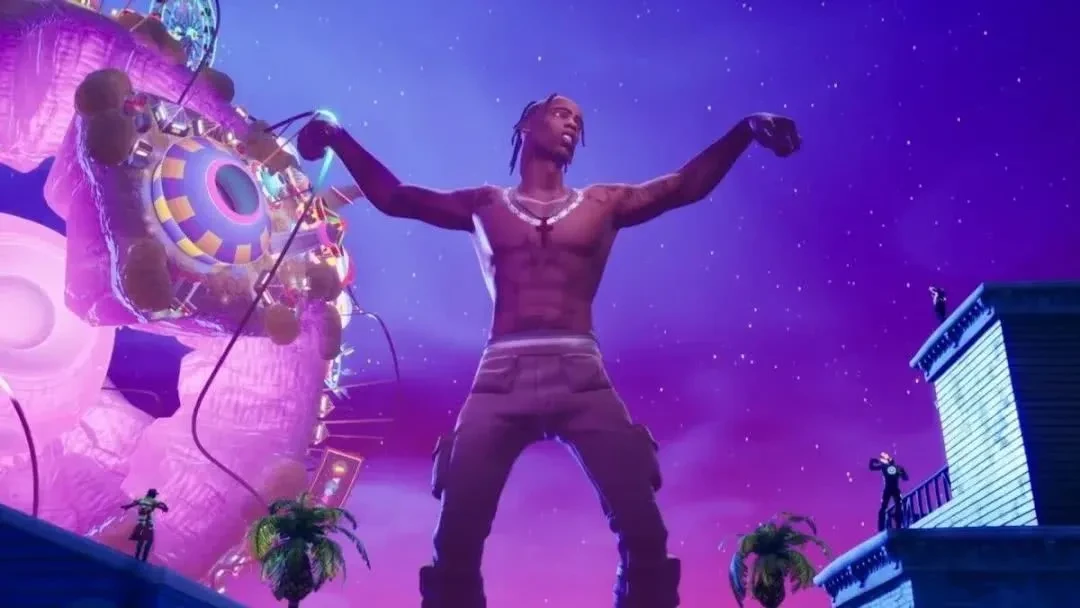
More than a decade ago, such a scene may have been confined to imagination. Today, Travis Scott's concert has made it a reality. Beyond concerts, you can buy land and build houses in this world, visit theme parks, adopt pets, host birthday parties, play games with friends, attend graduation ceremonies… In fact, this world is not some brand-new concept that appeared out of nowhere — it is the "Metaverse" that has been dormant for over two decades and is now blazing hot again.
As a virtual world that is born from and runs parallel to the real world while influencing both, the Metaverse provides people with a "dream-making space" where they can break through time and space limitations and traverse it as a digital avatar. "The first Metaverse stock," Roblox, successfully listed on the NYSE in March of this year. Tencent participated in its Series G funding round and secured exclusive distribution rights for Roblox products in China. Tech giants such as Facebook, Microsoft, ByteDance, Huawei, and NVIDIA have all invested in the "Metaverse." Zuckerberg commented that "the Metaverse will revolutionize human society in the future," while NVIDIA CEO Jensen Huang stated, "This virtual world is right before us, bathed in light, and it belongs to you and me. I believe we are at the cusp of the Metaverse revolution."
Is the Internet's Ultimate Form the Metaverse?
On March 10, 2021, "the first Metaverse stock," Roblox, successfully made its debut on the NYSE, surging 54.4% on its first day with a market cap exceeding $40 billion. The prospectus shows that Roblox's revenue in 2020 was approximately $924 million, a year-over-year surge of 82%. Daily active users stood at 32.6 million, up from 17.6 million in 2019 and 12 million in 2018. Since its listing, Roblox has attracted significant market attention, with its stock price once soaring to $103.87, a 131% increase from the offering price of $45.
Once we thought a future where we live a second life in a virtual world was far away. However, the proliferation of smart devices, the rise of e-commerce, short videos, gaming, and other applications, coupled with the sudden pandemic accelerating the formation of online habits, have laid the foundation for the arrival of the Metaverse.
"Metaverse," a term first coined by sci-fi author Neal Stephenson in his 1992 novel Snow Crash, paints a picture of people living as digital avatars in a virtual three-dimensional space. In this man-made space known as the "Metaverse," it has a fully functioning economy, data, content, IP, and more. It is born from the real world, runs parallel to it, and remains always online.
The 2018 sci-fi film Ready Player One gave people a more tangible way to "touch" a wondrous and enviable Metaverse — "Oasis." With just a VR headset, people can enter this imaginative virtual world and traverse it as another "self." You can become a superhero saving the world, or a trading guru making your mark, or even a travel blogger freely穿梭时空 — anything you can do in real life, or things you've always wanted to do but never could, can be achieved in the Metaverse.
Three years after Ready Player One's release, Roblox rose to prominence riding the wave of "Metaverse" gaming. Essentially, Roblox is a platform that brings together countless mini-games, developed Complete using tools provided by Roblox. Roblox hands over the creation of game content to users, allowing them to not only be players but also creators, easily creating, publishing their own virtual worlds and games. You can think of Roblox as a department store — it sets the style of the mall, provides the space, but doesn't open its own stores. Instead, it opens those spaces to others.
In the Roblox world, players use a token called Robux for Trading and purchases. Many popular games, as well as clothing, gear, and items, need to be purchased with Robux. Players can Select to earn Robux through in-game rewards, or can purchase Robux with fiat currency. Major U.S. retailers have all introduced Robux gift cards.
Of course, besides spending money, players can also earn money in Roblox. As we mentioned earlier, "Roblox doesn't open its own stores but opens them up to others" — this is what is known as a UGC gaming platform. Players who come to play in Roblox's gaming world can become Roblox's game creators, using universal tools to develop their own mini-games. As more and more players enter Roblox, and some of these players "open shops" to provide new games for Roblox, Roblox establishes a self-sustaining and continuously growing gaming platform.
Overwatch, PUBG, The Sims, and other popular games all have low-spec versions here. Of course, on this platform that places no restrictions on creativity, there are also many original and fun games, such as "Bug Face," "Toilet Blast," and more.
Twenty-year-old Gawronski and his girlfriend Elle released the action game "Bad Business" on Roblox, earning over $49,000 in a single month by selling skins and weapons in the game. Alex Balfans started trying to create games on Roblox at age 9. At 17, he released a chase game called "Jailbreak," which has been played over 4 billion times cumulatively. By selling skins and items in the game, Alex earns over a million dollars annually from it. Additionally, a 20-year-old named Anne Shoemaker created and released the dress-up game "Mermaid Life" and the pet simulation game "My Water Drop" during the pandemic, earning nearly $500,000 in just 5 months. She has since founded her own game studio and assembled a professional game development team.
According to Roblox's prospectus, the company paid its game creators $328.7 million in 2020, accounting for 36% of its total revenue. Over 1,250 game developers earned at least $10,000 in Robux, and over 300 developers earned $100,000 or more. Robux can be exchanged for real-world currency. It is reported that Roblox plans to pay game creators even more to incentivize higher-quality content.
Roblox, considered the closest to the Metaverse vision among current mainstream products, has outlined eight key elements that Metaverse products should possess: identity, friends, immersion, low latency, diversity, anywhere, economic system, and civilization. This means the Metaverse first needs to be large enough — not only to accommodate a sufficient number of users but also to have vast space for exploration and development. Second, people should have a virtual identity, and on that basis, the Metaverse needs strong social attributes — people can interact with friends from real life and also make new friends through the Metaverse. Third, the Metaverse must exist continuously, operating 7X24 without interruption. Fourth, the Metaverse should be a substitute for the real world, and as technology advances, it can even blur the sense of boundary with reality. Fifth, the Metaverse must be open and inclusive, allowing all kinds of players to join and opening interfaces to third parties to encourage more content creation. Finally, the Metaverse must have its own economic system, which is also a necessary condition for the Metaverse to develop into a "new world" running parallel to the real world.
Blockchain Is Part of the Technological Backbone of the Metaverse
To achieve immersion, the Metaverse needs VR/AR technology. Although most current Metaverse platforms have not yet adopted these technologies, as these devices improve and prices drop, adoption is only a matter of time. To meet the requirement for continuous existence, the Metaverse needs edge computing technology to ensure fast, smooth user experiences and solve issues of high latency, unstable networks, and low bandwidth. To support identity and economic systems, the Metaverse needs blockchain technology to establish credibility, ensure the security of users' virtual Assets, and provide a rule framework for virtual world user identities, property, and economic systems. The emergence of NFTs and their industry can not only bring economic returns to creators but also provide on-chain proof of ownership for their output, preventing tampering, theft, and destruction.
In recent years, the global gaming market has continued to expand, with the number of players reaching 2.7 billion by the end of 2020 and revenue growing to $159.3 billion. By comparison, the adoption rate of global crypto assets is approximately 1%, with fewer than 100 million people. Therefore, gaming is considered a gateway to attract more users into blockchain and drive blockchain technology better into the Metaverse, especially compared to DeFi and distributed storage which have a slightly higher barrier to entry.
Currently, the blockchain space already has Metaverse concept projects at scale, such as Decentraland, The Sandbox, and CryptoVoxels.
Decentraland is a decentralized virtual reality platform built on Ethereum, similar to a blockchain version of "The Sims." Users enter the platform with a digital identity, can browse, create content freely within the platform, and also purchase land and engage in social activities. Decentraland's platform token is MANA, which serves functions such as purchasing Assets and services as well as governance. Decentraland's virtual land parcels are called LAND, which need to be purchased with MANA. Each piece of LAND is located by (x, y) coordinates and is represented by an NFT, recording information such as transfers and owners. LAND holders have full control over the content environments and applications they create, from a small static 3D scene to applications or games with more interactive features.
Decentraland held two rounds of land auctions. The first auction was at the end of 2017, with a total of 35,356 LAND parcels sold, valued at 161 million MANA, approximately $30 million at the going rate. In December 2018, Decentraland sold all remaining 9,331 land parcels — 109 million MANA, approximately $6.6 million.
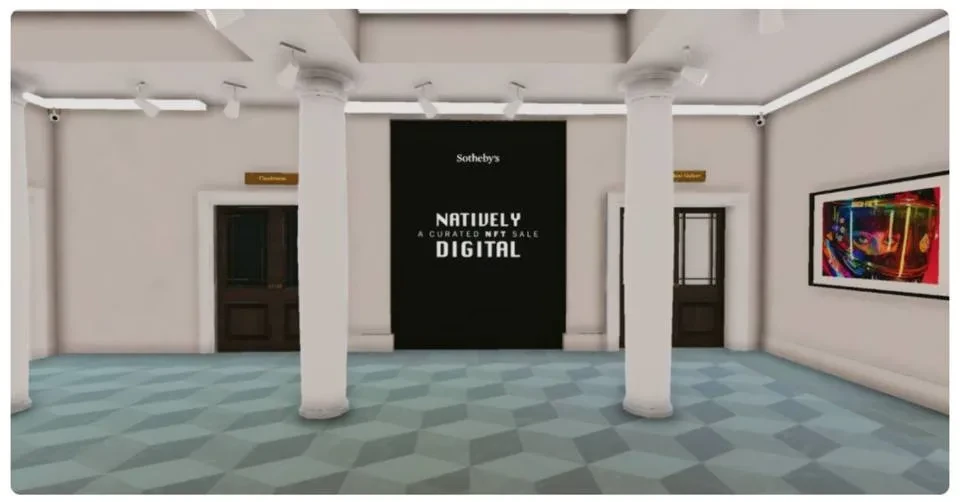
Beyond buying and selling land, users can innovate on Decentraland, such as designing and decorating land, purchasing clothing to dress up their digital avatars, and even visiting virtual galleries to view exhibitions. While appreciating works, Decentraland supports one-click redirects, directly linking to Trading platforms like OpenSea. On June 5, Sotheby's, a global top auction house, launched a virtual gallery in Decentraland's Voltaire Art District.
Nonfungible data shows that Decentraland's Trading volume in the past seven days was $1.3167 million, with 321 transactions. Historical total Trading volume stands at $64.8426 million, with over 120,000 transactions in total. Additionally, OpenSea data shows that Decentraland's total trading volume on the platform is 67,781.85 ETH, with an average price of 6.03 ETH, held by 4,596 unique owners.
The Sandbox requires a separate application Download, so it runs more smoothly. Users can create and experience 3D games here, earn rewards after Complete tasks, and can also earn returns by creating games using community-contributed pixel models. The Sandbox's virtual map is composed of 166,464 land parcels, each of which is an NFT using the ERC-721 standard. Users can use SAND to purchase land, and owning land means owning a part of The Sandbox. F2Pool's co-founder once purchased a 2424 adjacent virtual land parcel on The Sandbox for $650,000, saying it would be used to build the Dogecoin enthusiast headquarters.
Currently, The Sandbox is the most popular Metaverse game after Decentraland. Its Trading volume in the past seven days was $385,900, with 366 parcels sold. Historical Trading volume is $27.7452 million, with a total of 92,851 Trading transactions.
Beyond Decentraland and The Sandbox, CryptoVoxels has also garnered significant attention as a rising star. Not long ago, a hundred-person expedition team led by crypto art collector Cao Yin chose CryptoVoxels as their first stop. CryptoVoxels is a 3D blockchain sandbox game composed of land parcels and Minecraft-like voxels. In streets and cities made of pixels, you will encounter users from all over the world. Players can purchase land to build, develop, and sell buildings. Additionally, CryptoVoxels supports social features such as making friends, multi-player voice chat, and hosting gatherings.
In the past seven days, CryptoVoxels' Trading volume was $110,100, with 26 transactions. Historical total Trading volume is $11.2527 million, with a total of 9,018 transactions.
If the mobile internet was about filling effective human time, the Metaverse is about infinitely expanding living space. As technology develops, it will penetrate and blur the boundaries between reality and the virtual, and even reconstruct our real world. Compared to the Metaverse — "Oasis" — in the movie Ready Player One, even Roblox, currently considered the closest to the Metaverse vision, only scores a 10 out of whatever metric. We clearly still have a long way to go to reach the true Metaverse. However, the door to the virtual world has already opened. Humanity harbors the same endless longing for the distant starry sky and unknown universe when it comes to the Metaverse, and exciting opportunities are on the horizon.
Disclaimer
This article may contain product-related content that does not apply to your region. This article is only intended to provide general information and does not accept responsibility for any factual errors or omissions herein. This article represents only the author's personal views and does not represent OKX's views. This article is not intended to provide any advice, including but not limited to: (i) investment advice or investment recommendations; (ii) offers or solicitations to purchase, sell, or hold digital assets; or (iii) financial, accounting, legal, or tax advice. Holdings of digital assets (including stablecoins) involve high risk and may fluctuate significantly, or even become worthless. You should carefully consider whether Trading or holding digital assets is suitable for you based on your financial situation. For questions about your specific circumstances, please consult your legal/tax/investment professional. The information in this article (including market data and statistical information, if any) is provided for general reference purposes only. While all reasonable precautions have been taken in preparing such data and charts, we assume no responsibility for any factual errors or omissions expressed herein. © 2025 OKX. This article may be reproduced or distributed in its entirety, or excerpts of 100 words or less may be used, provided that such use is non-commercial. Any reproduction or distribution of the full article must prominently state: "This article is copyrighted © 2025 OKX, used by permission." Permitted excerpts must cite the article title and include attribution, for example, "Article title, [author name (if applicable)], © 2025 OKX." Some content may have been generated or assisted by artificial intelligence (AI) tools. Derivative works and other uses of this article are not permitted.
Show More
Recommended Reading

2025 KOL Most Used OKX Products Ranking
In the cryptocurrency industry, professional players' Select choices are always direct and pure. In 2025, KOLs cast the most authentic votes for industry tools and ecosystem development with a whole year of Funds investment and time dedication. We focused on four core questions — "What was your biggest achievement this year?", "With that achievement in mind, what is your most frequently used and favorite OKX product in 2025?", "Why do you love it?", and "This product
January 5, 2026

2026 Investment Outlook: On-Chain Assets, Intelligence, and Privacy | OKX Year in Review
Three major trends for crypto's future: asset transformation, entity transformation, and rule transformation. As we are about to enter 2026, after four years of focusing on "building roads" for infrastructure, the crypto industry is ushering in a profound paradigm shift. OKX Ventures defines this as the beginning of the era of "Kinetic Finance." Its core is no longer about how fast the network is, but about the flow of on-chain Assets and earning
December 31, 2025

Voting with Data: A Look at 2025's Popular Trading Products | OKX Year in Review
Looking only at market conditions, it is difficult to explain the returns gap between Trading users in 2025. What truly determines returns also depends on Account-level operation methods, not just market volatility itself. OKX's annual report shows that mainstream coins remain the core of Funds turnover and returns, supporting Trading and strategy execution. Emerging coins are more used to amplify volatility and provide staged opportunities, but are not a stable, long-term source of returns. What truly consistently contributes to returns is
December 30, 2025
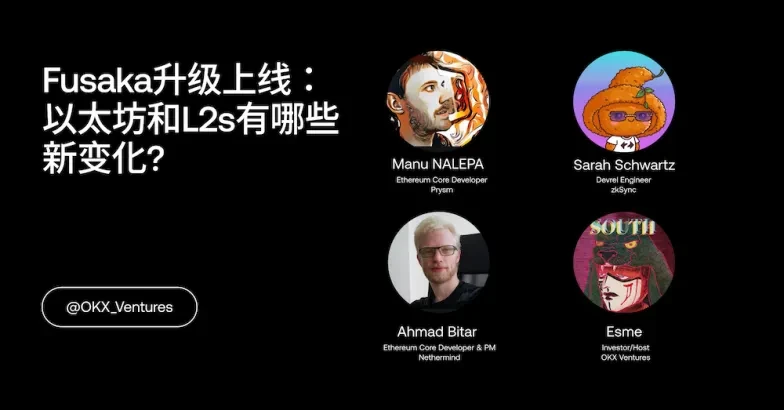
Fusaka In Action: What Ethereum's Latest Upgrade Means for L2, Nodes, and Users
Ethereum mainnet has already Complete the Fusaka fork. From a protocol level, this upgrade mainly covers four areas. Full text 按 Q&A Show More Core viewpoints and front-line experience from three guests: Ahmad (@smartprogrammer) – Nethermind Execution Client / Ethereum Core Dev Manu (@manunalepa) – Prysm / Of
December 16, 2025
OKX Research | Why Did RWA Become a Key Narrative in 2025?
RWA (Real World Assets) is becoming the "new favorite" of global capital. Simply put, RWA takes valuable, ownership-bearing things from the real world — such as houses, bonds, stocks, and other traditional financial Assets, or even art, private lending, carbon credits, and other assets that are not usually easy to Trade directly — and brings them onto the blockchain, making them Tradable, programmable crypto assets. This way, tho
November 20, 2025
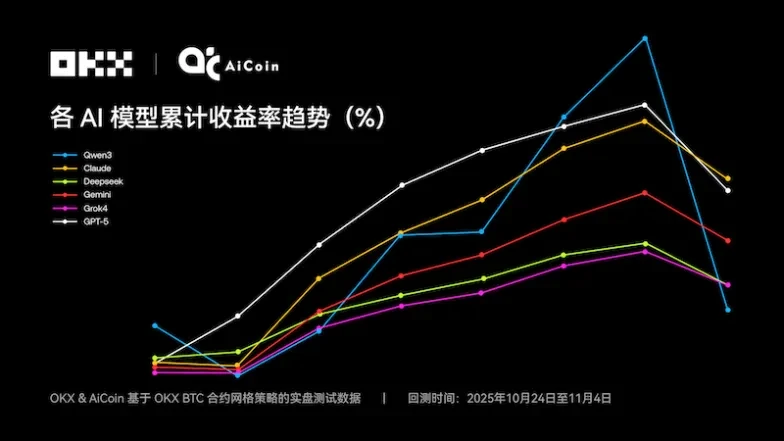
Claude Takes the Crown, 6 Major AI Grid Strategies Face Off | OKX & Ai Coin Live Test
Short-term trading champion , is it also the king of grid strategies? The first season of NOF1's "AI Trading Live Arena" finally concluded on November 4, 2025 at 6 AM, whetting the appetite of the crypto, tech, and finance circles. But the outcome of this "AI IQ public test" was somewhat unexpected — the six models' combined $60,000 principal had shrunk to just $4.
November 6, 2025