The Crypto Market Is Accelerating Its Americanization. Why?
Currently, crypto trading volume in the US market is on the rise, with the proportion of total trading volume increasing from 36% in November 2021 to 43% in January 2022.
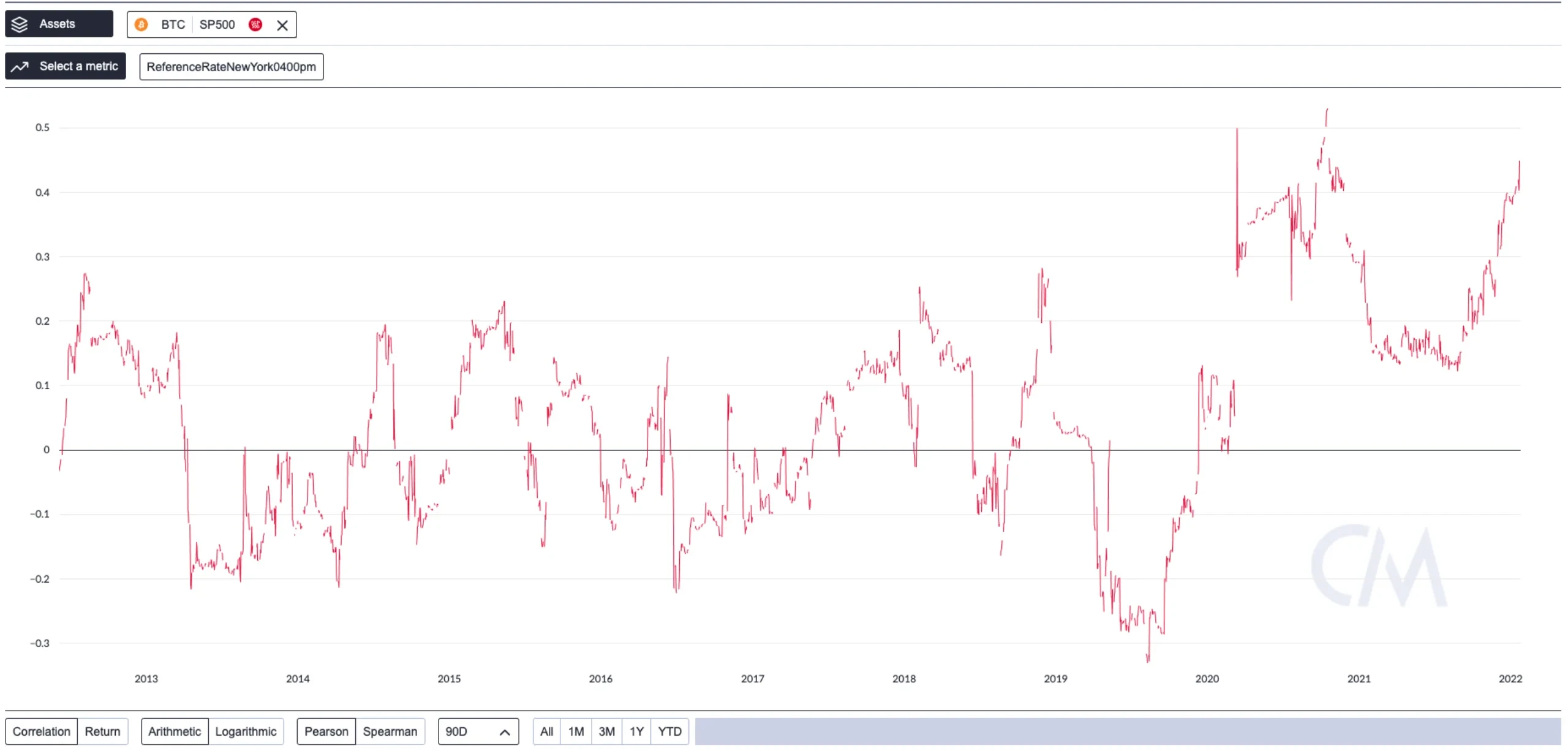
Furthermore, the 90-day correlation between Bitcoin and the S&P 500 index has reached a historic high of 0.41, meaning Bitcoin's price movements have 41% similarity with the S&P 500 index over the past 90 days. Historically, since 2013, the correlation between the two has consistently fluctuated between -0.2 and +0.2, with the only instance exceeding 0.4 occurring between April and October 2020. Since then, it has remained above 0.1.
This indicates that the crypto market is strongly correlated with US stock market trends, and the consistency between crypto market and US stock market movements is increasing.
Data source: CoinMetrics
So, is the crypto market really becoming Americanized? What impacts will this bring?
1. Why is the Crypto Market Becoming Americanized?
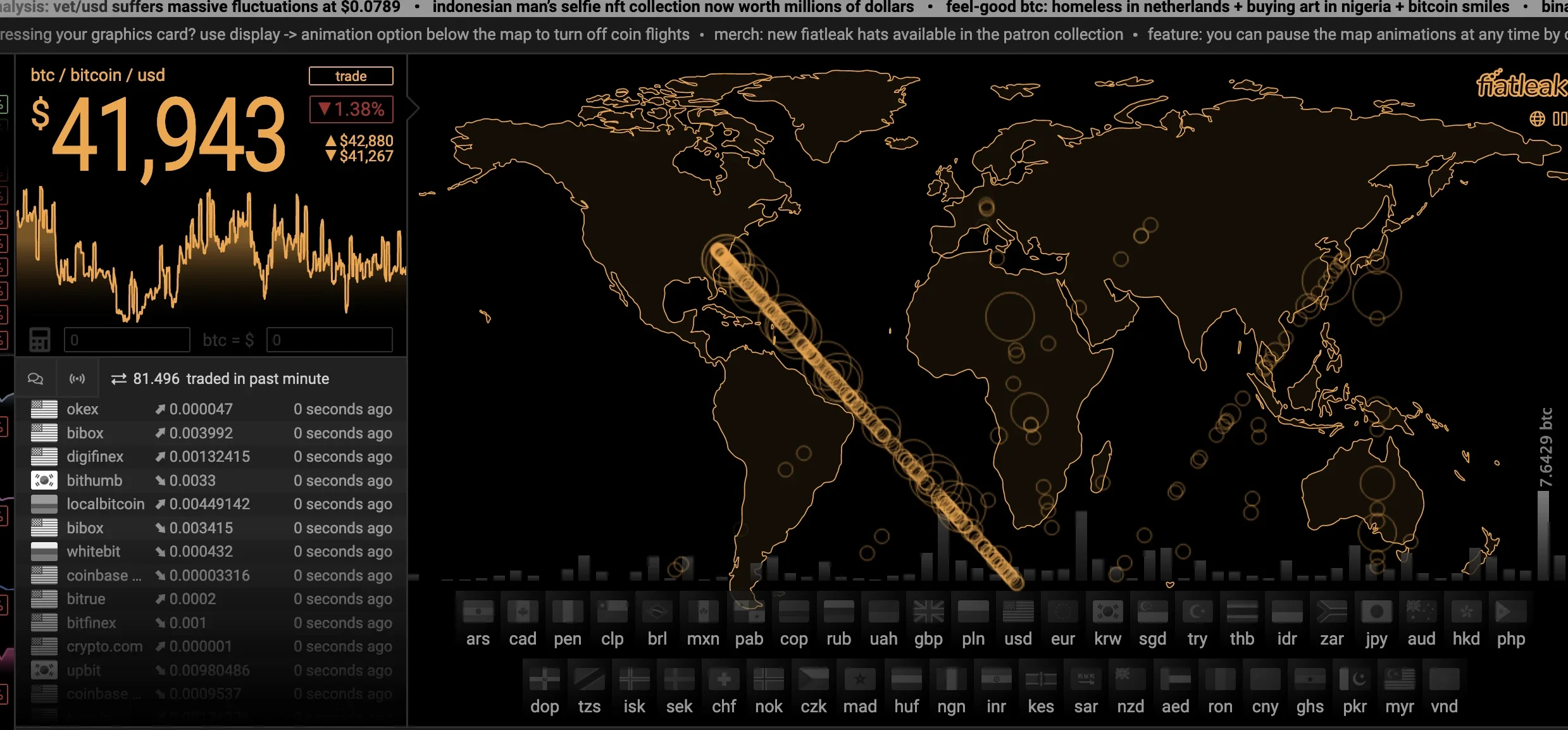
With the backing of giants like Grayscale, MicroStrategy, and Tesla, industry heavyweights from Wall Street and listed companies hold nearly 10% of the total circulating supply of Bitcoin. Fiat Leak data shows that mainstream cryptocurrencies are currently flowing toward North America, which are important reasons for the Americanization of the crypto space.
The Fiat Leak indicator is used to track trading between fiat currencies and crypto assets. For example, when Bitcoin's latest transaction is conducted in US dollars in Manhattan, the illustrated Bitcoin flows to the United States. The following chart shows Bitcoin's flow across countries worldwide.
Data source: fiatleak.com
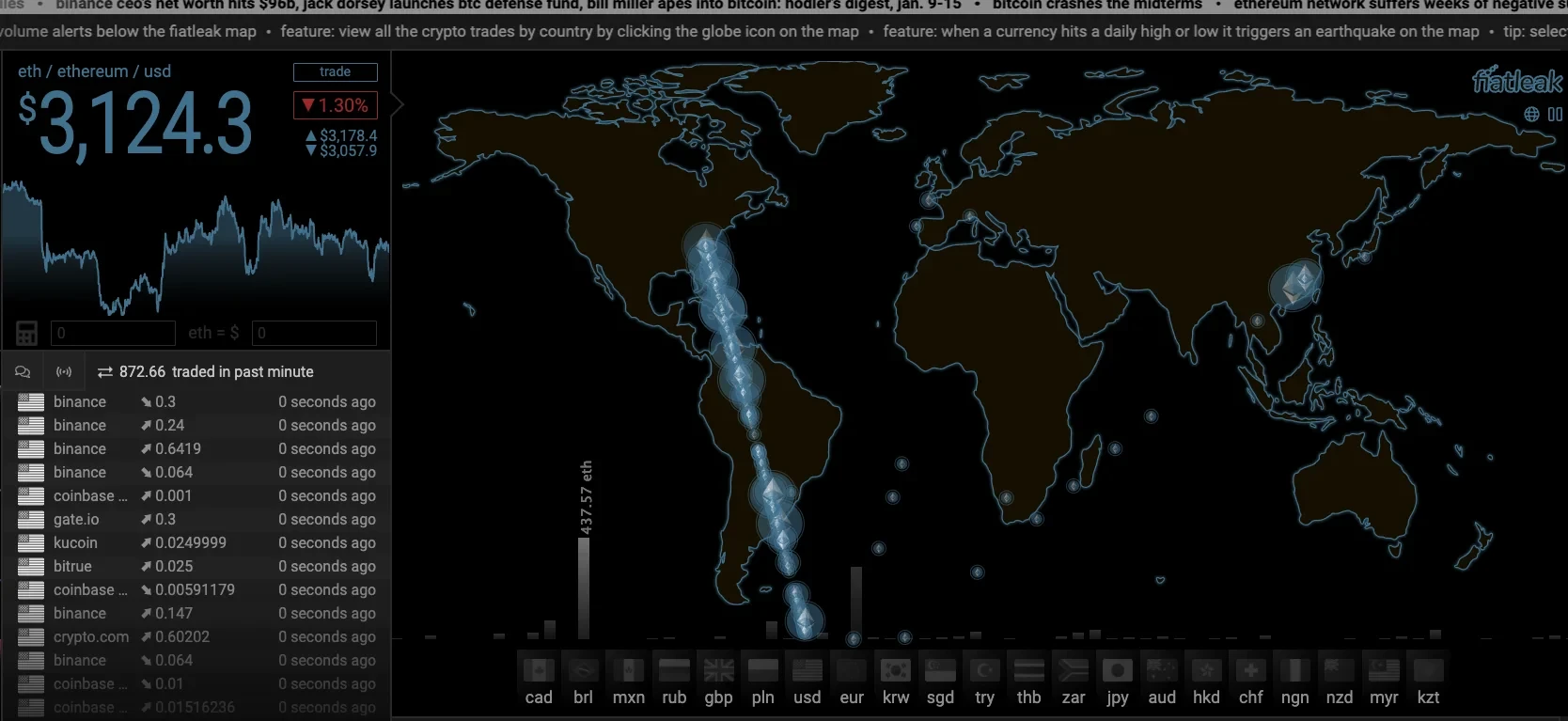
The following chart shows Ethereum inflows into countries worldwide.
Data source: fiatleak.com
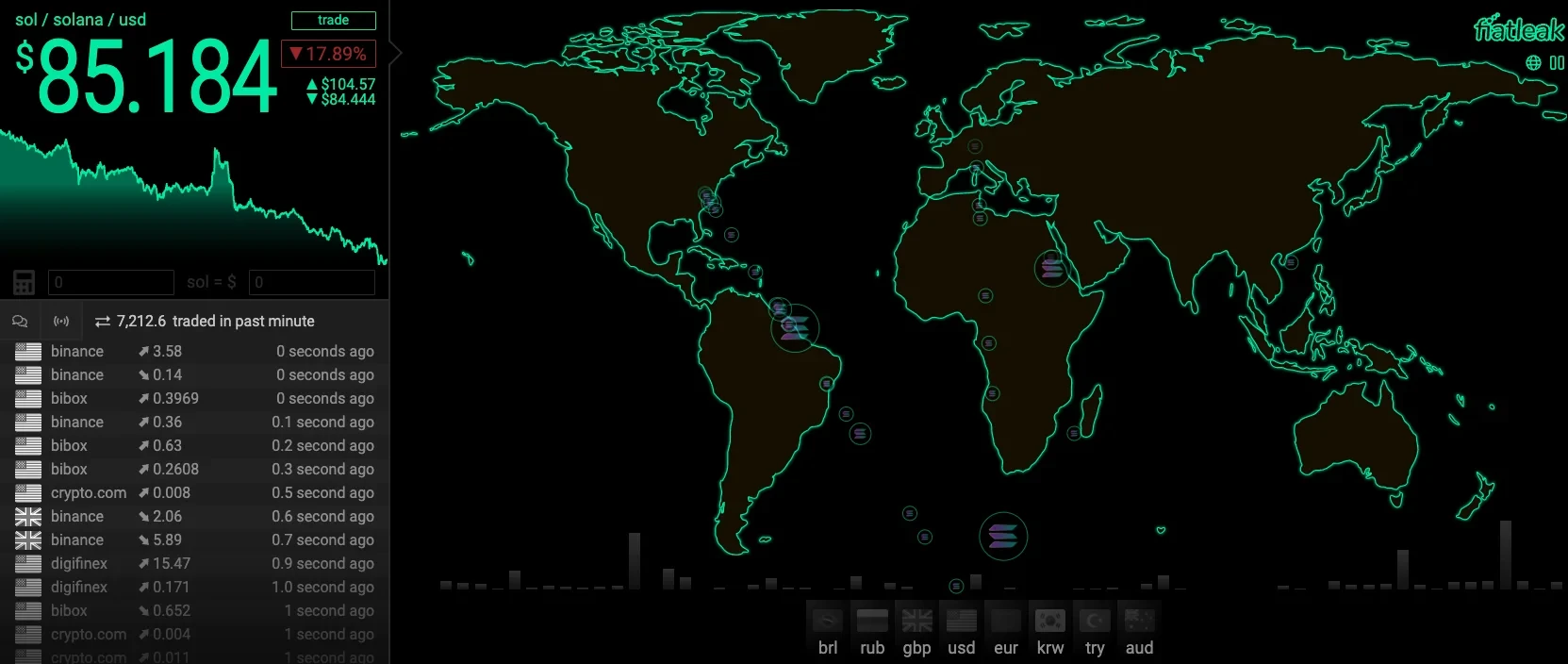
The following chart shows SOL inflows into countries worldwide.
Data source: fiatleak.com
Who is the king of the crypto world is clear at a glance. Obviously, the United States is the largest buyer of crypto assets. These factors collectively determine the ultimate direction of the crypto market, moving further and further toward Americanization.
What positive impacts will this have on the crypto market?
Clearly, the Americanization of the crypto market will inevitably bring massive amounts of funds, thereby realizing the "perpetual bull market" envisioned by crypto investors.
Looking back at the historical trend of the S&P 500 index, since 1993, the index has risen from 432 points at the bottom to 4,818 points at its peak, an increase of over 10 times in nearly 30 years.
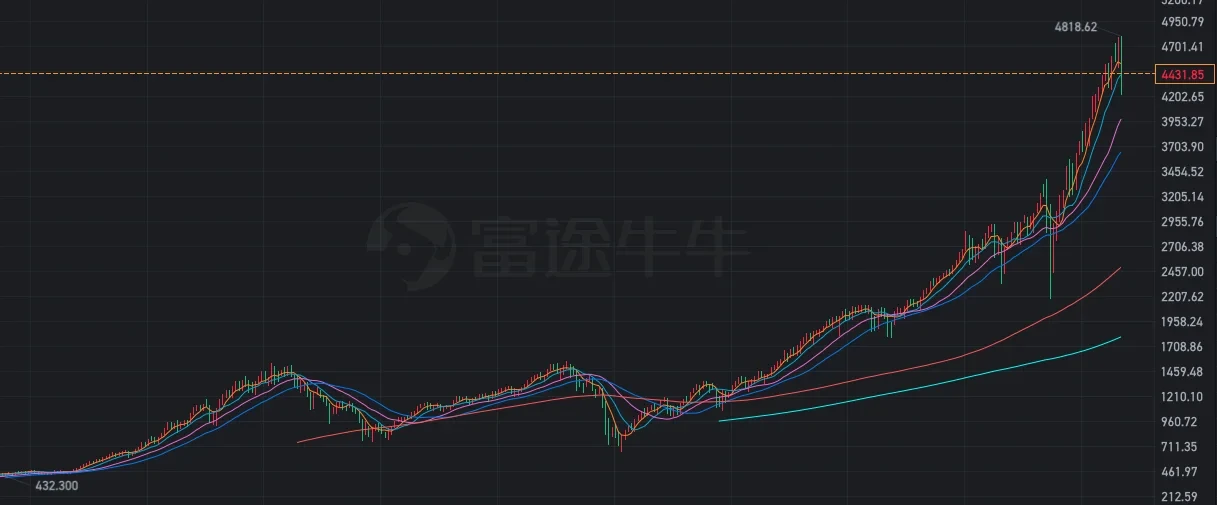
The NASDAQ index performance is even more impressive, rising from 353 points in 1991 to recent levels of 16,000 points, a gain of over 45 times in 30 years. Although the NASDAQ experienced the 2000 internet stock bubble crash, tech stocks have soared since the bubble burst, surging strongly from 1,300 points at the bottom in 2002 to 16,000 points.
If the crypto market can truly achieve Americanization, slow bull markets and perpetual bull markets may become reality. However, it must be emphasized that the "continuous rise" of US stock indices is built on "national will," requiring unimpeded financial infrastructure and a strong user base as foundations, along with sound securities laws and strong regulation as guarantees.
Although the current crypto space possesses strong innovation capabilities, it does not have the foundation for a "perpetual bull market" like US stocks. Additionally, the rapid concentration of crypto assets among giants will inevitably bring some drawbacks.
For example, when institutions stop increasing their Bitcoin holdings through Grayscale, GBTC's severe negative premium will have a huge negative impact on the entire market. Another example is MicroStrategy, which holds over 120,000 Bitcoin purchased through debt—could a financial crisis trigger a shock to the crypto market?
2. What Impacts Will Americanization Bring?
First, institutions will have a decisive impact on the crypto market, potentially even determining bull and bear cycles.
Take Grayscale Trust as an example.
Starting in 2013, Grayscale began aggressively accumulating crypto assets through GBTC/ETHE and other crypto trusts. By February 2021, the amount of BTC held through Grayscale custody reached 655,000, all purchased by institutions and managed by Grayscale. For example, the renowned Rothschild family fund holds nearly $1 million worth of GBTC through Grayscale Trust.
Currently, 1 share of GBTC corresponds to 0.00092988 Bitcoin. As early as before 2014, GBTC allowed redemption of physical Bitcoin through Grayscale. After being penalized by the SEC in 2014, GBTC no longer supports redemption.
Additionally, according to the requirements of the US Securities Act of 1933, after Bitcoin and Ethereum and other crypto assets are exchanged for GBTC/ETHE, they must be locked for 6 months before being unlocked and allowed to be traded on the secondary market. Other crypto assets exchanged into corresponding trusts must be locked for 12 months before secondary market trading—for example, Litecoin (LTC) converted into LTCN trust must be locked for 12 months before being unlocked and circulating on the secondary market.
From March 2020 to January 2021, Grayscale's total managed assets surged from $3 billion to $60 billion, a 20-fold increase, while BTC price surged from $3,000 to $41,000, making Grayscale the bull market engine.
Furthermore, during the bull market, GBTC consistently maintained a positive premium of 5% to 15%. Historically, GBTC's highest positive premium occurred in December 2017, reaching 150%. The Ethereum trust was similar—during this bull market cycle, ETHE consistently maintained a positive premium of 10% to 20%. Historically, ETHE's highest positive premium occurred in June 2020, reaching 1,200%.
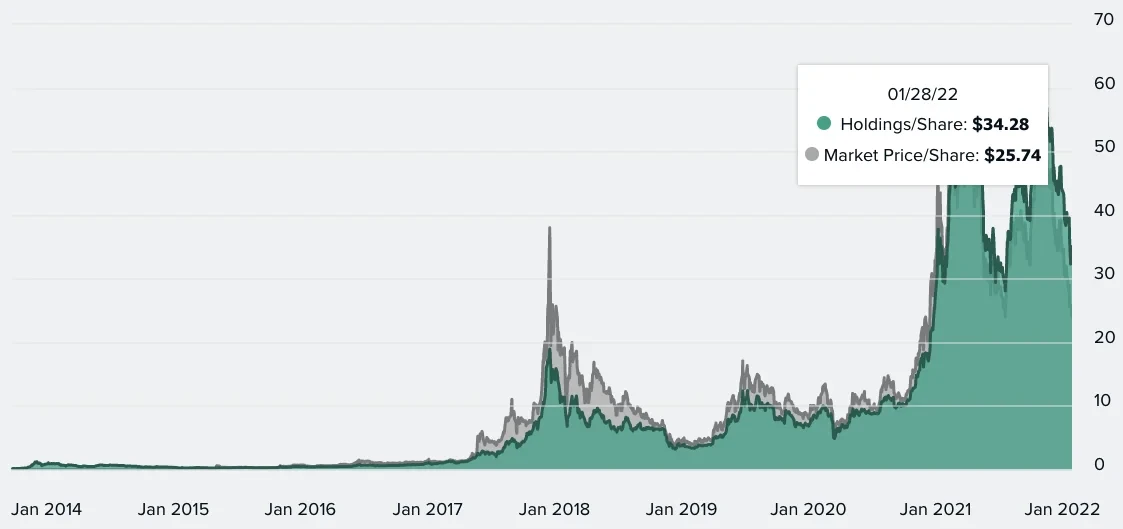
Times have changed, and Grayscale Trust has become less "sweet" and even somewhat "repugnant."
The latest data shows GBTC's negative premium has reached 25%, and ETHE's negative premium has reached 19%. Additionally, since February 2021, almost all Grayscale trusts have entered negative premium territory, a trend that continues to this day. Furthermore, since February 2021, institutions have almost stopped increasing their cryptocurrency holdings through Grayscale, which marks the starting point of this bear market.
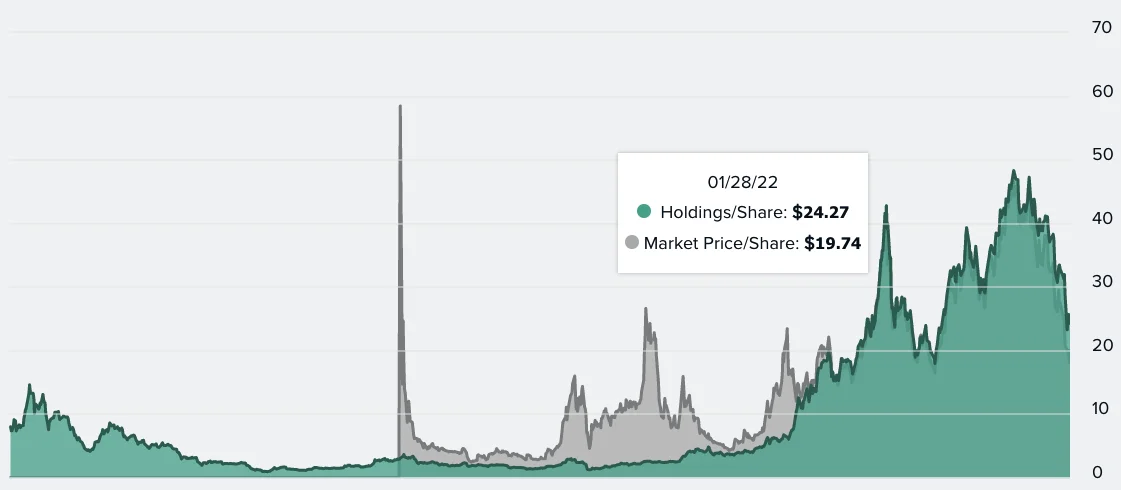
This demonstrates Wall Street institutions' outlook on the market on one hand, and highlights the drawbacks of excessive concentration in the crypto market on the other—namely, that Grayscale alone can determine crypto market trends.
Take MicroStrategy as another example.
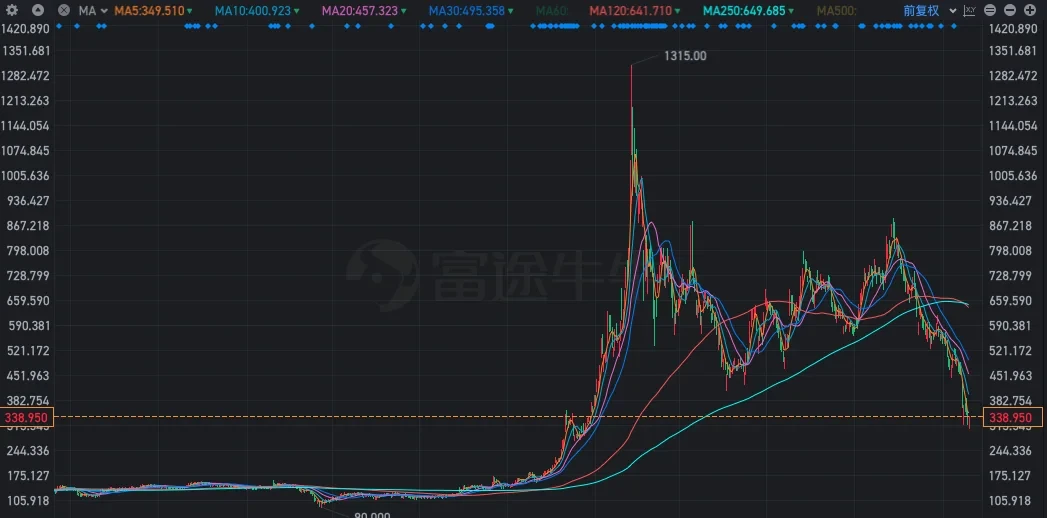
Since January 2022, MicroStrategy's stock price has plummeted from $560 to $300, a drop of as much as 46%. While this is somewhat related to Bitcoin's price decline, the root cause lies in the SEC rejecting the company's NON-GAAP accounting strategy.
The so-called NON-GAAP accounting strategy means that when calculating asset liabilities, BTC on the books only counts profits, not losses. After the SEC rejected NON-GAAP accounting and switched to GAAP accounting strategy, it was exactly reversed—BTC on the books only counts losses, not profits.
So, will this cause MicroStrategy to fall into a terrifying death spiral? That is: Bitcoin price decline—stock price decline—financing ability decline—bankruptcy—Bitcoin liquidation.
It's worth noting that MicroStrategy's stock MSTR was able to surge to $1,315 in February 2021 precisely because of its massive Bitcoin purchases. It was also able to issue $600 million in junk bonds this June to purchase Bitcoin. Currently, MicroStrategy holds 124,391 Bitcoin at an average price of $29,900, worth $4.7 billion. Yet MicroStrategy's total US stock market capitalization is only $3.5 billion.
Currently, under the dual impact of GAAP accounting strategy and BTC price decline, will MicroStrategy ultimately face bankruptcy?
Additionally, according to MicroStrategy's Q3 2021 financial report, losses reached as high as $36.1 million. With core business losses, significant Bitcoin declines, and Bitcoin investment losses calculated into the asset liability sheet, will MicroStrategy face liquidity depletion and find itself in dire straits? If bankruptcy ultimately occurs and assets are liquidated, 120,000 Bitcoin would have a devastating impact on the market.
In summary, under Wall Street's powerful capital control capabilities, the crypto market is no longer that "unwanted child" but has long become a playground for whales. However, larger whales will also produce larger-scale "whale falls," and of course bring larger-scale destructive power. Nevertheless, extreme events only occur in extreme situations, and the crypto market still has significant growth potential—don't throw the baby out with the bathwater.
Disclaimer
This article may contain product-related content not applicable to your region. This article is intended to provide general information only and does not accept responsibility for any factual errors or omissions herein. This article represents only the author's personal views and does not represent OKX's views. This article is not intended to provide any advice, including but not limited to: (i) investment advice or investment recommendations; (ii) offers or solicitations to buy, sell, or hold digital assets; or (iii) financial, accounting, legal, or tax advice. Holding digital assets (including stablecoins) involves high risk, may fluctuate significantly, and may even become worthless. You should carefully consider whether trading or holding digital assets is suitable for you based on your financial situation. For questions about your specific situation, please consult your legal/tax/investment professional. The information appearing in this article (including market data and statistics, if any) is for general reference only. Although we have taken all reasonable precautions in preparing these data and charts, we accept no responsibility for any factual errors or omissions expressed herein. © 2025 OKX. This article may be reproduced or distributed in full, or excerpts of 100 words or less from this article may be used, provided such use is non-commercial. Any reproduction or distribution of the entire article must also prominently state: "This article copyright © 2025 OKX, used with permission." Permitted excerpts must cite the article name and include attribution, for example "Article Name, [Author Name (if applicable)], © 2025 OKX". Some content may be generated or assisted by artificial intelligence (AI) tools. Derivative works or other uses of this article are not permitted.
Show More
Recommended Reading
OKX Pay: Opening a New Era of Next-Generation Crypto Payments
The choice of tens of millions of users. Register with OKX to enjoy the ultimate trading experience and diverse wealth management products. A letter from OKX CEO Star: Today, we are officially launching the first version of OKX Pay to over 100 million global users. As the industry's first payment application to truly achieve non-custodial and compliant integration, OKX Pay will be embedded in the OKX App and is currently available in select markets, expected to fully launch within months
March 22, 2026

New Chapter: Building Next-Generation Financial Infrastructure Together
OKX's partnership with Intercontinental Exchange (ICE) is an important moment for OKX and equally significant for the evolution of the entire digital assets market. ICE establishes and operates the world's most important financial infrastructure, including the New York Stock Exchange as well as global derivatives and clearing platforms. ICE's strategic investment in OKX and joining our board demonstrates our shared belief—digital assets technology will transform financial markets
March 10, 2026

Tribute to Another Year of Forging Ahead
As OKX's CEO and also a builder who remains true to our original mission, I am proud to look back on OKX's extraordinary growth and progress this year. Despite many challenges, 2024 was a year of focus, innovation, and resilience. We not only expanded and optimized our products but also made significant progress in launching transparent and regulatory-compliant localized businesses, while further strengthening our global management team. Notably, after experiencing
January 29, 2026

2025: Steady Progress Toward Financial Freedom Together
— Year-end letter from OKX Founder and CEO Star to Global Users "Financial freedom" is often misunderstood. It doesn't mean absence of rules, but rather having the right to choose even when rules exist—and when the system is truly tested, it remains reliable and effective. This is precisely what we have focused on throughout 2025. First, I want to extend my sincere gratitude to our global clients, partners, and regulatory authorities
January 16, 2026

OKX Officially Launches in Germany and Poland
Author: Erald Ghoos, CEO of OKX Europe Today is significant for OKX—and for crypto users across Europe. We have officially launched our fully compliant centralized cryptocurrency trading platform in Germany and Poland! For us, this is not just geographic expansion, but a commitment to building the cryptocurrency future the right way: secure, transparent, and meeting local needs. If you are in Germany
October 21, 2025

Partnership Upgrade! OKX Partners with Standard Chartered Bank to Expand European Market
On October 15, OKX Europe CEO Erald Ghoos stated that OKX is expanding its strategic partnership with Standard Chartered Bank to the European Economic Area (EEA). Earlier this year, OKX first partnered with Standard Chartered Bank in the UAE to launch the collateral mirroring program—this is a
October 15, 2025