What is the "Bridge" That Everyone Is Talking About? A Quick Overview of Mainstream Cross-Chain Bridges
The waves of DeFi, GameFi, and NFTs have opened up the world's imagination for Ethereum, bringing long-anticipated application scenarios from "castles in the air" to reality. Ethereum's narrative has become more mainstream and grand. The implementation of EIP-1559 and the future transition to Ethereum 2.0 have brought expectations of reduced supply, or even deflation, to Ethereum. Statements like "Ethereum will gain greater market share relative to Bitcoin in the longer trend" and "Ethereum's foundation and use cases are a powerful complement to Bitcoin's more macro value storage properties" have clearly increased. Ethereum enthusiasts even compare it to tomorrow's financial giant. As the digitalization of fintech accelerates, it will surely set off even bigger waves, and Ethereum's position will become more solidified.
However, while these three major waves have driven the development of the Ethereum ecosystem, they have also accelerated the contradiction between Ethereum demand and scalability. On one hand, this has provided certain opportunities for competing chains; on the other hand, Layer 2 is also in a stage of readiness. Over the past few years, the crypto world has obviously not been able to reach a conclusion on whether the future will be "one chain dominates" or "multiple chains flourish." But from our current perspective, we believe that existing blockchain performance and architecture are still difficult to adapt to the diversity of the internet. First, a platform's capacity is after all limited, and in extreme situations, a small number of applications will inevitably cause network paralysis. Second, there is a contradiction between universality and specificity, and it is difficult to use a universal standard to meet various needs. This is also why in the past two years, public chains/side chains specifically built for games or NFTs have emerged. We are in a multi-chain era where public chains, side chains, and Layer 2 are developing simultaneously.
But the coexistence of multiple chains means that assets will circulate on different chains, and the interoperability of assets between chains naturally becomes an urgent need for on-chain users. The emergence of various cross-chain bridges has reconnected the fragmented ecosystem into a whole. This article will explore what cross-chain bridges are, and briefly sort out existing cross-chain projects. If there are errors or shortcomings, or if readers have more topics they want to discuss, welcome to join the OKX official community to exchange and correct.
What is a Cross-Chain Bridge?
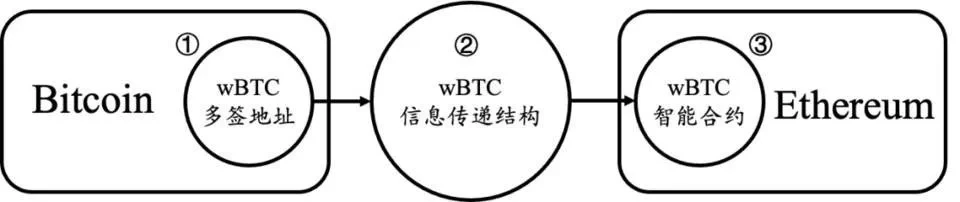
When talking about cross-chain bridges, let's start with the currently simplest and most mature asset cross-chain bridge solution—WBTC. WBTC, full name Wrapped Bitcoin, is a pegged currency of Bitcoin based on Ethereum that can be exchanged 1:1 with Bitcoin. Simply put, it's an ERC 20 version of Bitcoin, aimed at bringing Bitcoin's liquidity and stability as crypto assets into the Ethereum ecosystem.
WBTC's operation requires three participants: WBTC DAO, merchants, and custodians. Users send BTC to merchants to request WBTC exchange; merchants verify users through KYC/AML, then initiate a minting request to the WBTC smart contract, and send users' BTC to custodians; after custodians receive BTC, they issue a minting request to the smart contract; the contract approves the request and sends WBTC to merchants; merchants send WBTC to users.
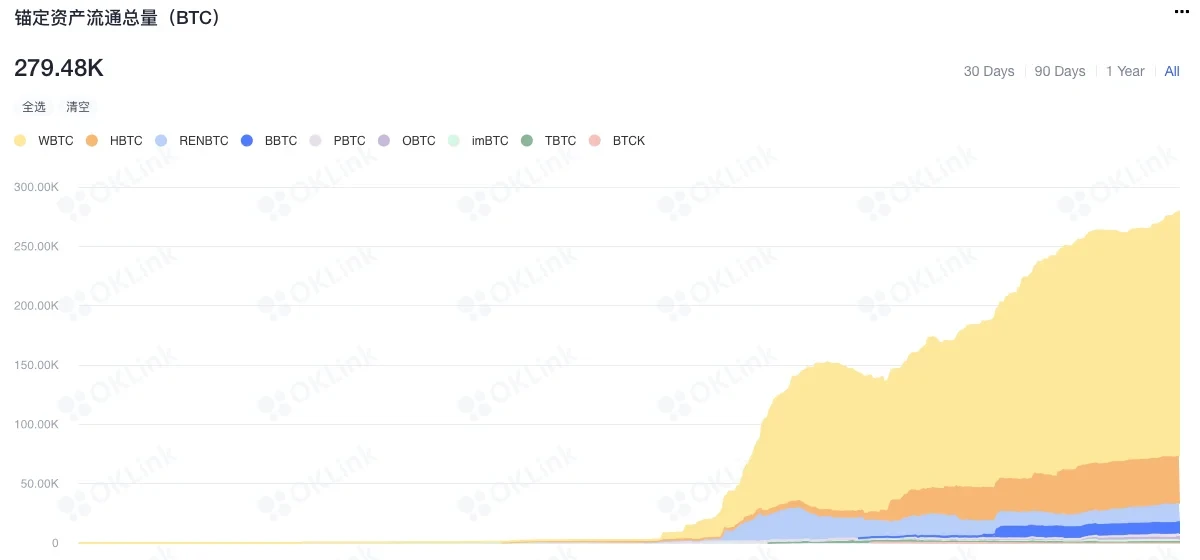
In addition to WBTC, which was the earliest to launch, Bitcoin pegged currencies have made significant progress under the DeFi wave. OK Link has recorded 9 types of Bitcoin pegged assets on Ethereum. Calculating from 97,449 Bitcoin pegged currencies on September 18 last year, assets grew to 279,475 in one year, an increase of 187%.
After understanding WBTC, we have a preliminary understanding of bridges. Patrick McCorry, CEO of PISA Research, defined bridges as follows: A bridge is responsible for keeping assets on an L1 blockchain, while the same assets are issued on another (mainly external) service. The bridge defines who keeps the funds, and the conditions that must be met before assets are unlocked. Simply put, whenever an L1 blockchain like Ethereum connects to any other system, a bridge is used. All bridges have similar actions:
- Deposit funds, users can deposit assets to the bridge, and the bridge will give proof representing this asset in another system;
- Update account balance, information about the new account balance will notify the bridge, which can be used to assist the provision process;
- Asset withdrawal, users can withdraw assets from the bridge based on their balance in another system and the tokens issued and destroyed in another system;
Currently, asset cross-chain is mainly achieved through two major approaches: First, through cross-chain aggregation application swaps, by aggregating liquidity of assets on different chains, building cross-chain trading pools, allowing users to complete asset exchanges on different chains in the pool, commonly such as Anyswap, Multichain.xyz, etc.
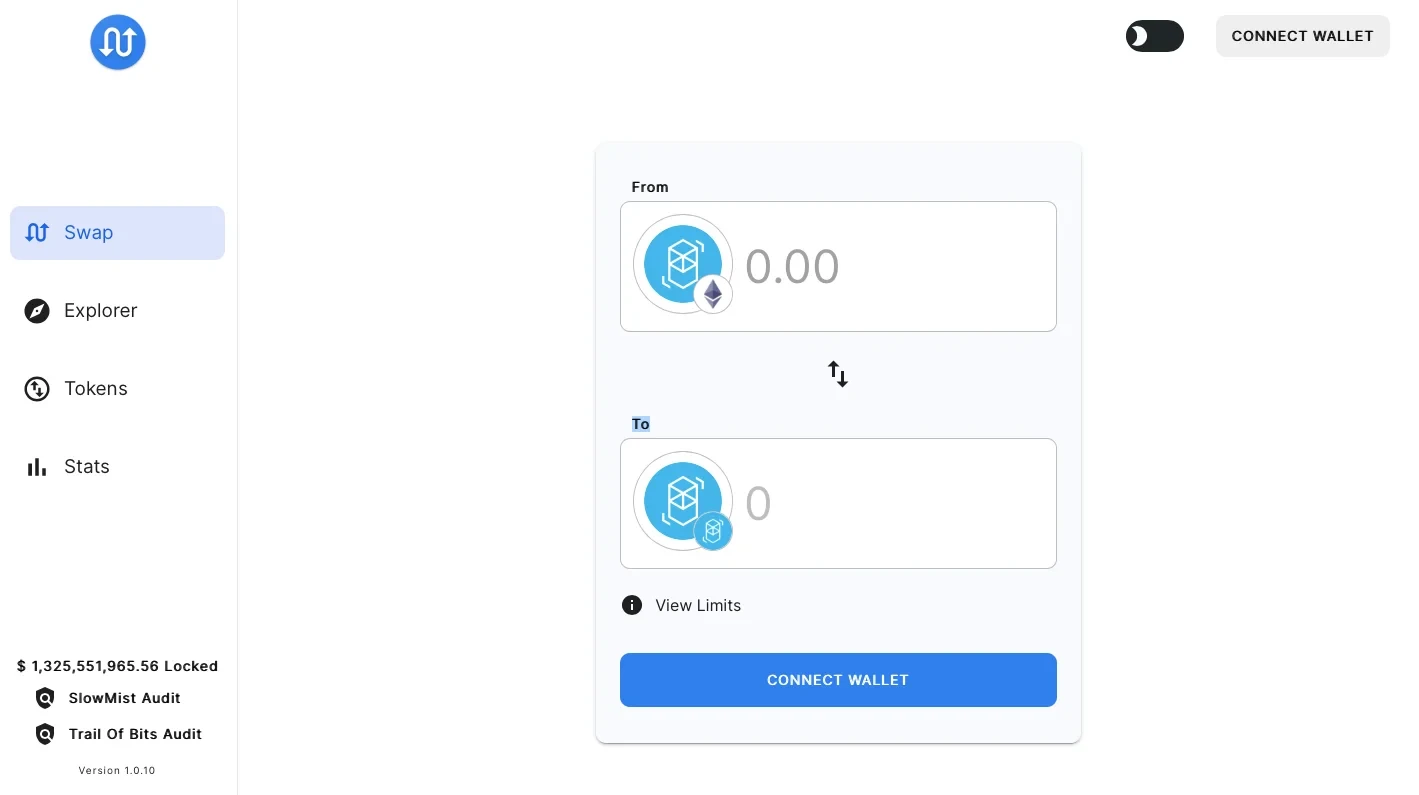
Second, build a bridge channel between two blockchains, keep native assets custodied on this bridge, while one chain obtains asset trading situations on another chain through oracles, and maps them to another chain at a 1:1 ratio, such as WBTC.
Cross-Chain Protocol Overview
1**) OKX Bridge**
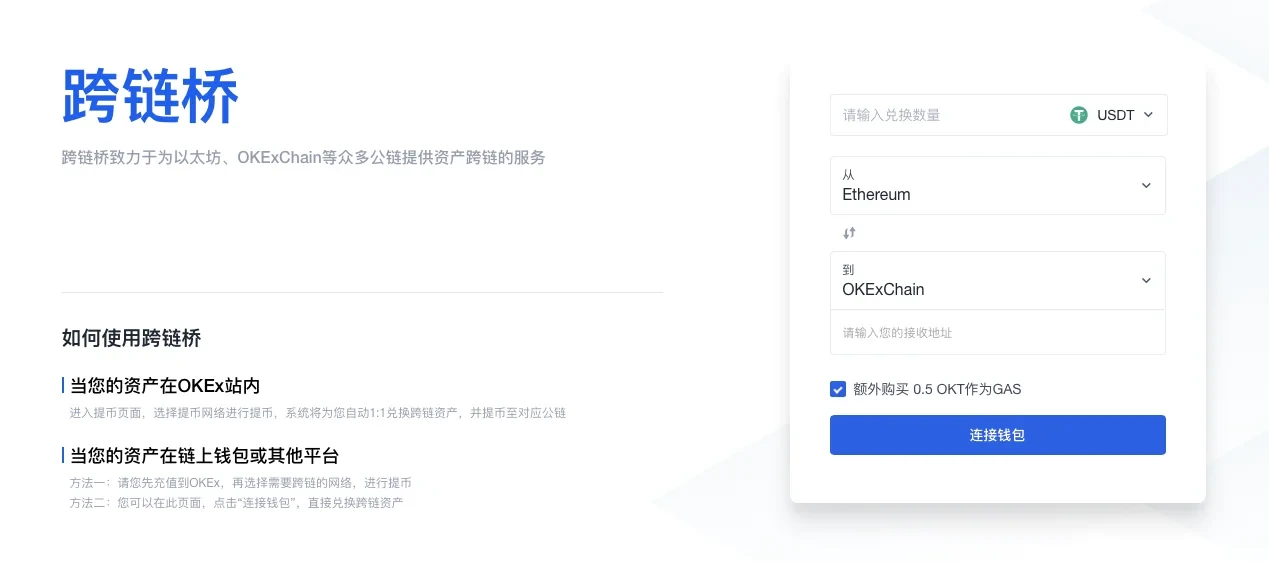
OKX Bridge is the official cross-chain tool provided by OKX, currently providing asset cross-chain services for networks such as Ethereum, OKTC, TRON, etc. OKX Bridge supports over 20 mainstream assets for cross-chain including USDT, BTC, ETH, DAI, etc., meeting users' needs for asset interoperability.
When users' assets are within OKX, enter the withdrawal page, select the withdrawal network for withdrawal, and the system will automatically perform 1:1 exchange of cross-chain assets and withdraw to the corresponding public chain. When users' assets are in on-chain wallets or other platforms, they can choose to first deposit to OKX, select the network requiring cross-chain for withdrawal, or in the OKX Bridge interface, click "Connect Wallet" to directly exchange cross-chain assets.
2**) Avalanche Bridge**
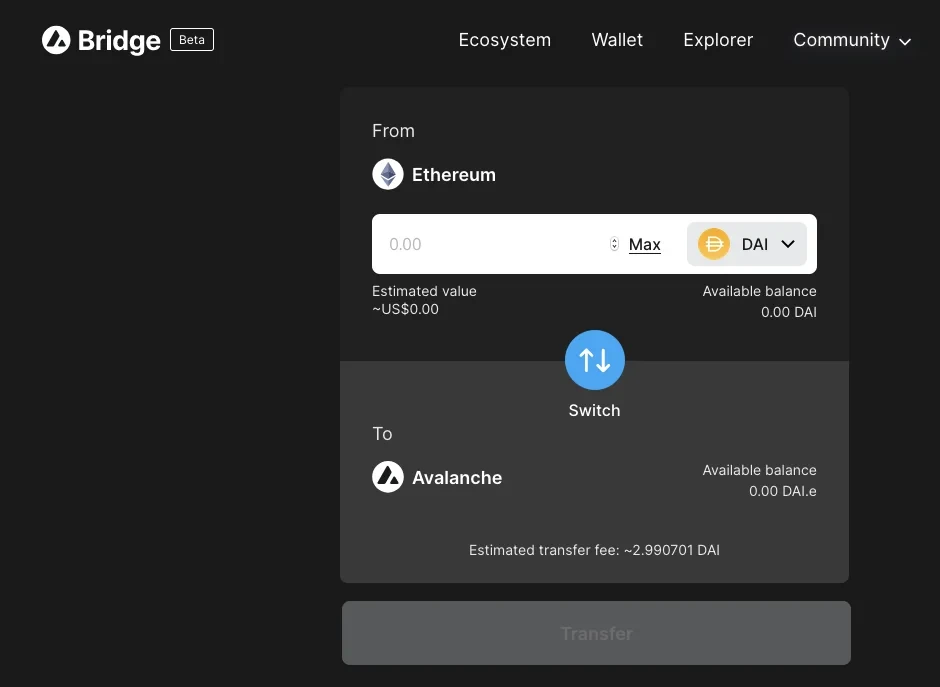
Avalanche Bridge is the official cross-chain tool launched by the Avalanche Protocol in early 2021, mainly used to solve the problem of users transferring ERC 20 standard assets on the Ethereum chain to the Avalanche network. Through Avalanche Bridge, users can interoperate ERC 20 assets with Avalanche's C-chain. Currently, it only supports the transfer of ERC 20 assets between Ethereum and Avalanche, and does not support the transfer of native assets on the Avalanche chain to Ethereum. In addition, Avalanche Bridge does not support native ETH or BTC, but can transmit wrapped assets like WETH and WBTC through the bridge.
3**) Multichain.xyz**
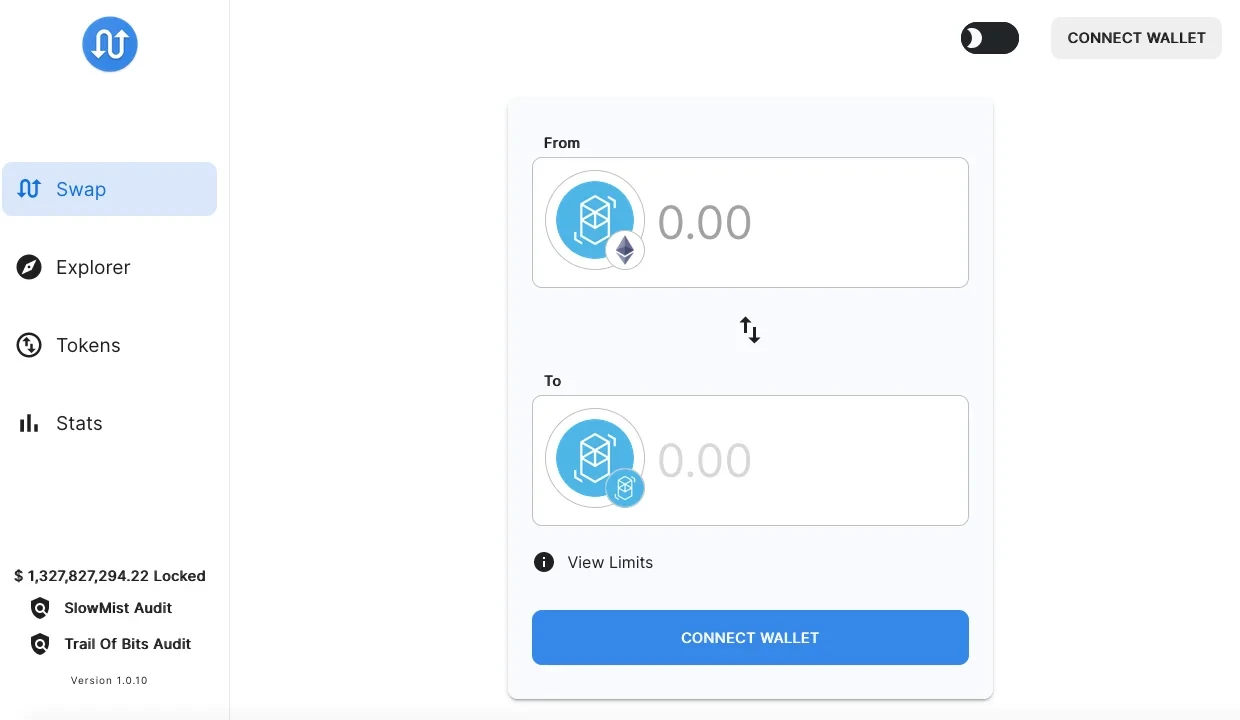
Multichain.xyz mainly targets cross-chain between platforms supporting the Ethereum Virtual Machine, jointly developed by yearn.finance founder Andre Cronje and the Anyswap team based on Anyswap SMPC Network, and is currently the most widely used multi-chain cross-chain platform. Compared with other platforms, Multichain.xyz's biggest advantage is that it supports developers deploying their own cross-chain tokens. A while ago, the Loot-like game Rarity character minting developed by AC became very popular, and many users converted ERC 20 FTM to Fantom mainnet FTM through Multichain.xyz.
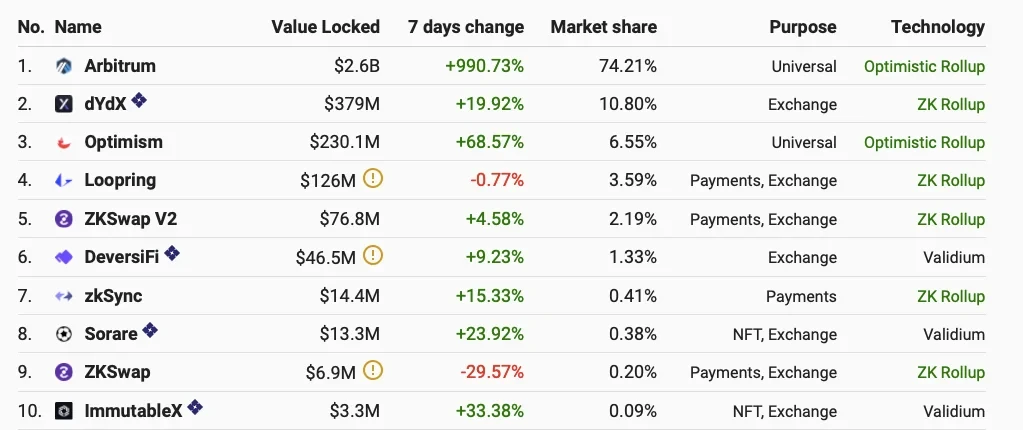
Recently, Layer 2 has made significant progress. L2Beat data shows that as of September 18, the total value locked (TVL) in Layer 2 has exceeded $3.5 billion, growing 257.61% in the past 7 days. Among them, Arbitrum's TVL increased 990.73% within 7 days, exceeding $2.6 billion, with a growth rate that is remarkable and has further promoted the popularity of the Layer 2 concept. From the perspective of fund inflow speed, Layer 2 networks supporting general smart contracts are more popular.
In our articles "After DeFi and NFTs, Will Layer2 Become Ethereum's Next Explosion Point? (Part 1)" and "After DeFi and NFTs, Will Layer2 Become Ethereum's Next Explosion Point? (Part 2)", we conducted series discussions from Ethereum EIP-1559 upgrade, hash rate hitting new highs and other important dynamics to Layer2 topics. Interested readers can move to these.
4**) Arbitrum Bridge**
Arbitrum Bridge is the cross-chain bridge officially launched by the Ethereum Layer 2 scaling protocol Arbitrum, mainly used to solve asset transfers between Ethereum Layer 1 and Arbitrum. Currently, Arbitrum Bridge supports the transfer of ETH and ERC 20 assets between Layer 1 and Layer 2, with fees settled in ETH.
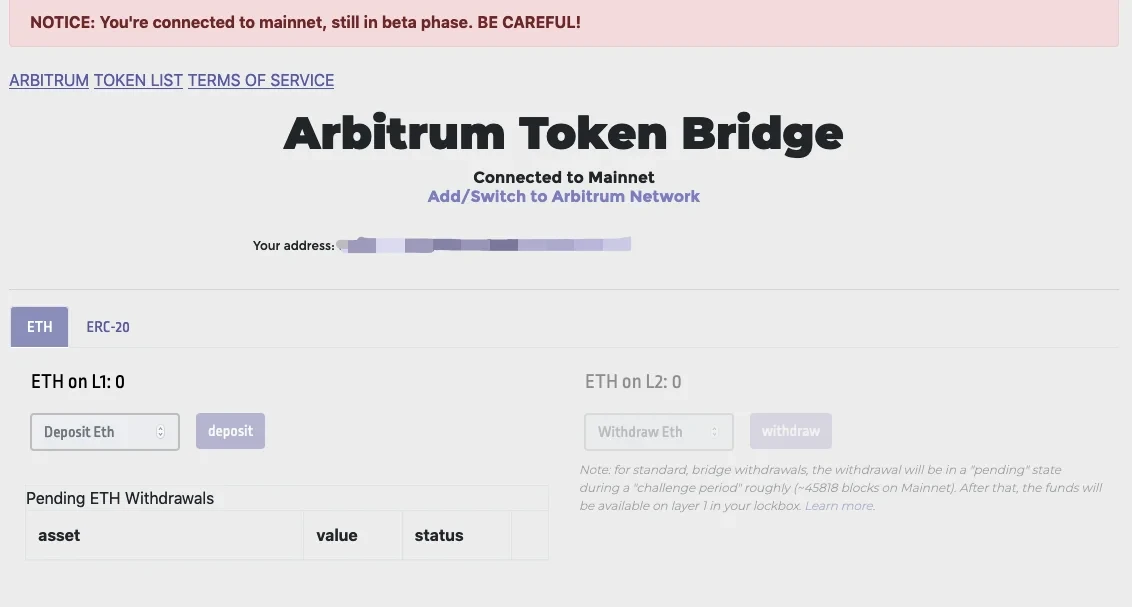
It should be noted that withdrawing from Layer 1 to Arbitrum basically only takes a few minutes, but if withdrawing assets from Arbitrum, it requires waiting at least 7 days.
5**) Optimism Gateway**
Optimism Gateway is the cross-chain bridge officially launched by Ethereum Layer 2 scaling Optimism, mainly used to solve asset interoperability needs between Ethereum and Optimism. The cross-chain bridge currently supports the transfer of mainstream ERC 20 assets in the Ethereum ecosystem such as ETH, DAI, LINK, UNI, etc.
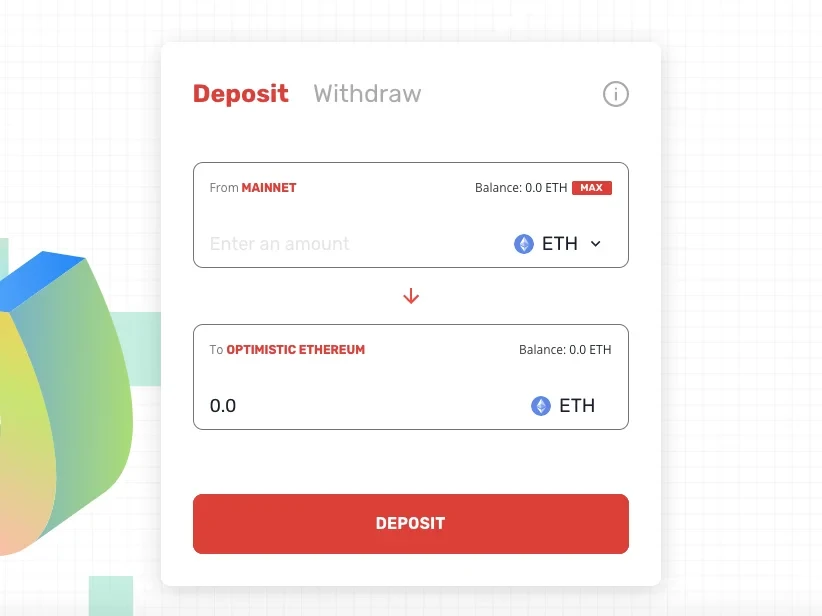
Optimism, which also uses Optimistic Rollup technology like Arbitrum, also requires waiting 7 days for asset withdrawal.
Conclusion
When a single blockchain cannot meet the needs of scale expansion, and new chains need time to build and improve their ecosystems, various cross-chain bridges operate between different blockchains, solving the problem of fund circulation and bringing great convenience to users,俨然 becoming a new trend.
In an ideal state, cross-chain bridges can both meet asset interaction needs and have extremely high security, while better compatible with various public chain protocols, applications, and trading, while ensuring cross-chain environment transparency. But in reality, in the past 2 months, there have been 3 security accidents where cross-chain applications were hacked. Although this to some extent confirms the "value" of cross-chain bridges, the increase in on-chain interaction needs and the growth of cross-chain fund scale have also made cross-chain protocols a new "hot target" in hackers' eyes. Although cross-chain products have begun to take shape in the market, they still face significant challenges in security. Considering that technology development is not achieved overnight, although cross-chain protocols have great development prospects, the test and trial of them still need to be left to the market and time.
Disclaimer
This article may contain content about products not available in your region. This article is committed to providing general information only and does not take responsibility for any factual errors or omissions therein. This article represents only the author's personal views and does not represent OKX's views. This article is not intended to provide any of the following advice, including but not limited to: (i) investment advice or investment recommendations; (ii) offers or solicitations to buy, sell or hold digital assets; or (iii) financial, accounting, legal or tax advice. Holding digital assets (including stablecoins) involves high risk, may fluctuate significantly, or even become worthless. You should carefully consider whether trading or holding digital assets is suitable for you based on your financial situation. For questions about your specific situation, please consult your legal/tax/investment professional. The information appearing in this article (including market data and statistics, if any) is for general reference only. Although we have taken all reasonable precautions in preparing these data and charts, we assume no responsibility for any factual errors or omissions expressed herein. © 2025 OKX. This article may be reproduced or distributed in full, or excerpts of 100 words or less from this article may be used, provided that such use is non-commercial. Any reproduction or distribution of the entire article must also prominently state: "This article is copyrighted © 2025 OKX, used with permission." Permitted excerpts must cite the article name and include attribution, for example "Article Name, [Author Name (if applicable)], © 2025 OKX". Some content may be generated or assisted by artificial intelligence (AI) tools. Derivative works or other uses of this article are not permitted.
Show More
Recommended Reading
OKX Pay: Opening a New Era of Next-Generation Crypto Payments
The choice of tens of millions of users, register with OKX to enjoy the ultimate trading experience and diverse wealth management products. A letter from OKX CEO Star: Today, we officially launch the first version of OKX Pay to over 100 million global users. As the industry's first payment application that truly achieves non-custodial and compliance integration, OKX Pay will be embedded in the OKX App, currently open to some markets, and expected to fully launch within months
March 22, 2026

New Chapter: Building Next-Generation Financial Infrastructure Together
The partnership between OKX and Intercontinental Exchange (ICE) is an important moment for OKX and equally significant for the evolution of the entire digital assets market. ICE establishes and operates the world's most important financial infrastructure, including the New York Stock Exchange and global derivatives and clearing platforms. ICE's choice to invest in OKX and join our board demonstrates our shared belief—digital assets technology will be in the financial markets
March 10, 2026
Tribute to Another Year of Forging Ahead
As OKX's CEO, and also a builder who never forgets the original intention, I am proud to look back on OKX's extraordinary growth and progress this year. Despite many challenges, 2024 was still a year full of focus, innovation, and resilience. We not only expanded and optimized our products, but also made important progress in launching transparent and regulatory-compliant localized businesses, while further expanding our global management team. Notably, after experiencing
January 29, 2026

2025: Steady Progress Towards Financial Freedom Together
—— A year-end letter from OKX Founder and CEO Star to global users "Financial freedom" is often misunderstood. It doesn't mean no rules, but rather having the right to choose when rules exist—and when the system is truly tested, it remains reliable and effective. This is exactly what we have been focused on throughout 2025. First, I want to extend my sincere gratitude to our global clients, partners, and regulatory authorities
January 16, 2026

OKX Has Officially Launched in Germany and Poland
Author: Erald Ghoos, CEO of OKX Europe Today is significant for OKX—and also for crypto users across Europe. We have officially launched a fully compliant centralized cryptocurrency trading platform in Germany and Poland! For us, this is not just a geographic expansion, but a commitment to building the cryptocurrency future the right way: secure, transparent, and meeting local needs. If you are in Germany
October 21, 2025
Partnership Upgrade! OKX Partners with Standard Chartered to Expand European Market
On October 15, OKX Europe CEO Erald Ghoos stated that OKX is expanding its strategic partnership with Standard Chartered to the European Economic Area (EEA). Earlier this year, OKX first partnered with Standard Chartered in the UAE to launch the collateral mirroring program—a
October 15, 2025